
Capturing the female form is perhaps the oldest and most enduring challenge in the world of art. When you move from standard portraiture into the realm of nude photography, the stakes get higher. You aren't just managing clothes and smiles; you are managing skin, shadow, and the raw vulnerability of your subject. Whether you’re aiming for the high-contrast drama of fine art nude photography or the intimate heat of erotic photography, the way you pose your model makes the difference between a clinical anatomical study and a piece of art that breathes.
Posing isn't just about where the hands and feet go. It’s about creating tension, flow, and narrative. It’s about understanding how the light hits a curve and how a slight tilt of the chin can change the entire mood of the frame. In this guide, we’re going to dive deep into the techniques that turn a simple shoot into a masterclass in art nude photography.
The Psychology of the Pose: Comfort and Connection
Before you ever click the shutter, you have to establish a vibe. How to photograph nude models begins with trust. A model who feels awkward or exposed (in the negative sense) will look stiff in your photos. Tension shows up in the shoulders, the jaw, and the hands.
Start with a conversation. Explain your vision. If you’re looking for a specific mood: maybe something dark and brooding or soft and ethereal: share that. When the model understands the "why" behind the pose, they can inhabit it more fully. This mental connection is the foundation of high-end erotic nude photography. If you find yourself struggling to visualize how a pose might look under specific lighting, sometimes using digital tools can help. For instance, experimenting with AI-generated aesthetics on CandyAI can be a great way to brainstorm new moods and silhouettes before you ever step into the studio.
Mastering the Standing Pose: The Power of the S-Curve
The most fundamental concept in posing nude models is the "S-curve." In traditional art, this is often called contrapposto. By having the model shift her weight onto one leg, the hips tilt, the shoulders counterbalance, and the spine creates a natural, flowing "S" shape.
This technique elongates the body and creates a sense of movement even in a static shot. To enhance this:
- Arch the back: A slight arch creates a more dramatic silhouette and highlights the small of the back.
- Point the toes: This extends the line of the leg, making it look longer and leaner.
- Mind the hands: Hands should be soft. Avoid "flat" palms against the skin; instead, use the sides of the hands or light fingertip touches to guide the viewer’s eye toward specific areas of interest.
When you’re working with standing poses, the negative space between the arms and the torso is crucial. If the arms are pinned to the sides, the model looks wider and the silhouette becomes a block. Create "windows" of light by having her lift her hair or rest a hand behind her head.
Sitting and Reclining: Curves and Compression
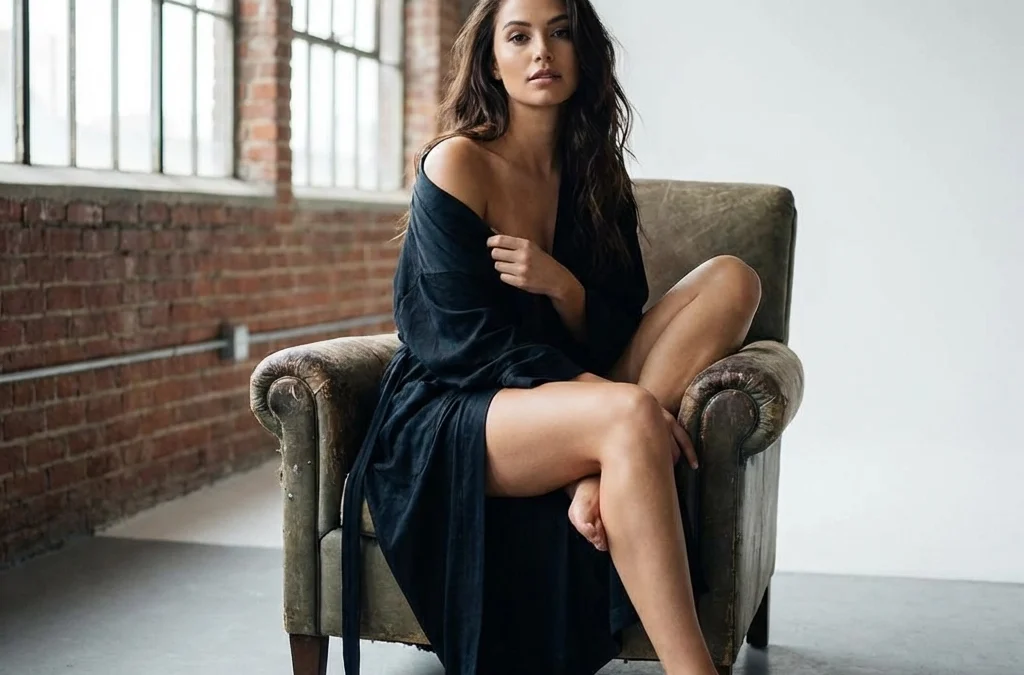
Sitting poses offer a different kind of intimacy. They allow for more "folding" of the body, which creates interesting textures in the skin and muscle. However, sitting can also cause unwanted compression. To keep the look professional and artistic, have the model sit on the edge of the chair or stool. This prevents the thighs from flattening out and maintains the tone of the legs.
In boudoir photography poses, reclining on a bed or a plush rug is a staple. To make this work:
- The Twist: Have the model lie on her back but twist her hips to one side. This emphasizes the waist-to-hip ratio.
- The Lift: Encourage her to use her elbows or forearms to lift her upper body. This defines the collarbone and keeps the neck from "disappearing."
- The Arch: Even when lying down, a slight arch in the lower back creates a more dynamic and erotic shape.
If you’re looking to see these movements in action, watching a professional fine art nude tutorial is the best way to understand the subtle shifts that make a pose go from "okay" to "unforgettable."
Lighting for Nude Photography: Painting with Shadow
You can have the most beautiful model and the most perfect pose, but without the right lighting for nude photography, the image will fall flat. In figure photography, light is your paintbrush.
- Side Lighting: This is the holy grail for defining muscle and bone structure. By placing your light source to the side, you create deep shadows that wrap around the body, highlighting the three-dimensional nature of the form.
- Backlighting (Rim Lighting): This creates a "halo" effect around the model’s silhouette. It’s perfect for separating her from a dark background and emphasizing the fine details of her skin and hair.
- Softbox vs. Hard Light: Soft, diffused light is forgiving and romantic, perfect for a dreamier aesthetic. Hard light, like a direct spotlight or sunlight through a window, creates sharp, high-contrast lines that are incredibly effective for more aggressive, modern erotic photography.

Don’t be afraid of the dark. In nude photography tips, we often emphasize that what you don't see is just as important as what you do. Leaving parts of the body in total shadow invites the viewer's imagination to fill in the gaps, adding a layer of mystery and sophistication to your work.
Advanced Posing: Tension and Release
Once you’ve mastered the basics, it’s time to play with tension. High-end art often features poses that look almost impossible: muscles flexed, bodies twisted, limbs reaching. This creates a sense of "action" in a still photo.
Try having your model reach for something just out of frame or pull against her own limbs. This "pull and push" dynamic creates micro-expressions in the muscles that look stunning under the right light. It moves the work away from being just "nudes" and into the territory of genuine fine art.
If you're serious about mastering these techniques and want to see how the world's best photographers handle these complex setups, you really should join the club to get full access to our exclusive galleries and behind-the-scenes content.
Diversity in the Frame
The beauty of the female form is found in its variety. As a photographer, your job is to adapt your posing techniques to the specific woman in front of your lens. A pose that works for a lithe, athletic model might not work for someone with more generous curves.
- Athletic Figures: Focus on the definition. Use hard lighting and poses that emphasize muscle tone and strength.
- Curvy Figures: Focus on the flow. Use softer lighting and "wrapping" poses that highlight the transition from one curve to the next.
- Skin Tones: Lighting needs to be adjusted based on melanin. Darker skin tones look incredible with high-sheen oils and rim lighting that catches the highlights, while paler skin can handle more subtle, low-contrast "milky" lighting setups.
Common Mistakes to Avoid
- The "Claw" Hand: When a model is nervous, her fingers tend to stiffen. Always check the hands. They should be relaxed, with fingers slightly separated.
- Shortening the Neck: Always remind the model to "push her shoulders down" and "extend the crown of the head." A long neck adds elegance to any pose.
- Over-Posing: Sometimes the best shot is the one that happens between poses. When the model relaxes or laughs, keep shooting. Those candid moments of raw humanity are often the most erotic.
- Dead Eyes: Even if the focus is on the body, the eyes tell the story. Ensure the model isn't staring blankly; she should be "looking" with intent, even if her eyes are closed.
Conclusion: Developing Your Signature Style
Success in nude photography doesn't happen overnight. It’s a constant dialogue between you, your model, and the light. The more you shoot, the more you’ll develop a "shorthand" for what works. You'll start to see the S-curves and the shadow play before you even pick up the camera.
Remember, the goal of art nude photography is to celebrate the body in its most natural state while elevating it through your unique perspective. Keep experimenting, keep pushing the boundaries of what is considered "erotic," and never stop learning.

For more inspiration and to see how the pros handle the most challenging shoots, be sure to explore our deep-dive fine art nude tutorial section. And if you’re ready to see the finished results of these techniques, join the club today to unlock our entire library of high-end erotic and fine art content. The world of nude art is vast( let’s explore it together.)