
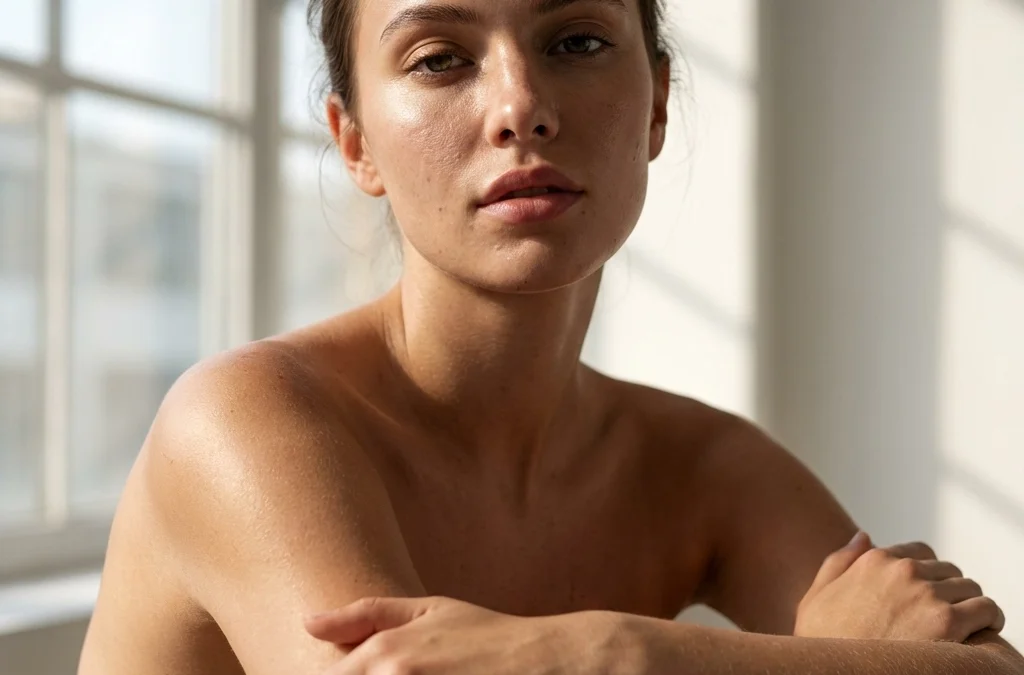
There is something deeply visceral about the human form. When you strip away the clothing, the trends, and the artifice, you’re left with the most complex and beautiful landscape known to man: the skin. In the world of erotic photography, the goal isn't just to capture a body; it’s to capture the feeling of that body. To do that, you have to master the light.
Lighting for nude photography is a delicate dance between revealing and concealing. It’s about how the highlights catch the fine, downy hair on a woman’s thigh or how the shadows pool in the small of her back. If you get it right, the viewer can almost feel the heat radiating off the skin. If you get it wrong, the image feels flat, clinical, or: even worse: plastic. We want raw. We want texture. We want pores that look soft, real, and inviting.
The Raw Allure of the Human Canvas
When we talk about "fine art nude photography," we aren't talking about airbrushed perfection. We are talking about the reality of the female form. Every woman brings a unique texture to the lens: from the porcelain smoothness of a pale shoulder to the rich, deep glow of melanin-rich skin. To honor that, your lighting must be intentional.
Before you even pick up your camera, you need a vision. Are you going for something moody and cinematic, or something bright and ethereal? If you find yourself stuck for inspiration or want to experiment with different lighting concepts before your model arrives, checking out tools like CandyAI can be a great way to visualize how light interacts with various body types and poses in a digital space. It helps you see the "why" behind the shadow before you ever turn on a strobe.
Hard Light: The Key to Micro-Shadows and Real Texture
If your goal is to emphasize texture: the tiny bumps of gooseflesh, the ridges of a fingerprint, or the subtle grain of the skin: hard light is your best friend. Hard light comes from a small, concentrated source. Think of a bare flash, a direct sunbeam through a window, or a focused spotlight.
The reason hard light works for texture is "micro-shadows." When light hits the skin at an angle, every tiny pore and every fine hair casts a microscopic shadow. This creates depth. Without these shadows, the skin looks like a flat, digital recreation.
However, hard light is unforgiving. It can highlight things you might want to minimize, like dry skin or blemishes. The trick is to find the balance. Using a single hard light source from the side (90 degrees to the model) will rake across her body, carving out her muscular structure and making every inch of her skin feel tangible and real. This is a staple technique we dive into frequently in our fine art nude tutorial series, where we show you how to tame these harsh sources for maximum erotic impact.
Soft Light: Pores That Breathe
On the opposite end of the spectrum is soft light. This is what most people think of when they hear "boudoir photography." Soft light is created by large sources: huge octaboxes, diffused windows, or bouncing a flash off a white ceiling.
Soft light wraps around the curves of a woman's body. It fills in the pores, making the skin look creamy and touchable. But there’s a trap here: if the light is too soft, you lose all detail. To keep that "raw" feeling while using soft light, you need to maintain some directionality. Don’t just blast her with light from the front. Place your large softbox at a 45-degree angle. This allows the light to fall off gently across her curves, maintaining the "soft pore" look while still giving her body three-dimensional shape.

The Magic of Side Lighting (Short Lighting)
In art nude photography, side lighting: often called short lighting: is the holy grail. This is when the side of the model's face or body that is turned away from the camera is the one being lit. It’s inherently sexy because it leaves so much to the imagination.
When you light a woman from the side, you are essentially sculpting her with light. You can highlight the curve of a breast, the line of a hip, and the arch of a foot while keeping the rest of the frame in deep, velvety shadow. This contrast is what makes erotic nude photography so powerful. It directs the viewer's eye exactly where you want it to go.
For those looking to truly master these high-end techniques and see how the pros handle complex lighting setups with world-class models, you really should secure your membership today. Our club is built on the idea that the female form is the ultimate art, and we provide the technical roadmap to help you capture it.
Natural Light: The Intimate Choice
Never underestimate the power of a single window. Natural light has an organic quality that studio lights struggle to replicate. It feels "lived-in" and intimate.
The best time for capturing skin texture with natural light is during the "golden hour" or when the sun is slightly filtered through thin clouds. If the light is too direct, use a sheer white curtain to diffuse it. Position your model so the light "kisses" the edge of her body. This rim lighting effect can make a silhouette pop against a dark background, highlighting the fine texture of her skin along the edges while maintaining a soft, dreamy core.

Skin Tones and Reflectance
Lighting isn't "one size fits all." Different skin tones react to light in vastly different ways.
- Lighter skin tones tend to reflect more light and can easily look washed out if you overexpose. You want to keep your highlights under control to preserve the detail in the pores.
- Deep, darker skin tones have a beautiful way of catching highlights and "specular" reflections. Using a bit of body oil can enhance this effect, creating high-contrast highlights that make the skin look incredibly vibrant and textured.
When photographing diverse models, you have to adjust your power settings. A setup that works for a pale, blonde model will need to be tweaked for a woman with a rich, ebony complexion to ensure you aren't losing her beautiful details in the shadows or blowing out the highlights on her skin's natural sheen.
In-Camera vs. Post-Processing
A common mistake in the digital age is thinking you can "fix the texture" in Photoshop. While you can certainly enhance it, the best raw skin texture is captured in-camera.
To get those soft pores and raw textures:
- Keep your ISO low. Noise (digital grain) will compete with and muddy the natural texture of the skin.
- Focus on the eyes, but mind the skin. Use a sharp lens (a 50mm or 85mm prime is usually best) and a medium aperture (around f/4 to f/5.6) to ensure the texture is crisp throughout the focal plane.
- Don’t over-edit. The trend in erotic photography is moving away from the "plastic" look. Leave the "imperfections." The tiny mole, the slight stretch mark, the way the skin folds: that is where the humanity and the eroticism live.

Building the Connection
Technical knowledge is only half the battle. The light can be perfect, but if your model isn't comfortable, it will show in her skin. Tension makes the muscles look tight and the skin look strained.
Communication is your most important "light modifier." Talk to her. Explain what you’re doing with the shadows. When she understands that you are creating art that celebrates her raw form, she will relax, and that’s when the magic happens. The pores soften, the posture becomes fluid, and the photography becomes fine art.
If you’re ready to take your skills to the next level and join a community of photographers who are dedicated to the high-end, artistic side of the industry, become a part of the club. You’ll get access to exclusive setups, behind-the-scenes content, and the inspiration you need to turn your vision into reality.
Capturing the raw texture of the female body is a lifelong pursuit. It requires patience, a keen eye, and a deep respect for your subject. But once you see that first shot where the light hits the skin just right: revealing every pore and every curve in perfect, erotic detail: you’ll realize it’s the only way to shoot. Keep practicing, keep experimenting, and most importantly, keep it raw.