
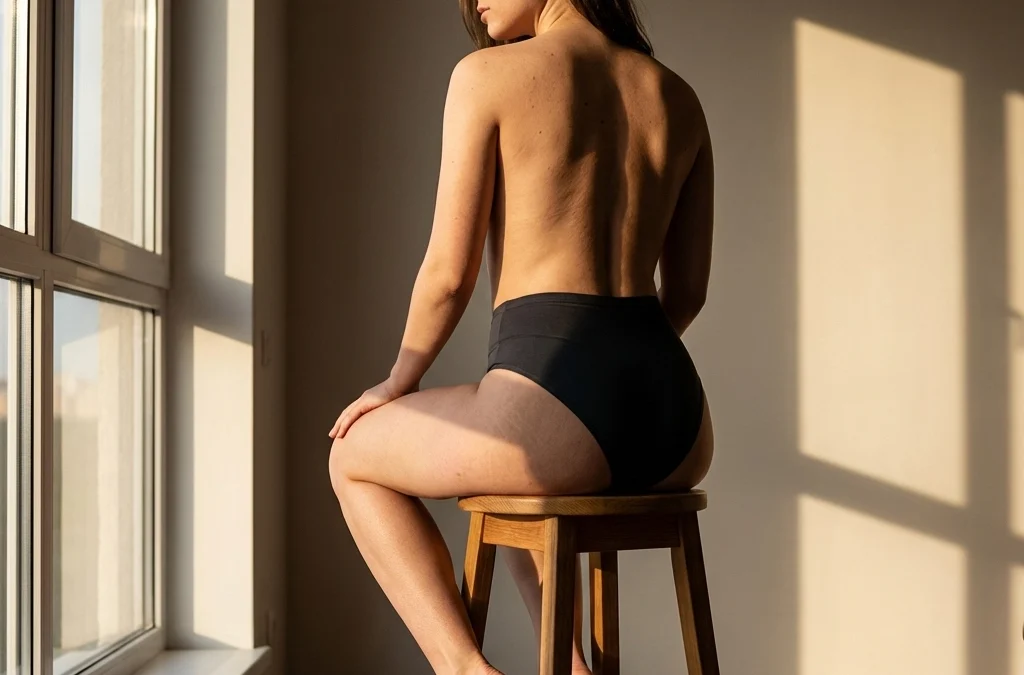
When you strip a woman down, you’re left with the most beautiful landscape on earth. But without the right light, that landscape can fall flat. In nude photography, light is your secondary subject. It’s what defines the arch of a spine, the swell of a breast, and the velvet texture of skin. If you want to move beyond simple snapshots and create high-end erotic photography, you have to stop thinking about lighting as a way to "see" the model and start thinking about it as a way to sculpt her.
Lighting for nude photography is a delicate dance between highlight and shadow. It’s about knowing what to reveal and, more importantly, what to leave to the imagination. Whether you’re shooting in a high-end studio or a sun-drenched bedroom, mastering these techniques will separate the amateurs from the artists.
The Foundation: Gear That Matters
You don't need a million-dollar studio to create stunning art nude photography. In fact, some of the most iconic images were shot with a single light source. However, having the right tools makes the process much more intuitive.
- Softboxes and Octaboxes: These are your best friends for erotic nude photography. They diffuse the light, making it wrap around the body’s curves rather than creating harsh, unflattering lines. A large octabox creates a wrap-around effect that mimics soft window light, perfect for that creamy skin look.
- Strip Boxes: These are narrow softboxes designed to create long, thin highlights. They are essential for edge lighting (rim lighting), which is a staple in fine art nude photography.
- Reflectors: Never underestimate a simple white or silver reflector. They’re perfect for bouncing a little bit of light back into the shadows: like the curve of a hip or the underside of a thigh: without adding another strobe.
- A Solid Prime Lens: While not "lighting" gear, a 50mm or 85mm prime lens with a wide aperture (f/1.8 or f/1.4) allows you to play with light in ways a zoom lens can't. It helps you isolate the light on specific parts of the body while letting the rest melt into a soft, blurred background.
If you’re feeling uninspired or need to visualize a specific look before your model arrives, experimenting with digital muses at CandyAI can be a great way to brainstorm new posing and lighting concepts. It’s a low-pressure way to see how light hits different forms before you step into the studio.

Low-Key Lighting: The Art of the Shadow
Low-key lighting is the bread and butter of fine art nude photography. This style is all about high contrast, deep shadows, and mystery. It’s perfect for emphasizing the muscularity and form of the female body.
To achieve a classic low-key look, you want to keep your background dark: ideally black velvet, which absorbs light like a sponge. Position your light source to the side or slightly behind your model. This is called "short lighting" or "rim lighting." It creates a bright highlight along the edge of her silhouette while leaving the front of her body in near-total darkness.
When you’re working with low-key setups, every inch of light counts. You’re not just taking a photo of a woman; you’re capturing the way light interacts with her skin. The goal is to create "chiaroscuro," a technique used by Renaissance painters to create a sense of volume and drama. If you really want to get into the weeds of how to execute this perfectly, our fine art nude tutorials dive deep into the specific strobe placements that make these shots pop.
High-Key Lighting: Ethereal and Bright
On the opposite end of the spectrum is high-key lighting. This is where the image is predominantly bright, airy, and soft. It’s often used in boudoir photography poses to create a romantic, dreamlike atmosphere.
For high-key nude photography, you’ll want a white background and plenty of diffusion. You can achieve this by blowing out the background with two lights, while using a large, soft light source in front of the model to fill in all the shadows. The result is a clean, graphic look that emphasizes the purity of the form.
The trick with high-key lighting is to ensure you don't lose the definition of the body entirely. You still need some subtle shading to show that she’s a three-dimensional being. Gentle shadows under the jawline or along the ribs keep the image from looking like a flat white cutout.

Using Natural Light for Raw Intimacy
There is something inherently sexy about natural light. It feels more intimate, like a private moment captured in the morning sun. If you’re learning how to photograph nude models in a home setting, the window is your most powerful tool.
North-facing windows are the gold standard because they provide consistent, soft light throughout the day. If you have direct sunlight, hanging a sheer white curtain can turn that harsh light into a giant softbox.
When shooting with natural light, pay attention to how the light "falls off." As the model moves further from the window, the light drops in intensity quickly. This allows you to create beautiful gradients across her body. Position her so the light hits her at a 45-degree angle; this is known as Rembrandt lighting, and it’s incredibly flattering for the face and torso alike.
Posing for the Light
In erotic photography, the pose and the light are inseparable. You can have the most expensive lighting rig in the world, but if the model is posed poorly, the light won't have anything to catch.
- The S-Curve: Encourage the model to shift her weight to one leg and arch her back slightly. This creates a natural "S" shape that catches highlights on the hips and shoulders.
- Arching and Stretching: When a model reaches overhead or arches her back, it elongates the torso and creates interesting peaks and valleys for the light to hit.
- The Power of Texture: Light reveals texture. If you’re shooting a "wet look" or using body oil, the light will create specular highlights that make the skin look succulent and tactile.
Managing these elements takes practice and a keen eye. If you're serious about mastering the craft and seeing how the pros do it, you really should join the membership to see behind-the-scenes content and full galleries that showcase these lighting setups in action.

Technical Settings for Success
Don't let the technical side kill the mood. Before the model even starts undressing, have your "base" settings ready.
- ISO: Keep it as low as possible (ISO 100 or 200) to ensure the skin tones are smooth and free of digital noise.
- Aperture: For studio work with strobes, f/8 to f/11 is usually the sweet spot for sharpness. For natural light or atmospheric shots, opening up to f/2.8 can create a beautiful, soft focus that feels more intimate.
- Shutter Speed: If you're using strobes, stay at or below your camera's sync speed (usually 1/200 or 1/250). If you're shooting natural light, make sure it’s fast enough to avoid motion blur, especially if the model is moving.
Experimenting with Color and Gels
Who says nude photography has to be natural? Adding color gels to your lights can completely change the vibe of a shoot. A subtle blue rim light paired with a warm amber key light can create a "cinematic" look that feels high-end and edgy.
Gels allow you to play with the temperature of the eroticism. Cool tones can feel distant and artistic, while warm tones feel inviting and "fleshy." Don't be afraid to experiment. The digital age allows for instant feedback: take a shot, check the screen, and adjust.

Post-Processing: Enhancing the Glow
Your work isn't done when the shutter clicks. In fine art nude photography, post-processing is where you polish the light. This isn't about "fixing" the model: it’s about enhancing the atmosphere.
Using tools like Dodge and Burn allows you to manually brighten highlights and deepen shadows, further sculpting the body. You can emphasize the sheen of the skin or the depth of a shadow in a way that directs the viewer's eye exactly where you want it to go. This is the final step in turning a good photograph into a masterpiece.
Conclusion
Mastering lighting for nude photography is a lifelong journey. Every woman's body is different, and every environment offers new challenges. The key is to remain curious. Watch how light moves across a room, how it catches on fabric, and how it transforms a silhouette.
When you learn to see light as a physical material: something you can mold and shape: your photography will reach a level of sophistication that commands attention. Whether you're chasing the "perfect" rim light or playing with the soft glow of a sunset, remember that you are creating art.
For more inspiration and a community that shares your passion for the high-end erotic aesthetic, become a member today and start your journey toward photographic mastery. The club is where the real education happens, surrounded by creators who understand that the nude form is the ultimate expression of art.