
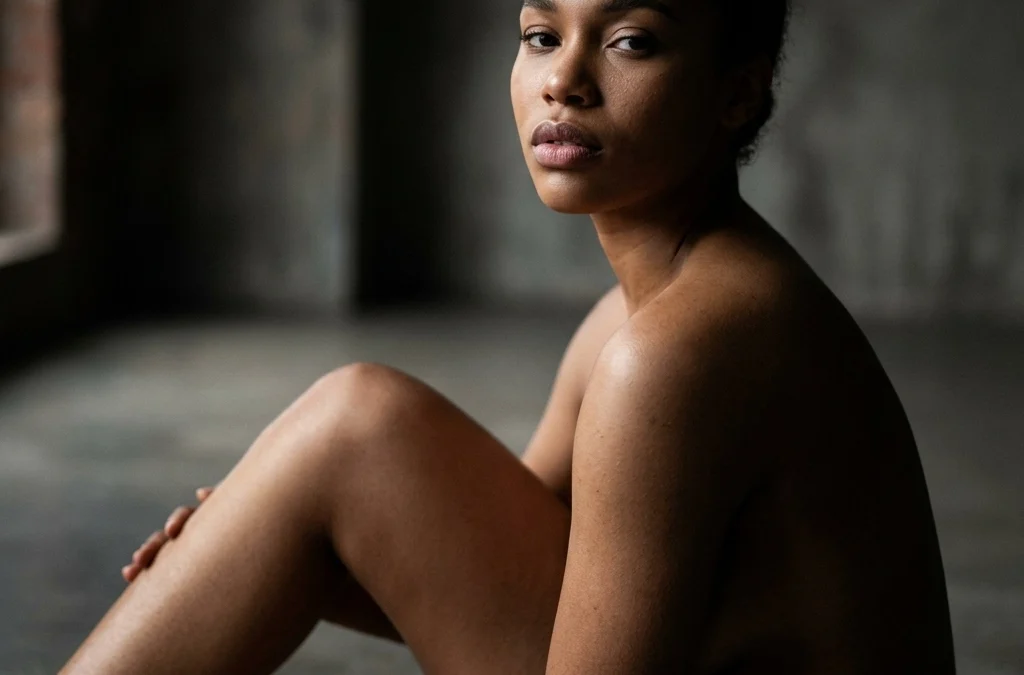
Lighting is the difference between a snapshot and a masterpiece. In the world of nude photography, light isn't just a tool to see the subject; it is the brush you use to paint the curves, textures, and soul of a woman. When you strip away the clothing, you are left with the raw geometry of the human form. To capture that essence with the respect and eroticism it deserves, you have to master the dance between highlight and shadow.
Whether you are shooting high-end erotic photography or moody art nude photography, the way you manipulate light dictates the emotional response of the viewer. It can make a scene feel intimate and whispered, or bold and statuesque. This guide is your roadmap to mastering those shadows and making every shot count.
The Power of the Low-Key Setup
There is something inherently provocative about what we cannot see. Low-key lighting is the bread and butter of fine art nude photography because it relies on deep, heavy shadows to hide parts of the body, leaving the rest to the viewer's imagination. This style emphasizes the silhouette and the "edge" of the form.
To achieve this, you want to position your light source: usually a single softbox or a beauty dish: to the side or slightly behind your model. This is often called rim lighting or edge lighting. By doing this, you trace the curve of a hip or the line of a spine with a thin, glowing highlight, while the rest of the body melts into a luscious, dark void. It’s a technique that feels incredibly sophisticated and raw at the same time.
When I’m looking for fresh inspiration on how light should hit different body types, I often find myself exploring digital aesthetics to see how perfect form can be rendered. Using a tool like CandyAI can actually help you visualize complex poses and lighting angles before you even step into the studio, giving you a digital playground to experiment with how shadows fall across a virtual muse.
High-Key: The Art of the Silhouette
On the opposite end of the spectrum is high-key lighting. This isn't about mystery; it's about energy, purity, and sometimes, a very direct kind of eroticism. In high-key nude photography, the background is usually blown out: pure white: which creates a stark, graphic look.
The trick here is to light your background more brightly than your subject. Position two large softboxes facing your white backdrop. This turns the background into a giant light source. Your model stands in front of it, and because the light is coming from behind her, she becomes a silhouette. If you want to retain detail on her skin while keeping that bright, airy feel, you can place a large reflector or a fill light in front of her to bounce some of that light back onto her chest, stomach, and face. This creates a "dreamy" look that is a staple in high-end boudoir and erotic nude photography.
Mastering Natural Window Light
You don't always need five thousand dollars’ worth of studio strobes to create world-class art. Some of the most beautiful erotic photography ever captured was shot using nothing but a window and a sheer curtain. Natural light has a quality that artificial light struggles to replicate: it’s soft, it’s directional, and it feels real.
The key to "how to photograph nude models" with natural light is timing. Early morning or late afternoon "golden hour" light provides a warmth that makes skin tones look succulent and inviting. If the sun is too harsh, a simple white bedsheet over the window acts as a massive softbox, diffusing the light across the model’s skin and eliminating harsh, unflattering shadows.

When working with natural light, pay close attention to the "fall-off." The closer your model is to the window, the more dramatic the contrast between the light side and the dark side of her body will be. This is where you can get those gorgeous, moody shots that define the best fine art nude photography. If you find yourself struggling with the technical side of balancing these exposures, we have a wealth of knowledge waiting for you. You can dive deeper into the specifics by checking out our fine art nude tutorials, where we break down these setups frame by frame.
The Technical Foundations: Equipment and Settings
While the "feeling" of the light is paramount, you still need to know your gear. For most indoor nude photography tips, a 50mm or 85mm prime lens is your best friend. These lenses offer a natural perspective that doesn't distort the body, and their wide apertures allow you to blur the background, keeping all the focus on the model’s skin.
In terms of lighting gear, you should aim for:
- A Wireless Trigger: Cables are a tripping hazard and kill the mood. Go wireless.
- Softboxes and Grids: A softbox creates soft, flattering light. Adding a grid to that softbox allows you to direct the light precisely, preventing it from "spilling" onto parts of the background you want to keep dark.
- V-Flats or Reflectors: These are essential for "filling" shadows. If one side of the model is too dark, a white reflector can bounce just enough light back to show the texture of her skin without losing the mood.

Your camera settings should generally stay at a low ISO (100 or 200) to ensure the images are crisp and free of digital noise. For studio work, a shutter speed of 1/160s to 1/200s is standard to sync with your flashes. Your aperture will vary depending on how much of the body you want in sharp focus; f/5.6 to f/8 is a safe bet for full-body shots, while f/2.8 is perfect for intimate, close-up details.
Posing for the Light
Lighting and posing nude models go hand-in-hand. You can have the most expensive lighting rig in the world, but if the model isn't posed to catch that light, the shot will fall flat. As a photographer, you need to guide her. Encourage her to arch her back to create highlights along the spine, or to tilt her hip toward the light source to emphasize her curves.
Remember, the eye is naturally drawn to the brightest part of the image. Use this to your advantage. If you want to emphasize the model's breasts or the curve of her derriere, ensure the light hits those areas first. Shadows can be used to slim the waist or hide areas the model might be less confident about. It’s a collaborative process: a dance of confidence and vision.

Texture, Skin, and Diversity
One of the most beautiful aspects of art nude photography is the variety of skin tones and textures. Light interacts differently with different skin. Darker skin tones reflect light in a way that can look incredibly metallic and statuesque when hit with a hard light source or a bit of body oil. Lighter skin tones often benefit from softer, more diffused light to prevent "hot spots" or overexposure.
Experiment with different skin finishes. A little bit of shimmer or oil can catch the light and create "specular highlights" that define muscle tone and skin texture. This is especially effective in erotic nude photography, where the goal is to celebrate the physical, tactile nature of the female body.
Elevate Your Craft
Nude photography is a journey of constant learning. Every woman you photograph is a new canvas, and every room you shoot in offers new challenges and opportunities. The difference between a hobbyist and a professional is the willingness to master the technical details so that, during the shoot, you can focus entirely on the art and the connection with your model.
If you’re serious about moving past the basics and want to learn the secrets of the pros, there is no better place to be than with us. We provide the tools, the community, and the inspiration to take your work to the next level. Stop guessing and join the club to get exclusive access to our full library of tutorials and galleries that will transform the way you see light and the female form.
Mastering the light is mastering the art. Now, get out there, pick up your camera, and start creating something unforgettable.