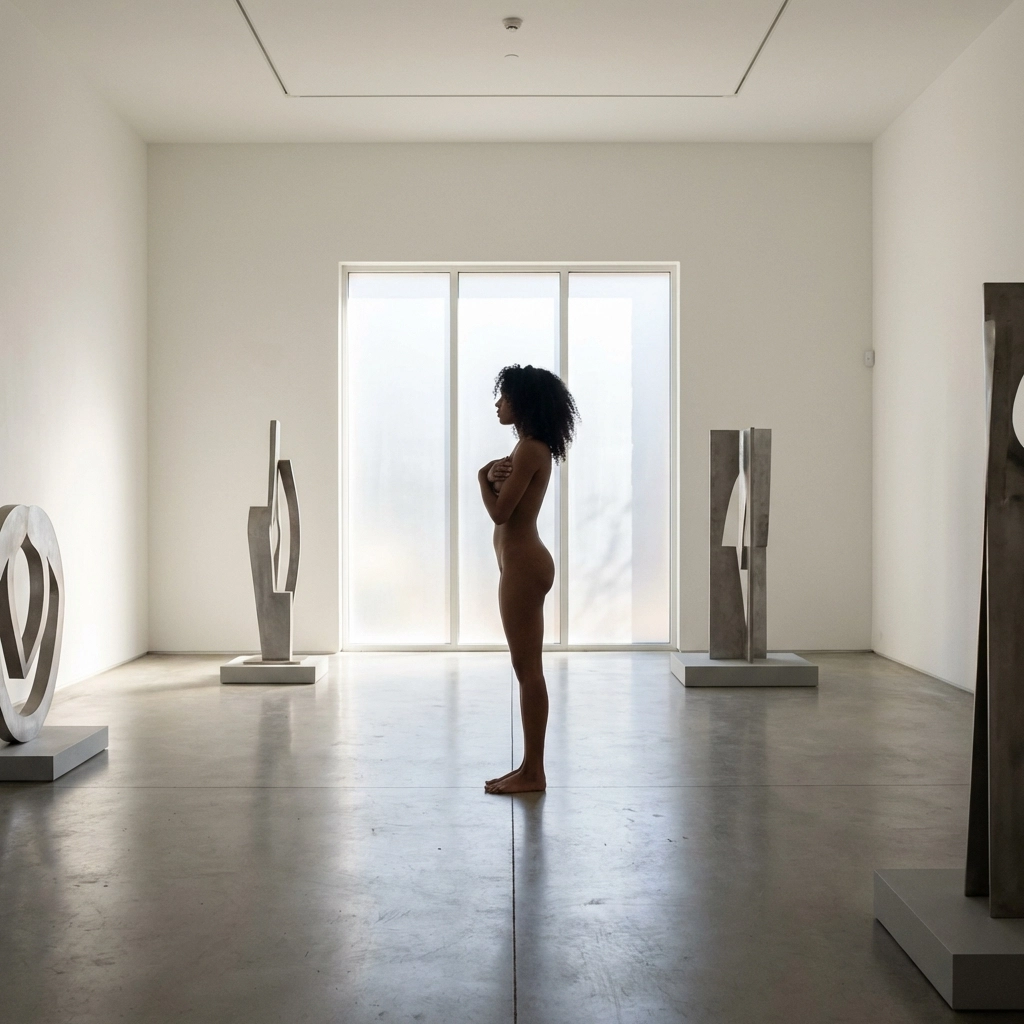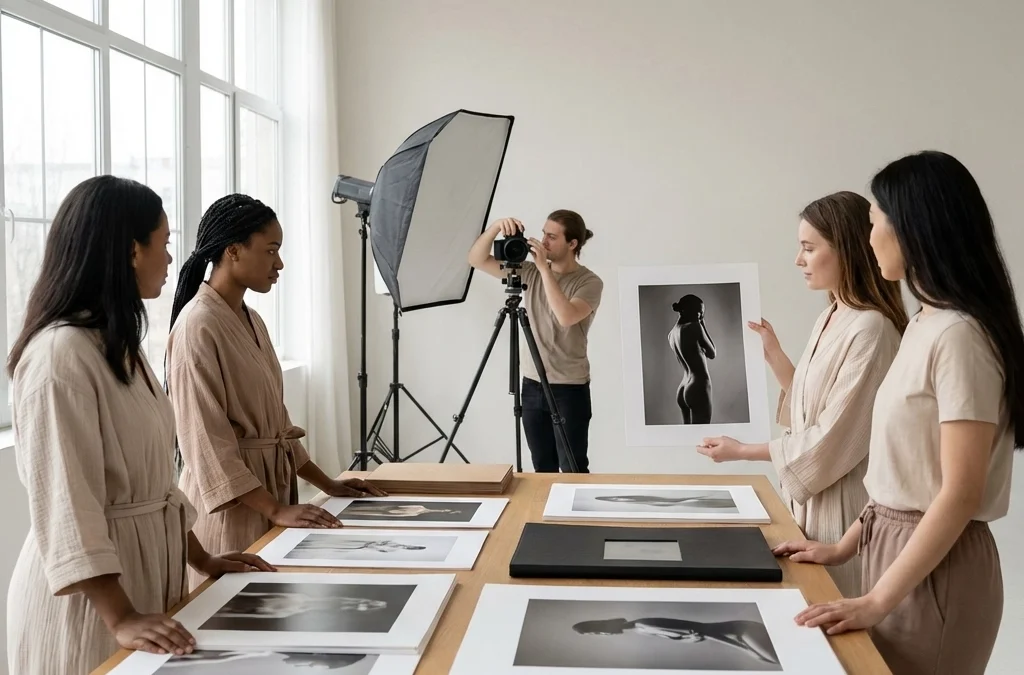
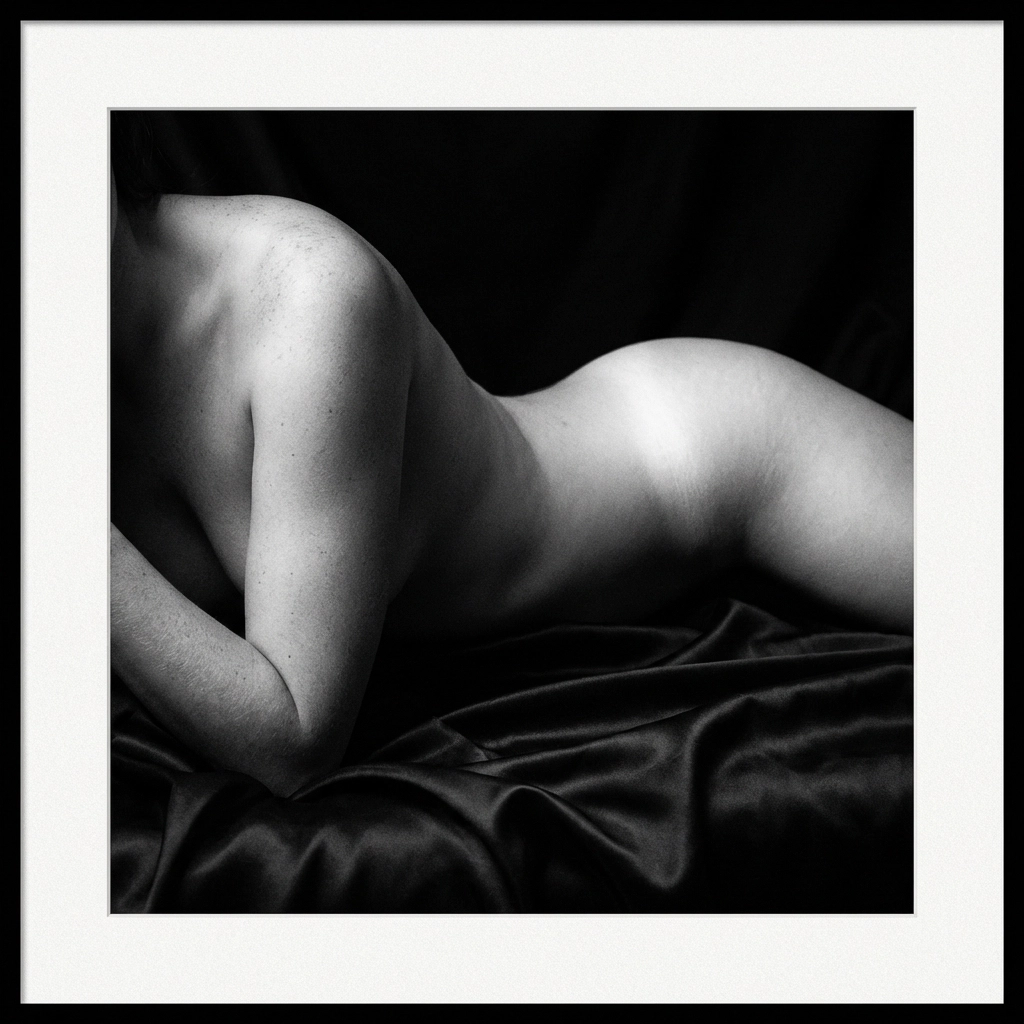
If you’ve ever looked at a classic marble statue and felt the weight of the emotion behind it, you understand the core of fine art nude photography. It’s not just about the absence of clothing; it’s about the presence of art. It’s about treating the human body, the most complex and beautiful canvas we have, as a landscape of light, shadow, and texture.
As the CEO of Fine Art Nude Club, I’ve seen thousands of shots. Some are technically perfect but soul-less, while others are raw but lack the polish to be called "fine art." This guide is here to help you bridge that gap. Whether you’re a hobbyist or looking to go pro, mastering this niche requires a blend of technical skill, psychological intuition, and a deep appreciation for the female form in all its diverse beauty.
Defining Your Artistic Vision
Before you even pick up your camera, you need to decide what you want to say. Fine art nude photography is an exploration. You aren't just documenting a person; you are creating an aesthetic experience.
Think of the body as a series of abstract shapes. When you zoom in on the curve of a hip or the line of a spine, you are moving away from the literal and into the metaphorical. One of the best ways to practice this is by looking at different body types and ethnicities. The way light catches on deep, dark skin compared to pale, porcelain tones creates entirely different moods. Embrace that diversity.
Many photographers find that starting with a concept helps. Are you going for something ethereal and soft? Or something gritty and high-contrast? Sometimes, when I’m looking for a spark of inspiration or trying to visualize a specific lighting mood, I use CandyAI to generate different character concepts and lighting scenarios. It’s a great way to see how light might interact with certain features before you even get into the studio.
Technical Essentials: The Exposure Triangle
You can have the best model in the world, but if your technicals are off, the art fails. You need to be in total control of your camera, which means shooting in Manual Mode and always in RAW format.
Aperture (f-stop)
For fine art, I usually recommend wide apertures like f/1.4 to f/2.8. This creates a shallow depth of field that makes the subject pop while softening the skin and blurring the background into a creamy bokeh. However, if you are doing "body landscape" work where the entire form needs to be sharp, don't be afraid to stop down to f/8 or f/11.
ISO
Keep it low. ISO 100 is your best friend for maintaining sharpness and reducing digital noise. Fine art is often about the subtle gradients in the shadows; noise can ruin those transitions.
Shutter Speed
If you’re shooting handheld, keep it at least 1/100s to avoid motion blur. If you want to get creative with movement, like a model spinning or fabric flying, you might drop it lower, but a tripod becomes mandatory then.
The Soul of the Shot: Lighting and Shadow
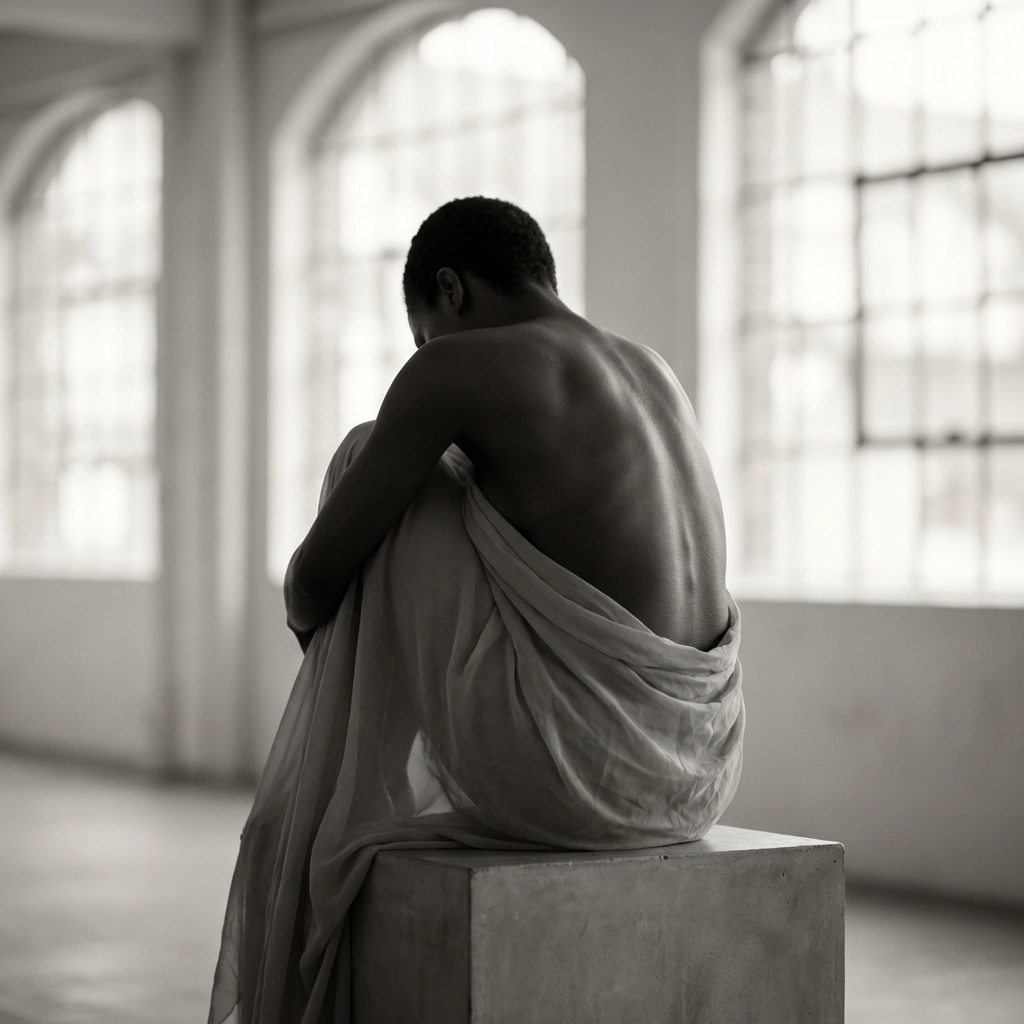
Lighting is what separates a snapshot from a masterpiece. In fine art nude photography, we often use light to "sculpt" the body.
Soft Light vs. Hard Light
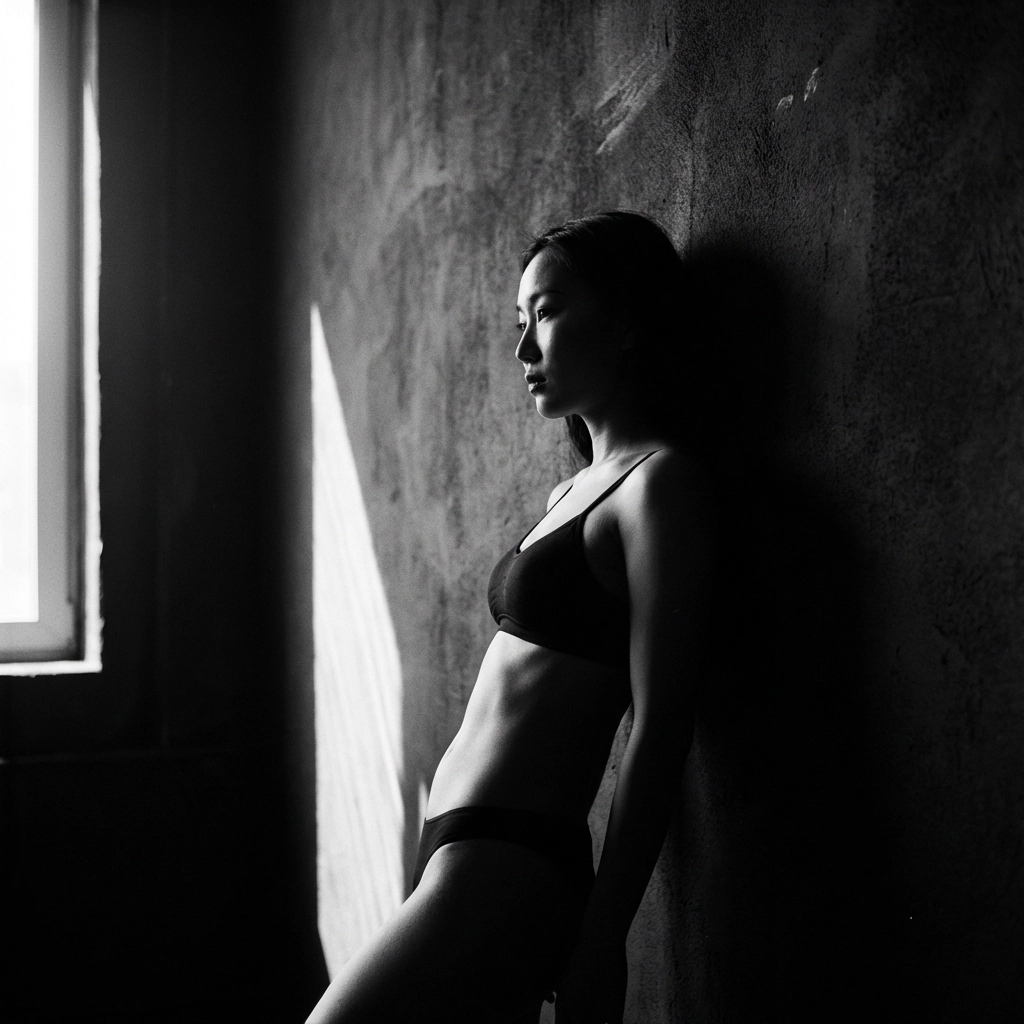
Soft, diffused light (like from a large softbox or a north-facing window) wraps around the curves of a woman’s body, creating smooth transitions and a flattering, romantic feel. On the flip side, hard light creates dramatic, sharp-edged shadows. This is perfect for highlighting muscle definition or the architectural lines of the ribs and collarbones.
The Power of Shadows
Never fear the dark. In this genre, what you don’t see is often just as important as what you do see. Strategic shadows can add mystery, depth, and a sense of drama. If you’re struggling with how to set up your lights, I’ve broken down several specific "Chiaroscuro" and "Rembrandt" setups in our fine art nude tutorials section. Mastering these classic techniques is a rite of passage for any serious art photographer.
Composition and Posing: Creating the Flow
Posing a nude model is a delicate dance. You want her to look natural, not staged. The best advice I can give is to look for "triangles." When a model bends her arm to touch her hair or tucks a leg under her, she creates geometric shapes that lead the viewer’s eye through the frame.
Flow Posing
Instead of giving rigid instructions, try "flow posing." Have the model move slowly through a series of motions, stretching, leaning, turning, and capture the moments in between. This results in more organic, less "posey" images.
Perspective Shifts
Don't just stand at eye level. Get on a ladder. Crawl on the floor. Shoot through objects like sheer fabric or glass. Changing your physical perspective changes the story of the image. A shot from above can feel vulnerable and soft, while a low-angle shot can feel powerful and statuesque.
Working with Models: Safety and Communication
The foundation of every great fine art nude photo is trust. If your model doesn't feel safe and comfortable, it will show in her eyes and her posture.
- Clear Communication: Always discuss the "level" of nudity before the shoot. Be clear about your vision.
- Comfort is King: Keep the studio warm (nude models get cold fast!), have a robe ready between sets, and play music that fits the mood.
- Hands-Off Policy: Never touch the model to adjust a pose. Use your words or demonstrate the pose yourself.
- The "Vibe" Check: Check in frequently. "Are you doing okay? Do you need a break?" goes a long way.
When the model feels like a collaborator rather than just a subject, the magic happens. She’ll start contributing her own ideas, and those are often the best shots of the day.
Post-Processing: Refining the Art
The click of the shutter is only 50% of the process. Post-processing is where you develop your "signature."
In Lightroom or Photoshop, focus on "Dodge and Burn." This is an old darkroom technique where you manually lighten (dodge) the highlights and darken (burn) the shadows. It allows you to emphasize the contours of the body even further, giving the image a three-dimensional, painterly quality.
If you’re working in black and white: which I highly recommend for fine art: pay close attention to the "color mix" panel. Even though the image is B&W, you can adjust the luminance of the underlying skin tones (usually the reds and oranges) to make the skin glow or look more grounded.
Conclusion: Join the Community
Fine art nude photography is a lifelong journey of learning. You’ll never truly "finish" mastering the human form because every person you photograph brings a new set of lines, a new story, and a new way for light to dance across their skin.
If you’re serious about pushing your boundaries, seeing behind-the-scenes content from professional sets, and learning from the best in the industry, you shouldn't do it alone. There is so much more to explore beyond the basics of lighting and posing. If you’re ready to take your portfolio to the next level and see how the pros do it, you should definitely join us and become a member of the club.
We share exclusive sets, deep-dive technical guides, and a community of like-minded artists who are all dedicated to celebrating the beauty of the female form.
Keep shooting, keep experimenting, and most importantly, keep seeing the art in everything.