
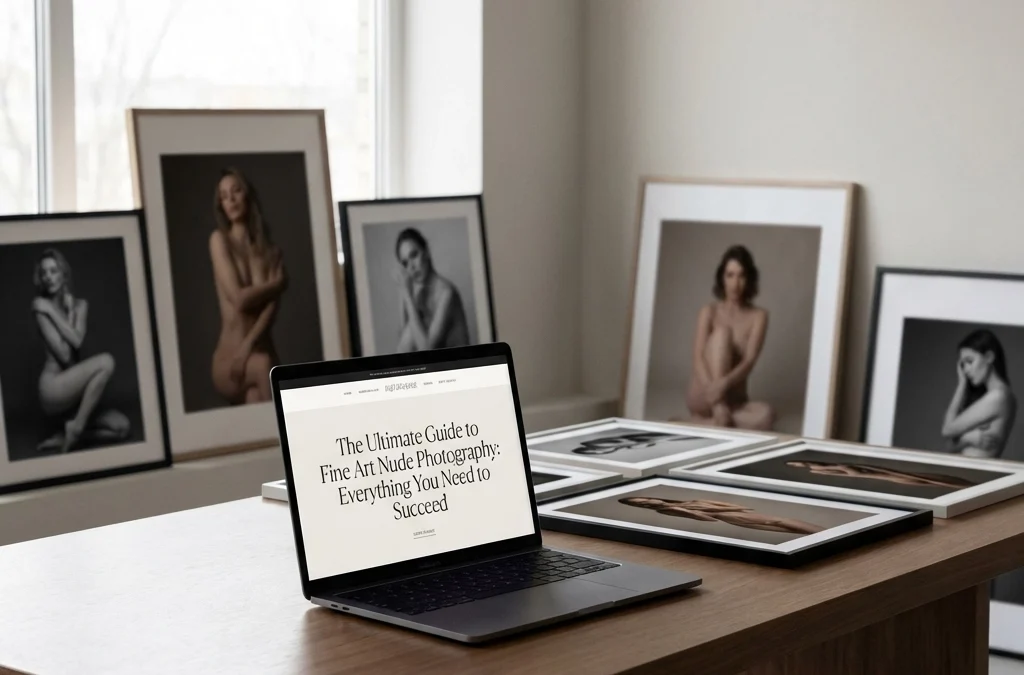
Fine art nude photography is one of the most challenging yet rewarding genres in the world of image-making. It’s not just about taking a picture of a naked body; it’s about capturing the interplay of light and shadow, the grace of human form, and the raw emotion that exists when all the layers are stripped away. Whether you are a seasoned pro looking to refine your style or a beginner wondering how to photograph nude models for the first time, this guide is designed to give you the technical and creative foundation you need to excel.
At Fine Art Nude Club, we believe that every curve and every shadow tells a story. Success in this field requires a blend of technical mastery, psychological intuition, and a deep respect for the art form. Let’s dive into the elements that turn a simple shot into a timeless piece of erotic photography.
The Technical Foundation: Camera Settings
Before you get creative with the lighting or the poses, you need to understand your tools. Shooting nude photography requires a delicate balance of settings to ensure the skin looks natural and the subject pops from the background.
I always recommend shooting in Manual Mode and recording in RAW format. RAW files preserve the most data, which is essential when you’re doing fine-tuned color grading later on. For aperture, a wide setting: anywhere between f/1.4 and f/2.8: is your best friend. This creates a shallow depth of field that keeps the focus strictly on the model while softly blurring the background, making the skin appear smoother and more ethereal.
Keep your ISO as low as possible (ideally ISO 100) to avoid digital noise. Grain can be an artistic choice, but it’s always better to add it in post-production than to be stuck with it in a dark shadow. Your shutter speed should stay above 1/100s to avoid motion blur, though if you’re using a tripod and your model is holding a still, contemplative pose, you can push it a bit further. If you're looking for a deeper breakdown of these settings in a real-world environment, watching a fine art nude tutorial can help you see how these numbers translate into actual art.
Lighting: Sculpting the Body with Shadows
In art nude photography, light is your paintbrush. You aren't just illuminating a subject; you are sculpting it. The goal is often to highlight the contours of the body, and nothing does that better than side lighting.
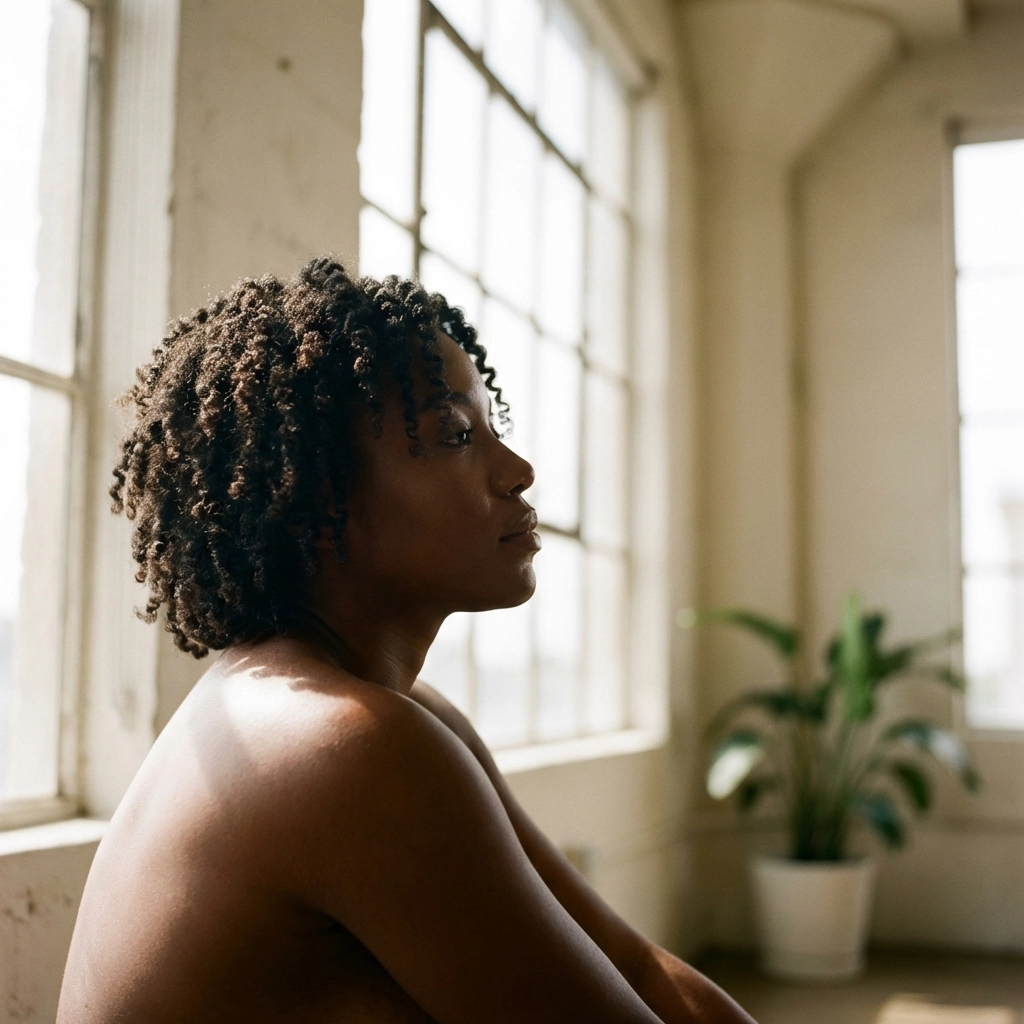
Natural Light: Large windows are the most accessible and often the most beautiful light sources. Soft, diffused light: like the kind you get on an overcast day or through a sheer curtain: wraps around the body, creating smooth transitions from highlights to shadows. It’s incredibly flattering for skin tones and creates a "painterly" feel.
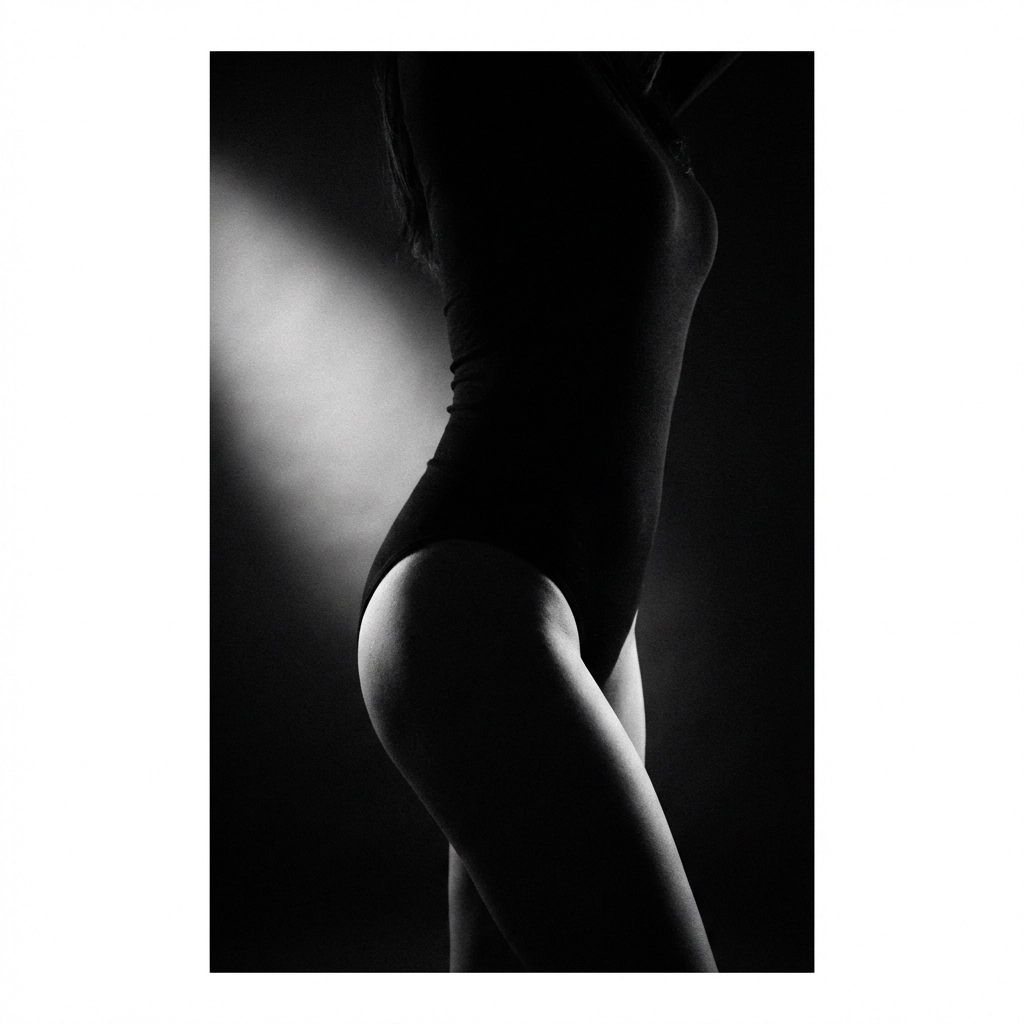
Studio Light: If you’re working with flashes or continuous lights, consider using softboxes or umbrellas to mimic that natural window light. However, don't be afraid of the dark. Chiaroscuro, or the use of strong contrasts between light and dark, is a staple of erotic nude photography. By letting parts of the model’s body fall completely into shadow, you invite the viewer to use their imagination, which often creates a more powerful image than showing everything at once.
Mastering Posing: The Art of the Silhouette
Posing nude models is a collaborative dance. The body has a language of its own, and as the photographer, you are the translator. The key is to avoid "flat" poses. When a model stands directly facing the camera with limbs straight, the image often loses its energy.
Instead, look for triangles and curves. Ask the model to shift her weight to one leg (the classic contrapposto), which naturally tilts the hips and creates an S-curve through the spine. Suggest that she play with her hair, rest a hand on the back of her neck, or cross her legs. These small adjustments create visual interest and lead the eye through the frame.
When I’m brainstorming new concepts or trying to visualize how a specific lighting setup might interact with certain body types, I sometimes use CandyAI to generate reference images. It’s a great way to explore aesthetic directions or test out "what if" scenarios for poses before the actual shoot begins.
Common boudoir photography poses, such as reclining on a bed or kneeling on a soft rug, are great starting points. They allow the model to feel grounded and comfortable. From there, you can move into more "editorial" or "abstract" territory, focusing on specific details like the arch of a back or the line of a shoulder.
Creating a Safe and Professional Environment
The most important "setting" on your camera isn't a dial; it's the atmosphere you create in the room. Erotic photography is intimate, and the model must feel 100% safe and respected to give her best performance.
- Communication: Talk through the concepts before the shoot. Explain your vision and ask about her boundaries.
- Temperature: If the model is nude, the room needs to be warm. A shivering model cannot hold a graceful pose.
- Physical Space: Never touch the model to adjust a pose. Use your words or demonstrate the pose yourself.
- Professionalism: Maintain a casual but professional tone. Your focus should be on the light, the composition, and the art.
When a model feels comfortable, she is more likely to experiment with her expressions and movements, leading to those candid, "in-between" moments that often end up being the best shots of the day.
Composition and Framing
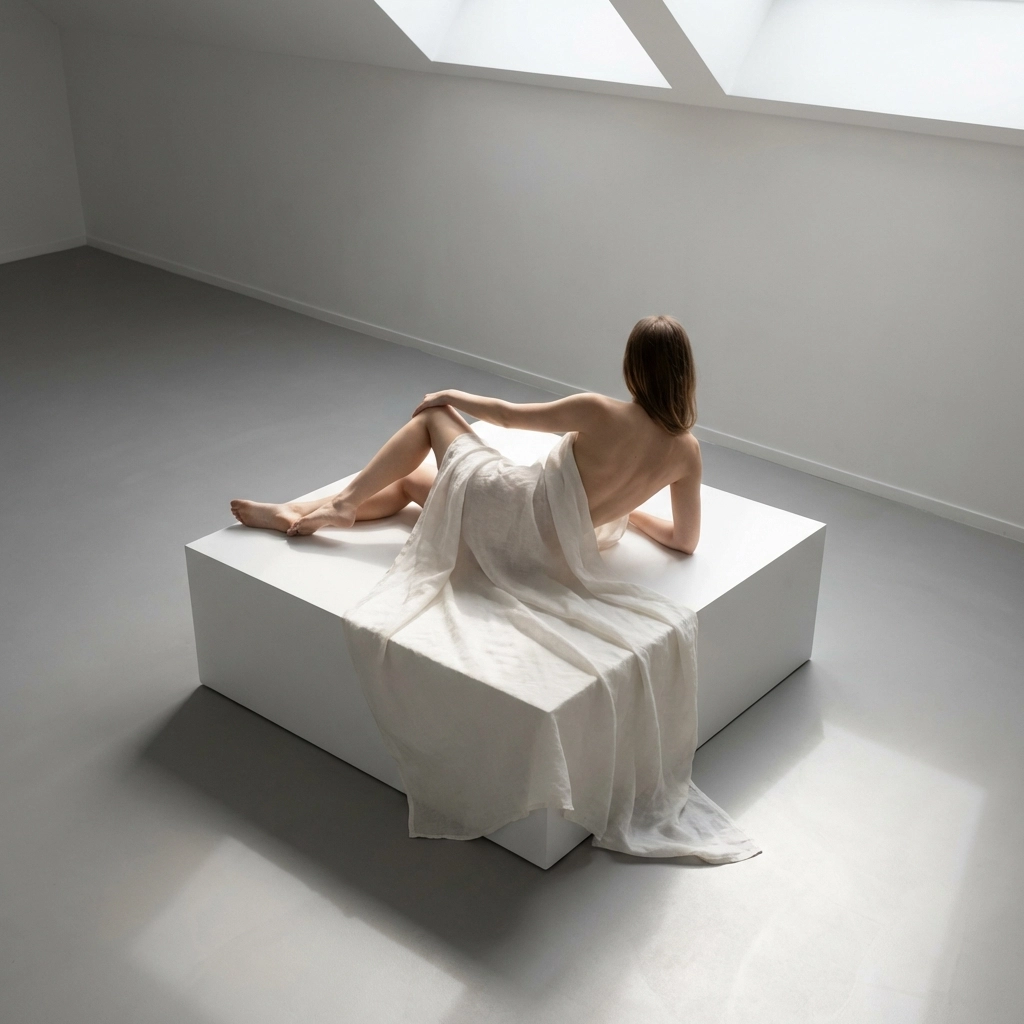
Don't just stand at eye level. To succeed in fine art nude photography, you need to move. Get high on a ladder to look down at the model, creating a sense of vulnerability or landscape. Get low on the floor to make the model appear statuesque and powerful.
Think of the body as a landscape. Close-up macro shots of skin texture, the curve of a hip, or the way hair falls over a breast can be just as provocative and artistic as a full-body silhouette. Vary your focal lengths as well; a 35mm lens is great for environmental shots that include the room, while an 85mm or 105mm lens is perfect for flattering portraits and detail work.
Post-Processing: The Final Polish
Once the shoot is over, the work moves to the digital darkroom. In fine art photography, less is often more. Your goal shouldn't be to "fix" the model, but to enhance the mood you captured on set.
Focus on adjusting your Black Points and White Points to ensure the contrast is exactly where you want it. Skin retouching should be handled with a light touch: you want the model to look like a human being, not a plastic mannequin. Retain the texture of the skin, the subtle freckles, and the natural tones.
Black and white conversion is a classic choice for this genre because it strips away the distraction of color and focuses the viewer’s attention entirely on form, texture, and light. It’s a great way to elevate a photo into the realm of "fine art."
Take the Next Step in Your Artistic Journey
Fine art nude photography is an endless journey of discovery. Every model is different, every light source offers a new challenge, and every shoot is an opportunity to find beauty in the human form. It takes practice, patience, and a willingness to see the world a little differently.
If you’re ready to dive deeper into these techniques and see how the world’s best photographers handle lighting, posing, and storytelling, you should join the club today. Our community is dedicated to the pursuit of high-end, artistic imagery, providing you with the inspiration and education you need to turn your passion into a profession.
Keep shooting, keep experimenting, and never stop looking for the light. Whether you are browsing for inspiration on CandyAI or setting up your own studio space, remember that the most important element of any photograph is the vision you bring to it.