
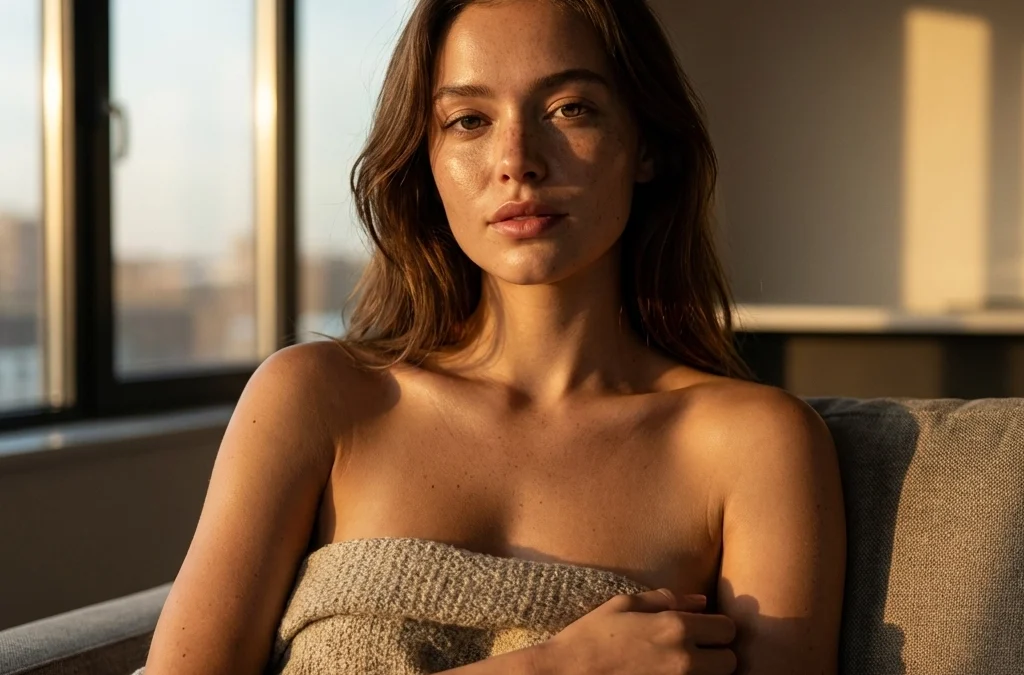
There’s a world of difference between a snapshot of someone naked and a high-end work of erotic photography. One is a record; the other is a feeling. To truly master the art of nude photography, you have to move past the physical and start capturing the tension, the mood, and the raw, unbridled energy that lives in the space between the lens and the subject.
If you’re here, you’re likely looking for more than just technical settings. You want to know how to create images that breathe, images that command attention and respect. Whether you’re shooting for your own portfolio or building a professional brand, this guide will walk you through the essential pillars of erotic nude photography.
1. Setting the Mood: The Foundation of Trust
Before you ever click the shutter, you have to understand that erotic photography is 90% psychology and 10% technical execution. You are asking a woman to be vulnerable in front of your lens. That requires a level of trust that can’t be faked.
Start by creating a space that feels high-end and safe. Keep the studio warm: models can't look sensual if they’re shivering. Have a clean, plush robe ready and plenty of water. But beyond the physical comforts, your professional demeanor is your greatest tool. Always explain what you’re doing and why. If you want her to arch her back to catch a rim light, tell her how it enhances the curve of her hip. When she feels like a collaborator in a piece of art rather than just a subject, the results will be exponentially more powerful.

2. Master Your Gear: Focus on the Form
While you don't need the most expensive kit on the planet, your choice of gear determines the "flavor" of your erotic nude photography.
- The Lens: For flattering, high-end results, the 85mm prime lens is king. It allows you to stay far enough back to give the model her personal space while providing a compression that makes the body look incredible. It also offers that creamy bokeh (background blur) that makes the skin pop.
- The Aperture: Don’t be afraid to shoot wide open. Dropping to f/1.4 or f/2.8 creates a shallow depth of field that focuses the viewer’s eye exactly where you want it: whether that’s the curve of a shoulder or the intensity in her eyes.
- The Camera: Use whatever you have, but ensure you’re shooting in RAW. You’ll need that extra data when you’re post-processing the skin tones and shadows.
If you’re ever feeling a bit stuck on a concept or want to visualize a specific look before your model arrives, I’ve found that using tools like CandyAI can be a great way to generate reference images or explore different aesthetics and lighting styles in a digital space. It’s a fun way to brainstorm the "vibe" of a shoot before you even pick up the camera.
3. Lighting for Drama and Depth
Lighting for nude photography isn't about revealing everything; it’s about what you choose to hide in the shadows. High-end eroticism thrives in the interplay between light and dark (chiaroscuro).
- Side Lighting: Position your light source at a 90-degree angle to the model. This creates deep shadows that define the musculature and the soft curves of the female form.
- Backlighting (Rim Light): This is the secret sauce for art nude photography. By placing a light behind the model, you create a glowing "rim" around her silhouette. This separates her from the background and highlights the texture of her skin and hair.
- Natural Light: Never underestimate a large window. Soft, directional window light is often more erotic than any studio strobe because it feels intimate and real.
4. Posing Nude Models: The Art of the Curve
Directing a model is where many photographers stumble. You want the poses to feel organic, even if they are meticulously planned.
One of the best nude photography tips is to focus on the "S" curve. Human bodies rarely look their best when they are "square" to the camera. Ask your model to shift her weight to one leg, arch her lower back, and point her toes. This creates length and emphasizes the natural flow of the female body.
When you're looking for boudoir photography poses, think about triangles. Have the model bend an arm or a leg to create negative space. This adds visual interest and prevents the body from looking like a solid block of skin. For those looking to dive deeper into these specific technicalities, our fine art nude tutorial section breaks down these movements in a way that’s easy to follow and execute.
5. Composition and Framing
How you frame your shot can turn a standard erotic photo into a masterpiece of art nude photography.
- The Rule of Thirds: Don't always center your subject. Place the most erotic part of the frame: be it the eyes, the curve of the waist, or a hand placement: on the intersections of the thirds grid.
- Leading Lines: Use the model’s own limbs or the environment (like the edge of a bed or a shadow on the wall) to lead the viewer’s eye toward the focal point.
- Close-ups: Sometimes the most erotic shot isn't the whole body. A tight crop on the nape of the neck, the small of the back, or the way her fingers graze her skin can be more suggestive and powerful than a full-frontal shot.

6. Direction: Capturing Raw Expression
You want more than a "pretty" face; you want an expression that tells a story. Talk to your model throughout the shoot. Instead of telling her to "look sexy," give her a scenario. Tell her to imagine she’s waiting for someone she’s been craving all day, or have her look into the lens as if she’s challenging the viewer.
Use music to help. A curated playlist can change the entire energy of the room. If you’re going for high-fashion eroticism, something upbeat and rhythmic works. For a more intimate, fine art vibe, go with something moody and atmospheric.
Remember, the goal is to capture the model's power. In modern erotic nude photography, the most successful images are the ones where the woman looks like she is in total control of her own sexuality.
7. Post-Processing: The Finishing Touch
The shoot doesn't end when the model puts her robe back on. Post-processing is where you refine the mood.
- Skin Tones: Keep them looking natural. Avoid the "plastic" look of over-smoothing. You want to see the texture of the skin, the goosebumps, and the subtle imperfections that make the image feel human.
- Contrast and Color: Erotic photography often benefits from a bit of grit. Experiment with high-contrast black and white to emphasize form, or go for warm, amber tones to create a sense of heat and intimacy.

Join the Elite
The journey from a beginner to a master of the craft takes time, practice, and the right community. You need to see how the pros do it, learn from their workflows, and see the raw results of high-end sets.
If you’re ready to take your skills to the next level and see the pinnacle of what erotic and fine art nude photography can be, you need to be in the room where it happens. We invite you to become part of our community and see the world’s most beautiful models captured by the best in the business. Check out our membership options to gain full access to our exclusive galleries, behind-the-scenes content, and a world of inspiration that you won't find anywhere else.
Mastering the art of the nude is about more than just lighting and lenses: it’s about capturing the essence of the female form with respect, passion, and a sharp artistic eye. Now, grab your camera and go create something unforgettable.