
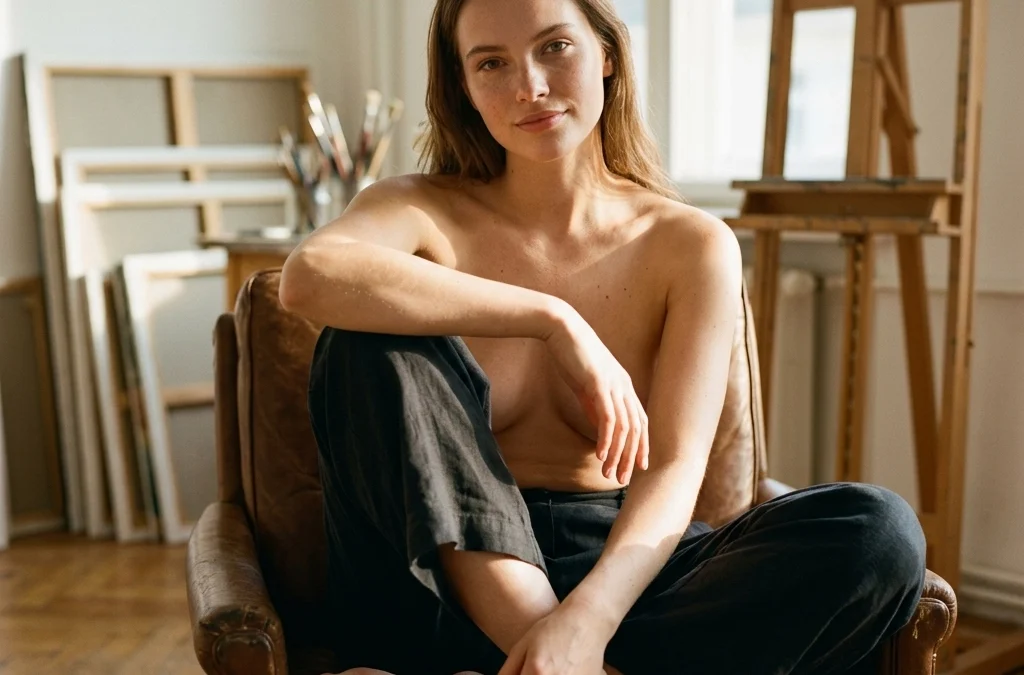
There is a raw, electric energy that fills the air when the clothes hit the floor. For a photographer, capturing the human form is the ultimate challenge and the highest reward. It’s not just about skin; it’s about light, shadow, vulnerability, and power. Whether you are aiming for high-end erotic photography or the classic lines of fine art nude photography, the transition from standard portraiture to the intimate world of the nude requires a shift in both mindset and technique.
You aren't just taking a picture; you are choreographing a dance of light across the female form. To help you master this craft, I’ve pulled together 20 pro secrets that will elevate your work from amateur snapshots to professional-grade art.
1. Build a Foundation of Trust
Before you even pick up your camera, you need to establish a connection. Nude photography is built entirely on trust. If your model doesn't feel safe, it will show in her eyes, her shoulders, and her posture. A tense model results in stiff, unappealing images. Spend time talking, sharing your vision, and ensuring she knows exactly what to expect.
2. Temperature is Everything
A cold model is a miserable model. Goosebumps might look cool in a gritty, high-fashion context, but usually, they just mean your subject is shivering. Keep the studio warm: warmer than you think it needs to be. When she is comfortable, she can relax into the more demanding boudoir photography poses that make a shot truly stand out.
3. Mastering Lighting for Nude Photography
Lighting is your best friend and your worst enemy. In art nude photography, light defines the shape. Side lighting is particularly effective because it rakes across the body, highlighting the curves of the hips and the dip of the spine while casting the rest into shadow. This "Chiaroscuro" effect creates a sense of drama and mystery that is central to the genre.
4. The Magic of the 85mm Lens
While a 35mm or 50mm lens has its place, the 85mm prime is often the king of erotic nude photography. It allows you to stand back, giving the model her personal space while providing a flattering compression that makes the body look incredible. It also produces a creamy bokeh that isolates the subject from the background, focusing all attention on her skin.
5. Concept First, Shutter Second
Never start a session without a clear concept. Are you going for a dark, moody noir vibe or a bright, ethereal high-key look? Having a mood board helps. If you find yourself stuck for creative ideas, using a tool like CandyAI can be a fantastic way to generate visual inspirations or explore different aesthetic compositions before you even step into the studio. It helps you visualize how different lighting setups might interact with various body types.
6. Posing Nude Models: The Power of Triangles
When it comes to posing, look for triangles. A bent elbow, a flexed knee, or a tilted head creates dynamic shapes that lead the viewer's eye around the frame. Avoid flat, straight-on shots which can look clinical. Encourage your model to arch her back slightly: this elongates the torso and emphasizes the natural curves of the female silhouette.
7. Watch the Extremities
Nothing ruins a beautiful fine art nude photography piece like a "clapping" hand or a "club" foot. Pay attention to the fingers and toes. Hands should be soft, light, and barely touching the skin. If she’s putting weight on a hand, make sure it doesn’t look strained. Graceful, ballet-like movements are what you’re aiming for.
8. The "No-Clothing" Rule Before the Shoot
Ask your model to wear loose-fitting clothing or a robe for at least an hour before the shoot. Elastic waistbands and tight bras leave red marks and indentations on the skin that can take a long time to fade. You want the skin to be a smooth, pristine canvas the moment she steps in front of the lens.
9. Use Negative Space
Sometimes, what you don't show is more important than what you do. Using negative space: large areas of black or white: can make the curves of the model pop. It adds a level of sophistication to erotic photography, moving it away from the mundane and into the realm of high art.
10. Learn from the Pros
If you’re serious about mastering these techniques, you need to see how the experts do it in real-time. Watching a pro handle a set, adjust a light by two inches, or give a subtle posing cue is worth a thousand textbooks. You can find these high-level insights by checking out our fine art nude tutorial section, where we dive deep into the nitty-gritty of the craft.
11. Focus on the Eyes
Even in a full-body nude, the eyes are often the focal point. They tell the story of the image. Is she defiant? Vulnerable? Playful? If the eyes are sharp and engaging, the viewer will feel a connection to the piece. If you’re shooting a more anonymous, faceless nude, then the "eye" of the image becomes the most prominent curve or texture.
12. Incorporate Texture
Don't be afraid to introduce elements that contrast with the smoothness of the skin. Think silk sheets, rough concrete walls, or even water. The contrast between a soft body and a hard or textured background adds a tactile quality to your work that makes it feel more "real" and high-end.
13. The Importance of Post-Processing
In fine art nude photography, post-processing should be used to enhance, not to fake. Frequency separation is a great tool for smoothing out skin tones while keeping the natural texture of the skin intact. You want her to look like a goddess, but a human one. Avoid the "plastic" look at all costs.
14. Keep the Vibe Right
Music is a powerful tool on set. Ask the model what she likes to listen to. Whether it’s low-fi beats, heavy rock, or sultry jazz, the music sets the rhythm for the shoot. It helps the model move more fluidly and fills the silence between shutter clicks.
15. Tether Your Camera
If you're in a studio setting, shoot tethered to a laptop or monitor. Seeing the images on a large screen allows you to spot small distractions: a stray hair, a weird shadow, or a distracting element in the background: that you might miss on the small camera LCD. It also allows you to show the model how incredible she looks, which boosts her confidence instantly.
16. Join a Community
Photography can be a lonely pursuit, especially in a niche like this. Surrounding yourself with like-minded creators who understand the balance between art and eroticism is vital for growth. To get exclusive access to behind-the-scenes content and a community of experts, you should join the club and get your membership today. It’s the best way to stay inspired and keep your skills sharp.
17. Experiment with Angles
Don't just stand at eye level. Get low and shoot up to give the model a sense of power and stature. Shoot from above to create a sense of intimacy and vulnerability. Every angle tells a different story about how to photograph nude models effectively.
18. Micro-Adjustments Matter
When you find a great pose, don't just take one shot and move on. Work that pose. Ask for micro-adjustments: "Chin down an inch," "Shift your weight to the back hip," "Close your eyes." One of these tiny changes will be the difference between a "good" shot and a "masterpiece."
19. Manage the Hair
Hair is an extension of the body's lines. Use it to cover or reveal. Wet hair can look incredibly erotic and raw, while big, blown-out hair feels more like classic glamour. Always have a fan on hand to add a sense of motion; a little bit of movement in the hair can bring a static image to life.
20. Don't Overthink It
Technical precision is important, but don't let it kill the soul of the image. Sometimes the best shots are the ones that happen in between "official" poses. Stay observant. If the model laughs or stretches naturally, keep shooting. Those candid moments often capture the true essence of art nude photography.
Mastering the art of the nude is a lifelong journey. It requires a delicate balance of technical skill, psychological intuition, and an unwavering eye for beauty. By focusing on these 20 secrets: from the way you light the skin to the way you interact with your subject: you’ll be well on your way to creating images that aren't just seen, but felt. Grab your camera, find your muse, and start creating something unforgettable.