
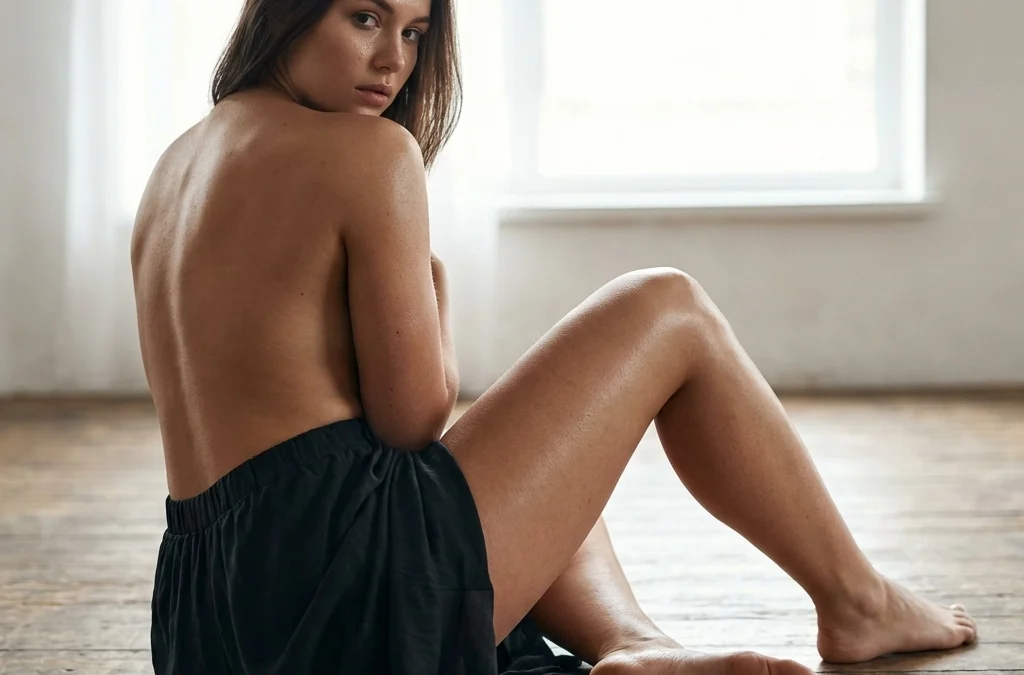
When you’re standing in a studio or a dimly lit bedroom with a naked woman, the camera is only half the equation. The other half: the part that separates a boring snapshot from a piece of high-end erotic art: is how you manipulate the physical form. We aren’t just taking pictures of skin; we are capturing the architecture of desire. In nude photography, your job is to find the rhythm in the body’s lines and the grit in its texture.
If you want to move beyond the basic and start creating images that carry weight and heat, you have to master the art of the pose. It’s about more than just telling a model to “look sexy.” It’s about understanding how a slight tilt of the pelvis or a tensed shoulder can transform a flat image into a three-dimensional masterpiece of curves and shadows.
The Geometry of the Female Form
The female body is a landscape of soft arcs and sharp angles. To capture it effectively, you have to stop seeing a person and start seeing shapes. In the world of fine art nude photography, we look for triangles. Triangles create a sense of balance while simultaneously leading the viewer’s eye through the frame.
Think about the space between a model's arm and her waist when she rests a hand on her hip. That negative space is just as important as the skin itself. By creating these "visual holes," you break up the mass of the body and emphasize the narrowness of the waist or the flare of the hip. When you're looking for inspiration or trying to visualize how different body types respond to light, experimenting with digital muses on CandyAI can be a great way to prep your brain for the visual flow of a live shoot.
Mastering the S-Curve
The S-Curve is the holy grail of erotic nude photography. It’s the natural flow from the shoulder, down through the waist, and over the hip. To maximize this, you need to play with weight distribution.
Never let your model stand with her weight evenly distributed on both feet. It’s static. It’s boring. Have her shift all her weight onto the leg furthest from the camera. This naturally drops one hip and raises the other, creating that lethal diagonal line across the pelvis. To add more tension, have her cross one leg over the other or lift a heel off the floor. This tightens the muscles in the calves and thighs, adding a raw, athletic texture to the lower body that looks incredible under hard side-lighting.
If she’s lying down, don't let her go limp. A limp body lacks energy. Encourage her to arch her back: just enough to create a bridge of light along the spine. This creates a deep shadow in the small of the back, which provides a visceral sense of depth. For a deeper look at how to execute these specific maneuvers, our fine art nude tutorial library offers frame-by-frame breakdowns of these classic poses.
Texture: Making the Skin Tangible
Texture is what makes an image feel "real." In an era of overly airbrushed, plastic-looking skin, raw texture is a breath of fresh air. We want to see the goosebumps, the faint stretch marks, the way light catches the fine hairs on the skin, and the saltiness of a light sweat.
To pull out maximum texture, you have to ditch front-on lighting. Flat light kills detail. It hides the very things that make a body interesting. Instead, use side-lighting (rim lighting or short lighting). By placing your light source at a 90-degree angle to the model, every curve becomes a mountain and every depression becomes a valley of shadow. This is how you make skin look touchable.
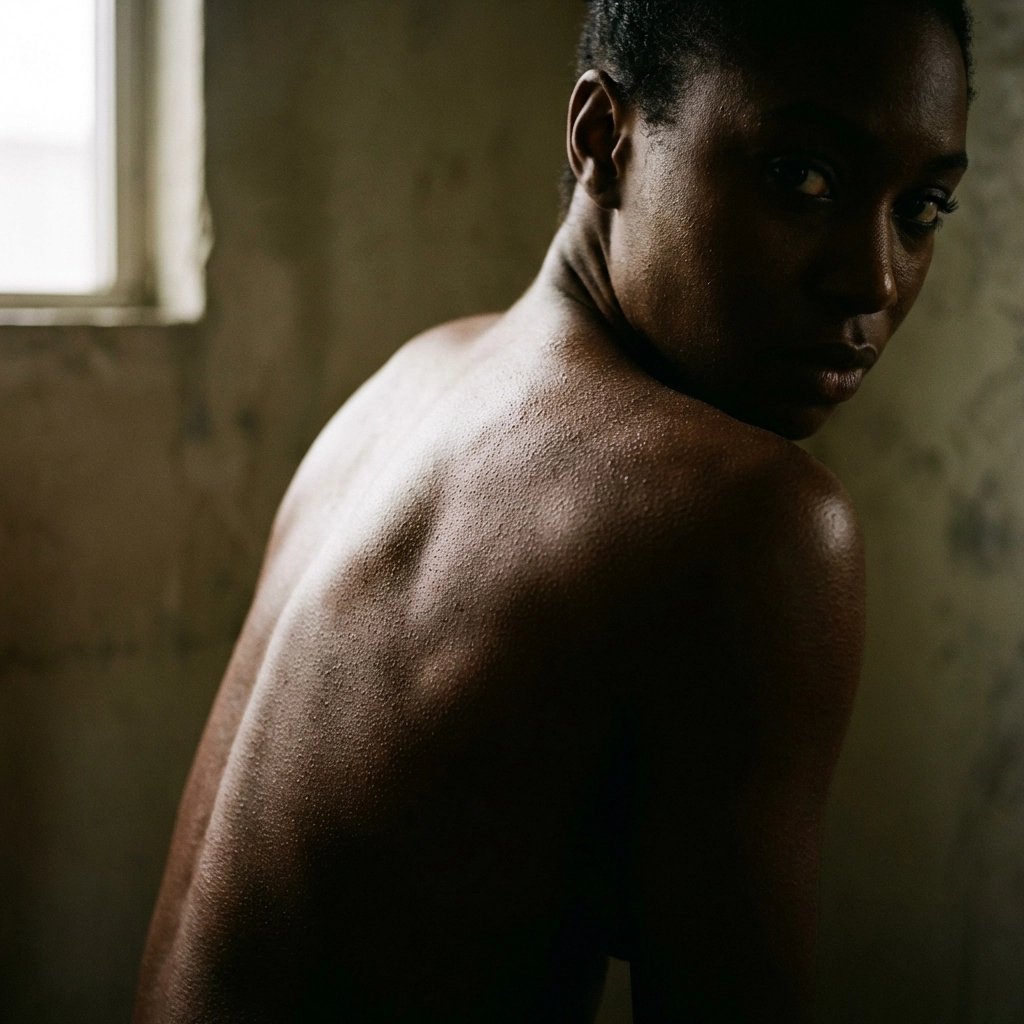
When focusing, don't just aim for the eyes. In art nude photography, the "hero" of your shot might be the curve of a buttock or the tension in a collarbone. Use a wide aperture: something like f/1.8 or f/2.8: to create a shallow depth of field. This allows you to keep the texture of one specific area tack-sharp while the rest of the body melts into a soft, erotic blur. It forces the viewer to look exactly where you want them to.
The Power of the Twist
Symmetry is the enemy of eroticism. A body facing the camera head-on looks wider and flatter than it actually is. The "twist" is your best friend.
Have your model turn her hips away from the camera while twisting her torso back toward the lens. This creates a series of dynamic folds and stretches in the skin around the waist and ribs. It emphasizes the "hourglass" and creates a sense of movement, even in a still frame. This tension in the skin provides a beautiful, tactile quality that highlights the underlying bone structure and muscle.
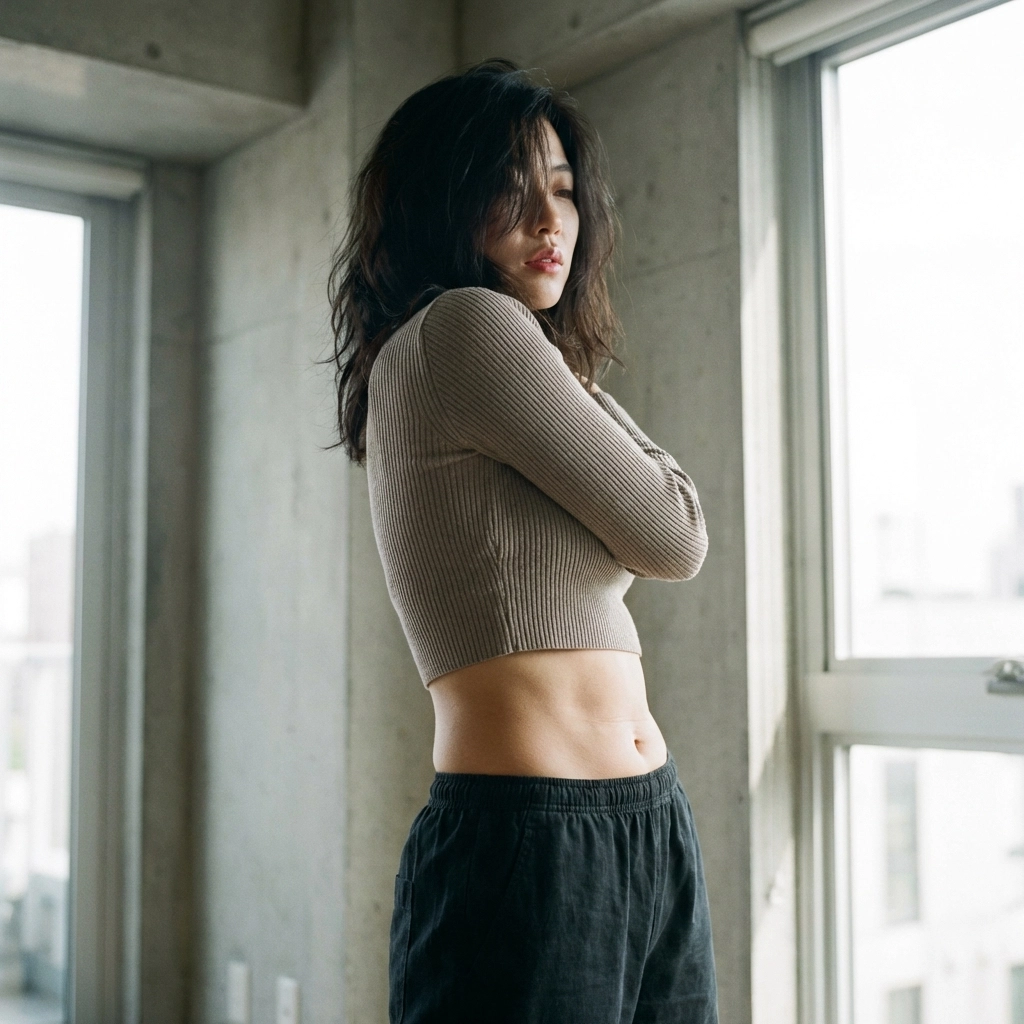
Always be mindful of the hands. Hands can either make or break a pose. If they’re flat and tense, they look like "zombie hands." Encourage the model to keep her fingers soft, slightly separated, and barely touching the skin. A hand grazing the thigh or resting lightly behind the head adds a layer of narrative and sensuality without distracting from the main lines of the body.
Communication and the "Invisible" Connection
You can be the best technical photographer in the world, but if your model is uncomfortable, it will show in every frame. Nude photography is a collaborative dance. It requires a high level of trust and professional intimacy.
Talk to your model constantly. Don't just grunt and click the shutter. Tell her when a pose looks incredible. Describe the light you're seeing. If you need her to move, be specific. Instead of saying "move your arm," say "bring your left elbow up toward your ear." This clarity prevents frustration and keeps the energy high.
Remember to let her "reset." Holding an arched back or a twisted torso is physically demanding. Give her breaks to robe up and relax her muscles. A relaxed model is a creative model, and that’s when the real magic happens: the small, unposed moments between the "official" shots are often where you’ll find the most raw, honest eroticism.
Technical Specs for the Raw Look
While we focus on the art, the technical side provides the foundation. For the kind of high-end erotic photography we advocate for at the Fine Art Nude Club, you want to balance clarity with mood.
- Lenses: A 50mm or 85mm prime lens is ideal. They provide a natural perspective without distorting the body’s proportions.
- Aperture: Keep it wide (f/1.4 to f/2.8) to isolate texture and create that dreamy, professional fall-off.
- ISO: Don’t be afraid of a little grain. In erotic art, a bit of digital noise can actually enhance the "film" look and add to the raw, visceral feel of the image.
- Shutter Speed: If you’re working with natural light, keep it fast enough to avoid motion blur, especially if the model is breathing heavily or moving between poses.
Final Thoughts on Posing
The goal of photographing nude models isn't just to document a naked body; it's to interpret it. By focusing on the S-curve, leveraging side-lighting for texture, and using the twist to create dynamic tension, you elevate your work from the mundane to the extraordinary. You are a sculptor, and the light is your chisel.
Every woman brings a different energy and a different set of lines to the table. Your job is to find those lines and highlight them. Don't be afraid to get close, don't be afraid of shadows, and most importantly, don't be afraid to be bold with your direction.
To see how the pros handle these complex setups and to gain access to exclusive behind-the-scenes content that you won't find anywhere else, make sure to join the Fine Art Nude Club. We dive deep into the aesthetics of the female form, helping you turn your passion into high-level art. Whether you're a seasoned pro or just starting your journey into the world of nudes, there’s always a new curve to discover.