
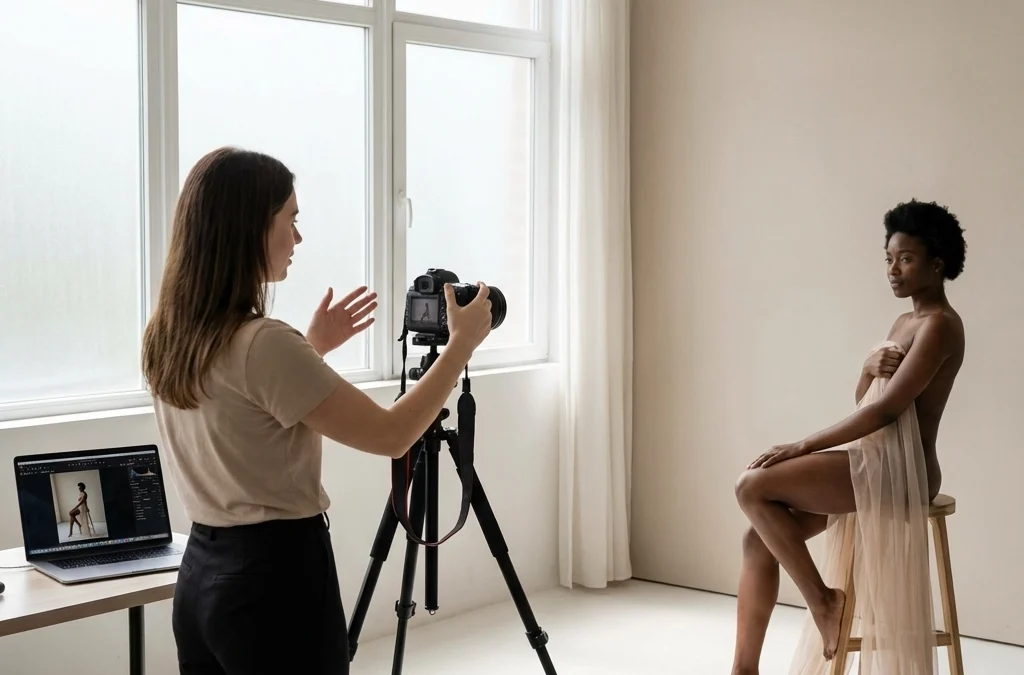
There is a profound difference between taking a picture of someone without clothes and creating fine art nude photography. One is a snapshot; the other is an exploration of light, shadow, and the incredible architecture of the human form. If you’ve ever looked at a gallery of erotic nude photography and felt a sense of awe rather than just voyeurism, you’ve witnessed the power of intentionality.
Creating tasteful erotic art is a journey of technical skill and emotional intelligence. It requires you to be a director, a technician, and most importantly, a respectful collaborator. Whether you’re just starting out or looking to refine your portfolio, mastering how to photograph nude models involves more than just clicking a shutter. It’s about building a narrative through skin and silhouette.
The Philosophy of the Form
Before you even pick up your camera, you have to decide what you want to say. Art nude photography isn't about the absence of clothing; it’s about the presence of a concept. Are you celebrating the softness of femininity, or are you looking for the hard, dramatic lines of a muscular physique?
When I’m in the pre-visualization stage, I often look for inspiration in the unlikeliest of places: classical sculpture, Renaissance paintings, or even modern digital art. If you’re ever struggling to visualize a specific look or want to see how different lighting interacts with various skin tones, experimenting with digital muses on CandyAI can be a fantastic way to brainstorm poses and compositions before you ever set foot in a studio.
Preparation: More Than Just a Mood Board
Successful nude photography starts long before the model arrives. You need a clear vision. Create a mood board that includes lighting styles, color palettes, and specific boudoir photography poses you want to try. This isn't just for you; it’s a communication tool.
Sharing your vision with your model helps build trust. When she knows exactly what the end goal is, she can contribute her own creative energy to the process. Professionalism is the foundation of this genre. If you want to dive deeper into the specifics of setting up your first professional session, our fine art nude tutorials offer a wealth of knowledge on how to transition from a hobbyist to a serious creator.
Creating a Sanctuary: Professionalism and Comfort
The comfort of your model is directly reflected in the quality of the final image. If she is cold, nervous, or uncomfortable, her muscles will tense, and that tension will show in the photograph.
- Temperature Control: Keep the studio warm. Bare skin loses heat quickly.
- Privacy: Ensure the space is private and secure.
- Communication: Always explain what you are doing before you do it. "I’m going to move this light to highlight your shoulder," is much better than just moving equipment around a naked person in silence.
- Hands-Off Policy: Never touch a model to adjust a pose. Use your words or demonstrate the pose yourself.
Technical Mastery: Lenses and Settings
When it comes to nude photography tips, your gear choice can make or break the "tasteful" aspect of the shoot.
The Lens: I almost always recommend a medium telephoto lens, like an 85mm or 105mm. These focal lengths are incredibly flattering for the human body. They compress the features slightly and prevent the distortion that wide-angle lenses (like a 35mm) can cause, which often makes limbs look unnaturally long or "bulgy" when close to the lens. A longer lens also allows you to maintain a respectful physical distance from the model.
The Aperture: To achieve that soft, ethereal look often seen in fine art nude photography, shoot with a wider aperture (f/2.8 to f/4). This creates a shallow depth of field, allowing the eyes or the curve of a hip to stay in sharp focus while the background melts away into a creamy blur.
Lighting the Human Canvas
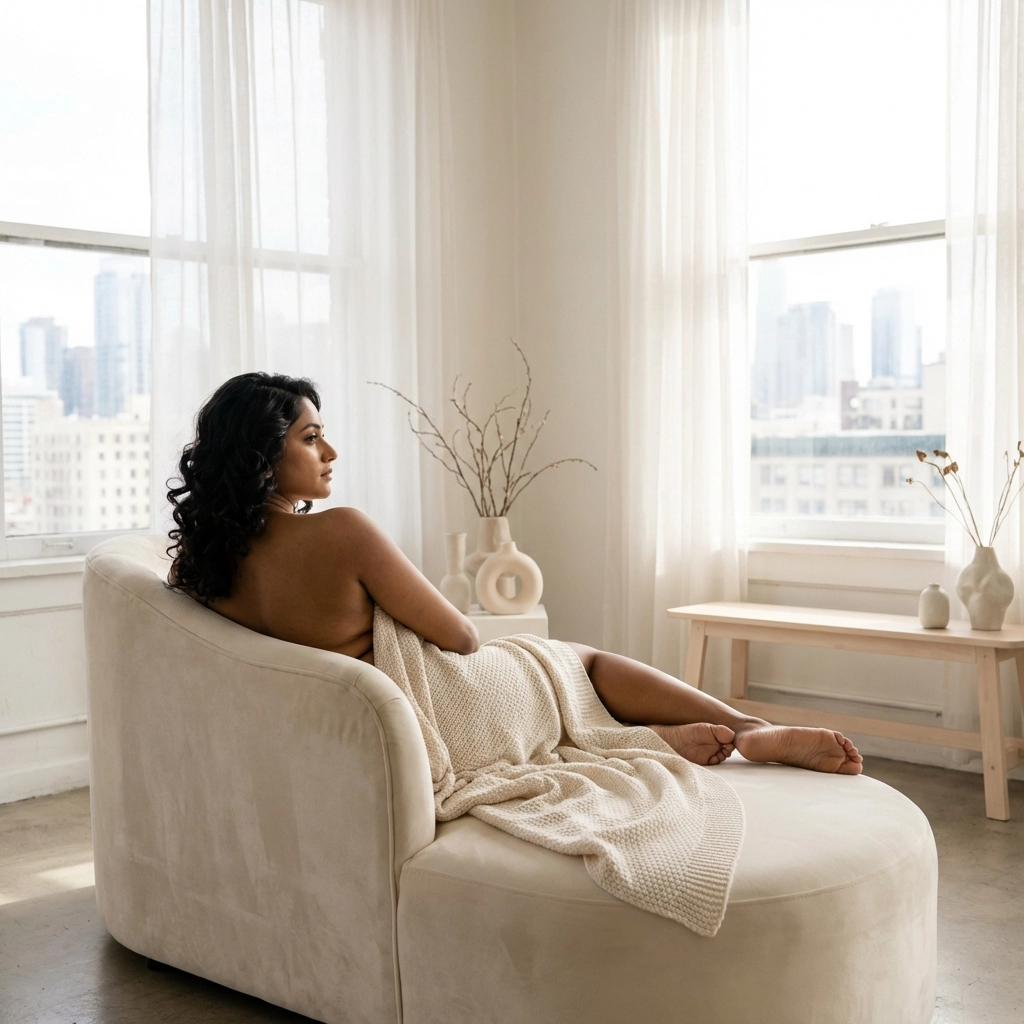
Lighting for nude photography is perhaps the most critical element in separating art from "snapshots." You aren't just lighting a subject; you are sculpting with light.
- Soft and Diffused: Use large softboxes or octaboxes. This mimics natural window light and wraps around the body, softening the skin and creating gentle transitions between light and shadow.
- Side Lighting (Chiaroscuro): If you want more drama, place your light source to the side of the model. This accentuates the "valleys" and "peaks" of the body, highlighting the ribs, the spine, and the curve of the waist. This is where erotic photography becomes truly "fine art."
- The Power of Reflectors: A simple white or silver reflector can fill in harsh shadows just enough to retain detail without losing the mood.
The Art of Posing: Beyond the Basics
Posing nude models is an exercise in geometry. You are looking for triangles, S-curves, and lines that lead the eye through the frame.
The S-Curve: This is the holy grail of female posing. By having the model shift her weight to one leg and drop a shoulder, you create a natural "S" shape that emphasizes the hips and waist. It’s a classic technique used for centuries in art.
Flow Posing: Don't ask for a static pose and stay there for twenty minutes. Encourage the model to move slowly: tilting the head, shifting a hand, stretching an arm. This "flow" allows you to capture candid, graceful moments that feel less staged and more authentic.
When you’re looking for the best ways to highlight a model’s unique beauty, remember that every body is different. What works for a lithe, athletic model might be different for someone with more voluptuous curves. To see how professional photographers handle these variations, you should join the club and explore our curated galleries, which showcase a diverse range of bodies and artistic styles.
Composition and Shooting Angles
Don't just stand at eye level. To create compelling art nude photography, you need to change your perspective.
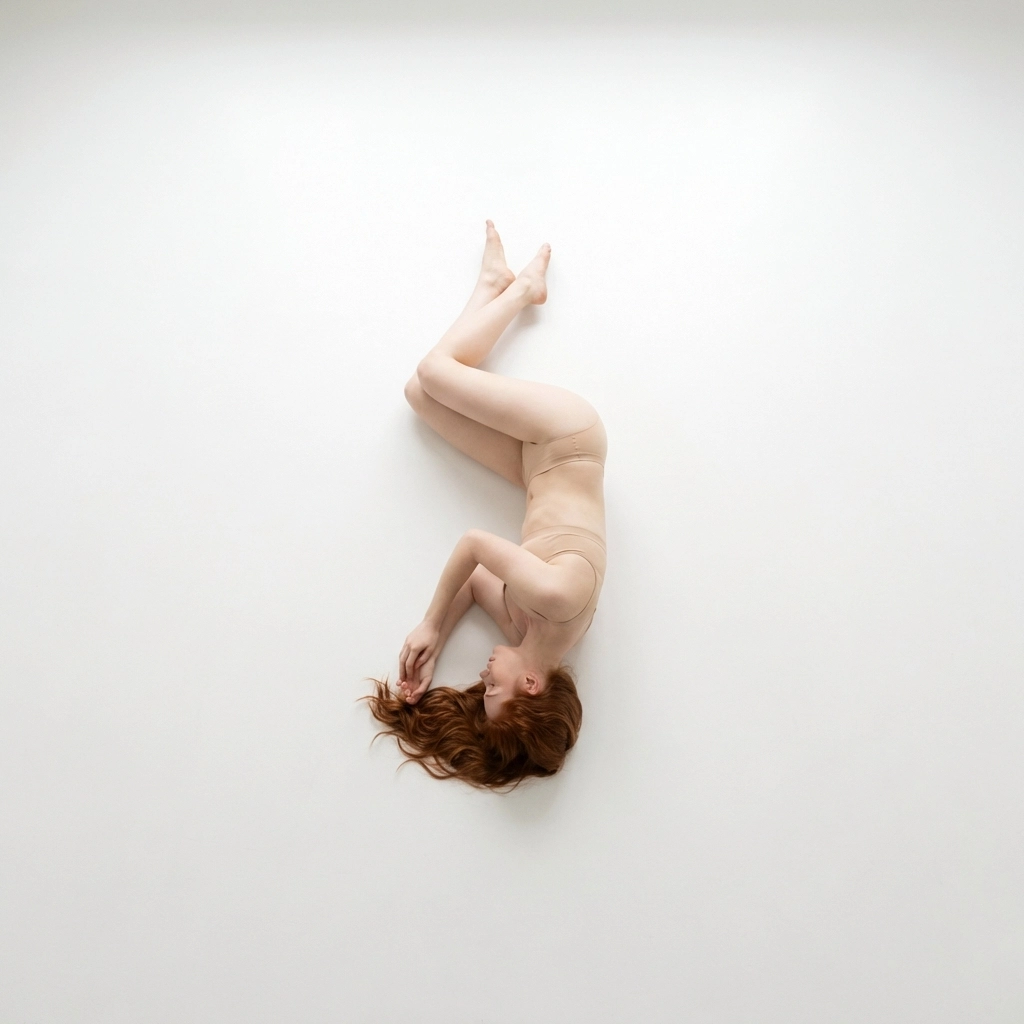
- The Bird's-Eye View: Shooting from above while the model is reclining can create a sense of vulnerability and grace.
- The Low Angle: This can make the model look powerful and statuesque.
- Negative Space: Don't feel the need to fill the entire frame with the body. Sometimes, a small silhouette against a vast, dark background says more than a close-up.
Post-Processing: The Final Polish
The work doesn't end when the model puts her clothes back on. Post-processing is where you define the final mood.
Black and White vs. Color: Black and white is a staple in this genre because it strips away the "reality" of skin tones and focuses the viewer entirely on form and light. It instantly makes an image feel more timeless and "artistic." However, color can add a layer of warmth and intimacy that is equally powerful.
Retouching with Restraint: The goal is to enhance, not erase. Remove temporary blemishes like goosebumps or strap marks from clothing, but keep the natural texture of the skin. Over-smoothing skin makes the model look like plastic, which kills the human connection essential to erotic nude photography.
Refining Your Personal Style
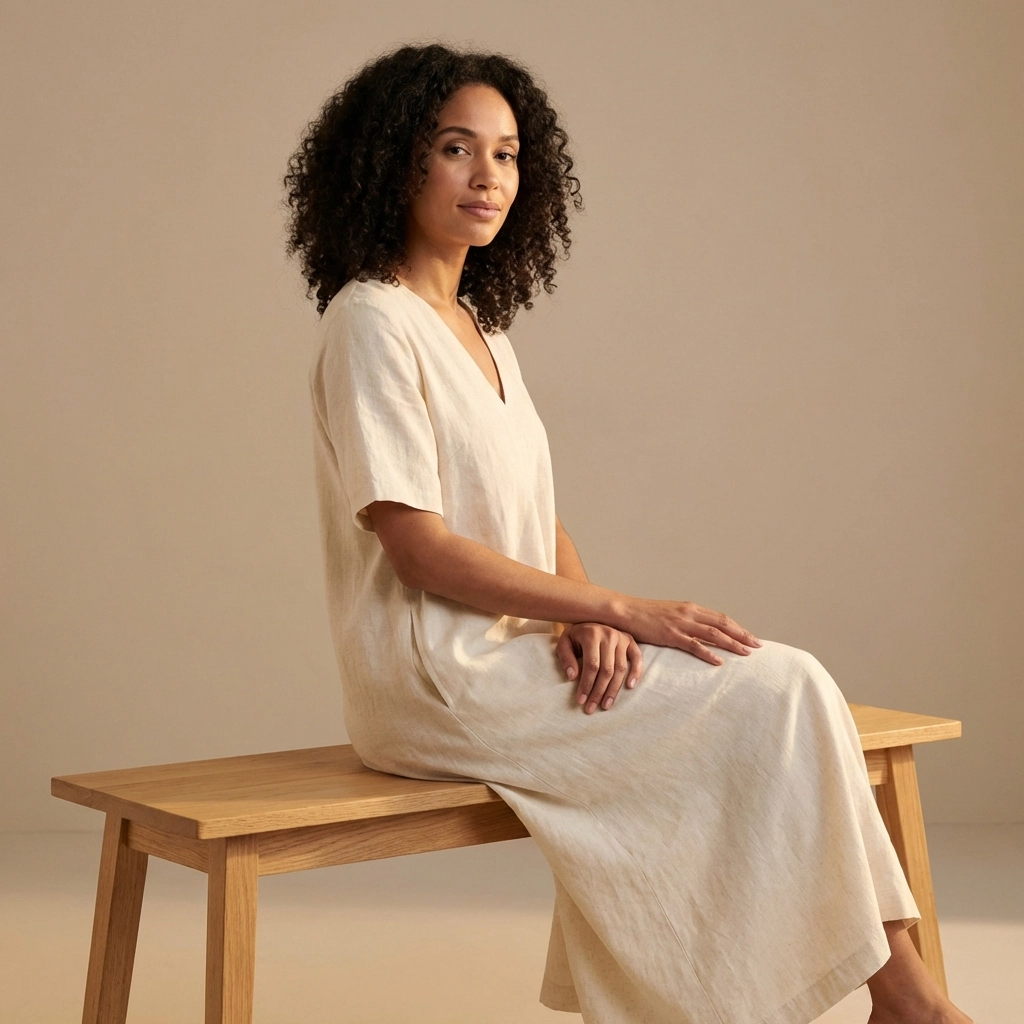
Every photographer eventually develops a "signature." Maybe yours is high-contrast shadows, or perhaps it’s airy, overexposed dreamscapes. The only way to find it is through consistent practice and study.
Look at the work of others not to copy, but to understand. Why does a certain shadow work? Why does a particular pose feel "tasteful" while another feels "crude"? It usually comes down to the balance between what is shown and what is suggested.
Creating art that is both erotic and sophisticated is a balancing act. It’s about celebrating the female form with a lens of respect and creativity. If you’re ready to take your skills to the next level and want to see how the pros do it, there’s no better place to start than by immersing yourself in high-quality examples. We invite you to join the club to gain access to an exclusive community and world-class photography that will inspire your next masterpiece.
Keep shooting, keep experimenting, and always remember that the most beautiful part of any photograph is the story you tell with the light.