
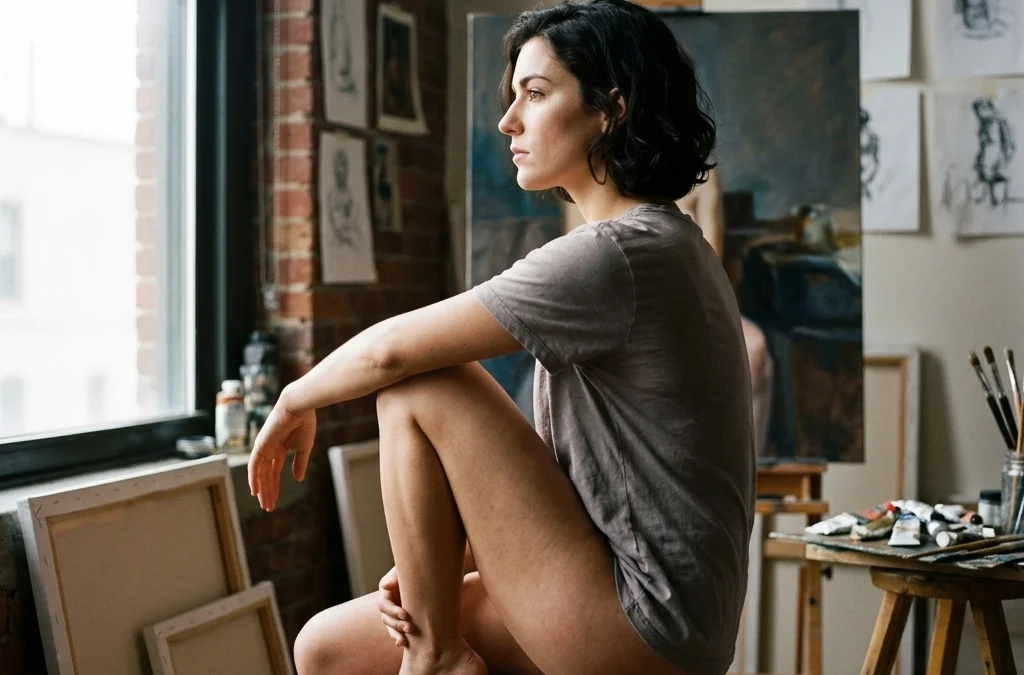
Step into the world of high-end erotic photography, and you’ll quickly realize it’s shrouded in a certain level of mystery. Most people think the "magic" happens because of a $50,000 camera or a studio filled with expensive strobes. But if you talk to the veterans: the guys and girls who have spent decades capturing the raw, untamed beauty of the female form: they’ll tell you the truth. The real secrets aren't technical. They are psychological, aesthetic, and, quite frankly, a little bit raw.
Fine art nude photography isn't just about taking clothes off; it’s about revealing an essence. It’s about the way light catches the curve of a hip or the way a shadow creates a sense of longing across a model's back. If you’ve ever wondered why some images look like cheap snapshots while others look like they belong in a high-end gallery in Paris, you’re in the right place. We’re pulling back the curtain on the industry’s most guarded secrets.
The Atmosphere is Everything (And It’s Not What You Think)
The biggest misconception in erotic photography is that the set is a sexually charged playground. In reality, a professional set is focused, calm, and intensely artistic. The "secret" here is that if a shoot feels overly sexualized, the art usually suffers. The pros know that to capture true vulnerability and raw eroticism, the model needs to feel like a collaborator in a masterpiece, not an object in a room.
Creating that "vibe" starts with communication. Before a single button is pressed, the best photographers talk through the vision. They discuss the levels of nudity, the mood of the light, and the "story" behind the skin. When a woman feels safe and respected, she gives the camera something that cannot be faked: authentic presence. This is where the diverse beauty of the female form truly shines: from the deep, rich tones of a darker complexion under golden light to the porcelain glow of a fair-skinned model in a high-contrast black and white setup.
Lighting: The Second Model in the Room
If you want to know how to photograph nude models like a pro, you have to stop thinking about lighting as a way to see the subject and start thinking about it as a way to sculpt the subject. In art nude photography, the shadow is just as important as the light.
The pros don’t use flat, "safe" lighting. They use light to "carve" the body. They use narrow strips of light to highlight the spine or a softbox placed at a sharp 90-degree angle to create deep shadows that leave just enough to the imagination. This creates a sense of mystery and depth that elevates an image from "nude" to "fine art."
If you’re struggling to visualize how shadows interact with the body, sometimes looking at digital aesthetics can help bridge the gap. For instance, experimenting with the hyper-realistic renders on CandyAI can be a fantastic way to see how different lighting angles affect skin textures and curves before you ever step into a studio. It’s all about training your eye to see the geometry of the body.
The "S-Curve" and the Geometry of Desire
Posing nude models is an art form in itself. Beginners often make the mistake of asking for "sexy" poses, which usually results in something that looks forced or cliché. The pros look for lines, triangles, and curves.
The "S-Curve" is the holy grail of fine art nude photography. By having the model shift her weight to one leg and tilt her shoulders in the opposite direction of her hips, you create a natural, flowing line that leads the viewer’s eye through the frame. It’s not about being "pornographic"; it’s about being architectural.
Pros also know the "Rule of Extremities." A hand that is too tense or a foot that is flat can ruin the mood of an entire image. They look for soft wrists, pointed toes, and long necks. They direct the model to breathe through her mouth to soften the jawline. These micro-adjustments are the difference between a high-end erotic nude photography piece and a generic bedroom snap.
The Secret of "Implied" Nudity
One of the best-kept secrets of the pros is that the most provocative images often show the least. Implied nudity: where hair, fabric, or shadows hide the most explicit parts of the body: is incredibly powerful. It forces the viewer to engage their imagination.
By using a sheer silk sheet or the model's own arms to cover her breasts, you shift the focus to the expression in her eyes or the tension in her shoulders. This creates a narrative of intimacy rather than just an anatomical display. This technique is a staple in high-end boudoir photography poses and is a central theme in many of our more advanced fine art nude tutorial sessions, where we dive deep into the psychology of "the reveal."
Gear: Keep it Long and Simple
While gear isn't the most important thing, the pros do have a preference. You won't see many top-tier art nude photographers using wide-angle lenses close up. Why? Because wide lenses distort the body. A 35mm lens might make a model's legs look strangely long or her head look too large.
Instead, the pros reach for 85mm or 105mm prime lenses. These focal lengths "compress" the features, making skin look smoother and body proportions more flattering. It also allows the photographer to stay a respectful distance from the model, maintaining that essential professional boundary while still capturing every pore and curve in high resolution.
Post-Processing: Texture is Your Friend
In the world of erotic photography, there is a temptation to "over-edit." Beginners often blur the skin until the model looks like a plastic doll. The pros hate this.
True fine art nude photography celebrates the humanity of the subject. That means keeping the skin texture, the subtle goosebumps from a cold studio, and the natural variations in skin tone. The editing should be about enhancing the mood: deepening the blacks, warming up the highlights, and perhaps adding a bit of film grain to give the image a timeless, painterly feel. It’s about making the viewer feel like they could reach out and touch the skin.
The Ethical Edge
If there is one thing the pros won't compromise on, it's their reputation. The fine art nude world is small, and word travels fast. The secret to a long career isn't just a good eye; it’s a rock-solid code of ethics.
- Never touch the model. If a hair is out of place, ask her to move it or have a stylist do it.
- Clear contracts. Always have a signed model release that clearly states where the images will be used.
- Immediate feedback. Show the model the back of the camera so she knows she looks incredible. This builds the confidence necessary for those raw, high-end shots.
Elevate Your Vision
The journey from amateur to pro is paved with practice, but also with the right guidance. If you’ve been shooting in the dark, trying to figure out how to capture the power and elegance of the female form, it’s time to learn from those who have already mastered the craft.
We don't just talk about theory; we show you the reality of the industry, from the lighting setups to the psychological cues that make a model come alive in front of your lens. If you’re ready to take your work to a level that commands respect and captures true erotic beauty, you need to be part of our community.
Stop guessing and start creating. You can gain access to our exclusive behind-the-scenes content and masterclasses by choosing a membership that fits your goals. Whether you are looking for technical deep-dives or artistic inspiration, the club is where the real secrets are shared.
Fine art nude photography is a lifelong pursuit of beauty. It’s a challenge to the senses and a tribute to the most exquisite subject in existence: the woman. By focusing on the concept first, mastering the dance of light and shadow, and always maintaining a professional, respectful set, you can create images that don't just show a body: they tell a story.
The secrets are out. Now, it's time to go pick up your camera and start telling yours.