
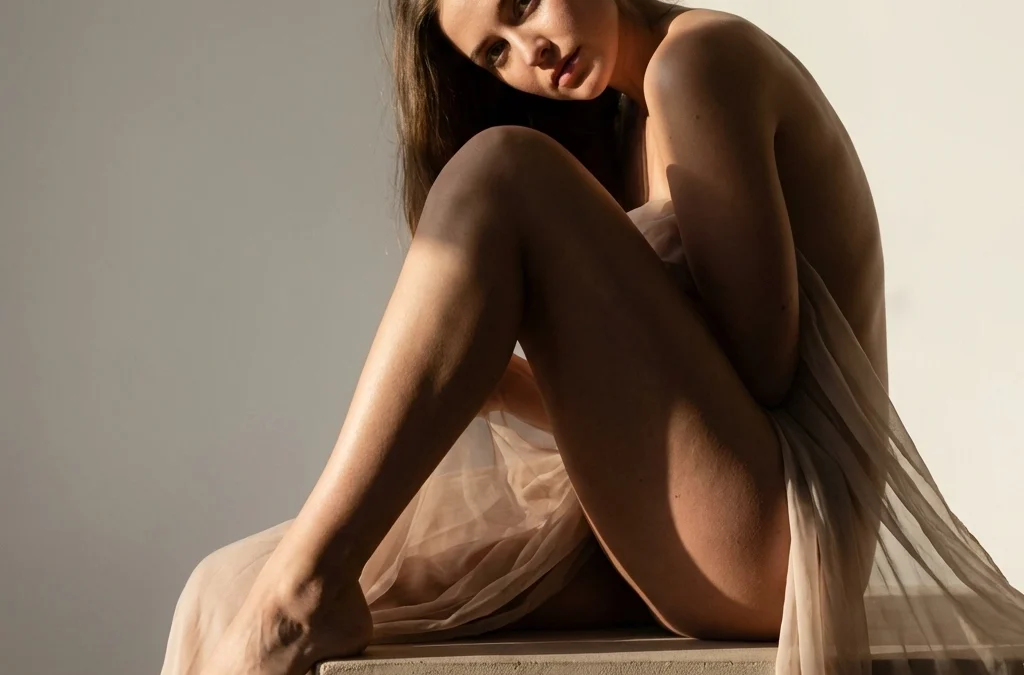
There is something visceral about the human form. It’s the ultimate canvas: unpredictable, breathtaking, and raw. When you step into the world of fine art nude photography, you aren't just taking pictures of skin; you’re capturing the architecture of a woman’s soul through the curves of her body. It’s about more than just stripping down; it’s about the play of light on a collarbone, the tension in a thigh, and the silent story told by a silhouette.
If you’re just starting out, the transition from standard portraiture to high-end erotic photography can feel daunting. You want to be tasteful, yet you want that raw, heavy-breathing energy that makes a photograph unforgettable. This guide is your roadmap to mastering the art of the nude, from the first click of the shutter to the final edit.
The Mindset: Beyond the Naked Eye
Before you even pick up your camera, you need to check your head. Nude photography requires a level of professional intimacy that most other genres don’t touch. Your model isn't just a subject; she’s your collaborator. Whether you’re working with a seasoned pro or a first-timer, the vibe in the studio dictates the final image. If she’s uncomfortable, it shows in every muscle fiber.
Start by creating an atmosphere that feels safe but creatively charged. Keep the studio warm: no one looks their best with goosebumps unless that’s the specific texture you’re going for. Talk through your vision. Show her mood boards or even use digital tools to visualize the vibe. If you’re looking for a quick way to brainstorm poses or see how certain lighting affects a digital silhouette, playing around with a tool like CandyAI can give you some surprisingly sharp inspiration for your next real-world shoot.
Gear Up: Tools for the Trade
You don’t need a room full of gear to create a masterpiece, but you do need the right glass. Fine art nude photography is all about flattering the body, and your choice of lens is the first step in that process.
- The 85mm Prime: This is the "God lens" for erotic photography. It offers a beautiful compression that makes the body look lean and elegant while providing enough distance so you aren't hovering directly over your model.
- The 50mm Prime: Perfect for tighter spaces or when you want a slightly more intimate, "in the room" feel.
- Full-Frame Sensor: To capture the subtle gradients of skin tone and the richness of shadows, a full-frame camera is almost non-negotiable. You want that dynamic range to ensure the blacks are deep and the highlights are creamy.
Set your camera to manual. You need total control. When you’re working with skin, the camera’s auto-metering can get confused by the expanses of highlights or the deep shadows of a low-key set. Master your exposure so you can focus on the woman in front of you, not the buttons on your deck.

Lighting the Architecture of the Body
Lighting is what separates a snapshot from a work of art. In art nude photography, light is your paintbrush. You aren't just illuminating a person; you are carving shapes out of the darkness.
Soft, Diffused Light
For a classic, ethereal look, large softboxes or natural window light are your best friends. This type of lighting wraps around the curves, softening the transition between light and shadow. It’s incredibly flattering for skin and gives the image an expensive, high-end feel.
High-Contrast Side Lighting
If you want to emphasize the muscularity and the raw "erotic photography" edge, move your light source to the side. This creates deep shadows in the valleys of the body: the small of the back, the curve of the waist, the dip of the navel. Use a single light source to create a "Rembrandt" effect on the body, letting half of her form disappear into the mystery of the shadows.
Rim Lighting
Nothing is sexier than a thin line of light tracing the edge of a woman’s silhouette against a dark background. Position your lights behind the model, angled back toward the camera. This "halo" effect separates her from the background and highlights the sheer perfection of her form without revealing everything at once.
Posing: Creating the Flow
Posing a nude model is about geometry. You want to create triangles, curves, and leading lines. A flat, square-on pose rarely looks good; it hides the natural movement of the body.
Direct your model to shift her weight. Have her arch her back: even slightly: to create that iconic "S" curve. Tell her to point her toes to lengthen the legs. Every limb should be doing something intentional. If a hand is just hanging there, it looks like a dead weight. Have her graze her own skin or pull her hair back to expose the neck.
If you're looking for a deep dive into the specifics of movement and form, our fine art nude tutorial section breaks down these movements frame-by-frame.

Composition and the Art of the Crop
You don't always have to show the whole body. In fact, some of the most powerful nude photography focuses on the details. A close-up of the nape of the neck, the curve of a hip, or the way her hair falls across her breasts can be more provocative than a full-frontal shot.
Use the rule of thirds to place her "action" points: the eyes, the apex of a curve, or a hand: on the intersections of your grid. Don't be afraid of negative space. A small, vulnerable figure in a large, dark frame can tell a hauntingly beautiful story.

Post-Processing: The Final Touch
Editing is where the mood is solidified. When it comes to skin, less is often more. You want her to look like a real woman, not a plastic mannequin.
- Color Grading: Warm tones suggest intimacy and heat. Cooler tones can feel more statuesque and distant.
- Black and White: There’s a reason B&W is a staple of the fine art nude world. Removing color forces the viewer to focus entirely on shape, texture, and light. It strips away the "reality" and turns the image into a timeless piece of art.
- Texture: Don’t blur the skin into oblivion. Keep the pores, the fine hairs, and the natural imperfections. That’s what makes the image erotic: the tactile reality of another human being.
The Professional Edge
As you grow, you’ll realize that technical skills are just the baseline. The real "mastery" comes from your unique eye and your ability to direct. Every shoot is a chance to push the boundaries of your own creativity. Don't be afraid to experiment with props: sheer fabrics, lace, or even water: to add layers to your images.

The world of erotic and fine art photography is vast and constantly evolving. If you’re serious about taking your work from amateur to elite, you need to surround yourself with the best in the business. Seeing how top-tier photographers handle lighting, posing, and post-production is the fastest way to level up your own game.
Ready to see the raw, uncut side of the industry? You need to join the club to get full access to our exclusive galleries, behind-the-scenes content, and a community of creators who live for the art of the female form. This is where the real education happens: watching the pros turn a simple session into a masterpiece.
Fine art nude photography is a journey of discovery. Every woman you photograph will teach you something new about light, shadow, and the incredible complexity of the human body. Grab your camera, find your muse, and start creating something that the world won't be able to look away from.