
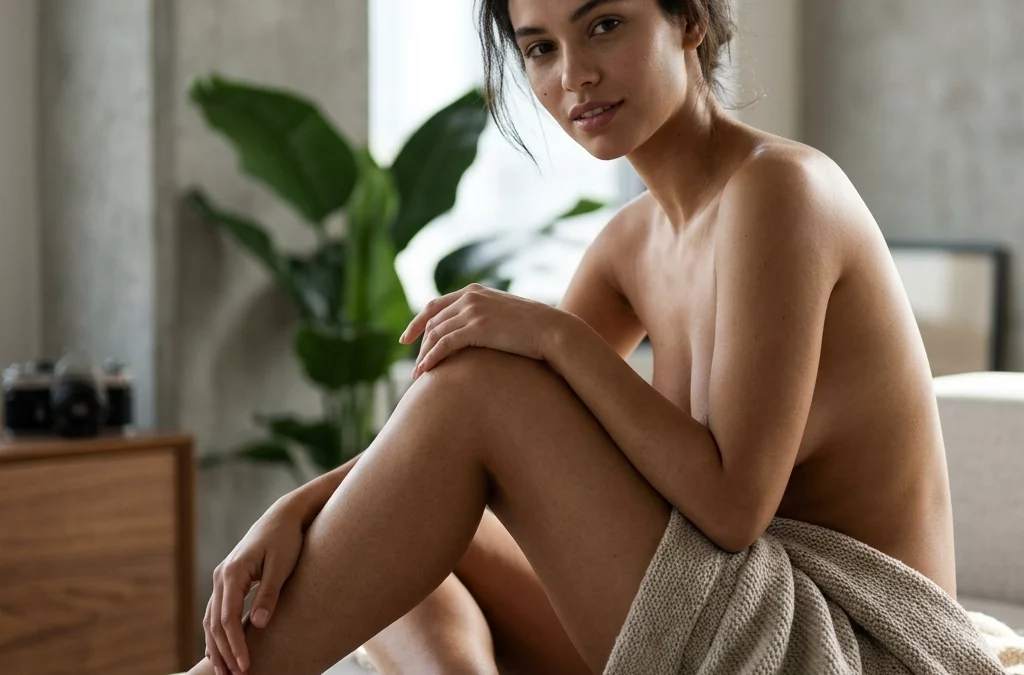
There’s a common misconception in the world of high-end erotic photography. Beginners often think that the gap between a "snapshot" and a masterpiece is filled with expensive Leica bodies, massive Profoto lighting rigs, and a team of ten assistants. But if you sit down with the pros who actually move the needle in this industry, they’ll tell you the truth: the gear is secondary. The real secret: the stuff they don’t usually share in a casual Instagram caption: is a mix of psychological warfare, light manipulation, and an obsession with the subtle geometry of the female body.
When we talk about fine art nude photography, we aren’t just talking about taking clothes off. We’re talking about capturing the raw, visceral energy of a woman in her most empowered state. To do that, you have to stop thinking like a technician and start thinking like a storyteller.
The Psychological Blueprint: Building the Vibe
Before the first light is even turned on, the shoot has already begun. High-end pros know that a model’s comfort is the single most important factor in the quality of the final image. If she is tense, it shows in her jaw, her shoulders, and her eyes. You can’t Photoshop out a lack of trust.
The secret? Communication that borders on over-explanation. You need to narrate the shoot. Tell her why you’re moving a light. Tell her how incredible the shadow is falling across her hip. This isn’t just about being polite; it’s about creating a shared creative vision. Many photographers use digital tools to help visualize these concepts before the model even arrives. For instance, using CandyAI can be a fantastic way to experiment with different aesthetics, personality types, and visual moods, allowing you to walk into a session with a crystal-clear idea of the "character" you’re trying to capture.
When you treat the session as a collaboration rather than a transaction, the model opens up. That’s when you get those fleeting, candid moments: the way she looks when she’s adjusting her black lingerie or the soft expression she wears when she thinks the camera isn’t looking.

Lighting: The Art of What You Don’t See
In erotic nude photography, what you hide is just as important as what you reveal. Amateurs often make the mistake of "flat lighting": flooding the scene with light so every detail is visible. The pros do the opposite. They embrace the shadows.
Shadows create depth. They create mystery. They guide the viewer’s eye to the curves you want to emphasize. One of the best lighting for nude photography setups is surprisingly simple: a single large window or one softbox positioned to the side of the model. This is called "short lighting," where the side of the face or body away from the camera is hit by the light, and the side closest to the camera is in shadow. It slims the subject and adds a sultry, cinematic weight to the frame.
If you’re shooting in a studio, don’t be afraid to use "unconventional" modifiers. Sometimes a simple piece of lace held over a light can create a black lace pattern across the skin that feels high-fashion and incredibly intimate. The goal is to create a mood that feels like a private moment caught in time.
Master the "S" Curve: Posing Nude Models
The female body is a landscape of curves, and your job is to maximize them. High-end pros avoid straight lines at all costs. If a model is standing straight, she looks stiff. If she shifts her weight to one leg, her hip pops, her waist cinches, and you’ve suddenly created a visual flow.
The "S" curve is the holy grail of art nude photography. By having the model twist her torso slightly away from her hips, you create a dynamic tension in the body. Whether she’s topless standing or reclining on a chaise, the goal is to create triangles with her limbs. A hand behind the head, a bent knee, or an arched back: these elements break up the silhouette and make the image feel alive.
Pay attention to the hands. Tension in the hands is a dead giveaway of a nervous model. Encourage her to let her fingers be soft, grazing her neck or playing with her hair. It’s these small, erotic nude photography details that elevate a photo from a basic nude to a piece of fine art. If you want to dive deeper into these specific technical movements, our fine art nude tutorial series breaks down these poses frame by frame.

Technical Precision: Camera Settings That Matter
While we said gear is secondary, how you use it is vital. To get that high-end, creamy look, you need to master your aperture. Most pros shoot wide open: think f/1.2 to f/2.8. This creates a shallow depth of field that makes the model’s skin pop against a blurred background. It creates a sense of focus that feels almost tactile.
When you’re learning how to photograph nude models, focus on the eyes: or, if she’s looking away, focus on the part of the body that is closest to the lens. If you’re shooting a close-up of a model in black leggings, the texture of the fabric against her skin should be sharp enough to feel.
Another "secret" is the focal length. For boudoir photography poses and intimate nudes, an 85mm or 50mm lens is your best friend. These focal lengths are incredibly flattering to the human form, avoiding the distortion that wider lenses can cause. You want to represent the woman as she is: curvy, powerful, and real: not warped by a lens that wasn't meant for portraiture.
The Power of Framing: Wide vs. Tight
A high-end gallery isn’t just one shot; it’s a narrative. Pros think in "sets." They might start with a wide shot that shows the model in her environment: perhaps a sun-drenched bedroom or a rugged beach setting. This establishes the "where" and the "mood."
Then, they move in. Medium shots capture the interaction between the model and her clothing: the way she pulls at black bottomless pieces or poses in black boots. Finally, the tight shots. These are the most intimate. A close-up of the curve of a breast, the arch of a foot, or the sweat on the small of her back. These macro details are often what sell a collection because they feel personal and raw.
Don't be afraid to experiment with "Dutch angles" or shooting through objects (like a glass of water or a sheer curtain) to add a layer of voyeuristic artistry. The goal is to make the viewer feel like they are seeing something they shouldn't: a private, beautiful moment frozen in amber.

Post-Processing: The Final Polish
High-end erotic photography doesn’t end when you click the shutter. The editing process is where you define your "signature." However, the secret here is restraint. The "plastic" skin look of the early 2000s is dead. Today’s high-end market wants texture. They want to see the pores, the faint stretch marks, the realness of the skin.
Pros use frequency separation to even out skin tones without destroying the natural texture. They play with color grading to enhance the mood: warm, golden tones for a nostalgic feel, or cool, desaturated blues for something more edgy and modern. The editing should enhance the goddess-like quality of the woman, not turn her into a mannequin.
Taking Your Work to the Next Level
Erotic photography is an endless journey of discovery. The "secrets" aren't about holding back information; they're about the relentless pursuit of aesthetic perfection and human connection. It’s about the way the light hits a woman’s shoulder and the way you capture that fleeting second of pure, unadulterated confidence.
If you’re tired of guessing and want to see how these concepts are applied in real-world professional shoots, you need to be in the room where it happens. We pull back the curtain on every aspect of the process, from the first "hello" to the final edit.
Ready to transform your vision and master the art of the human form? Join the club today and get exclusive access to the techniques that the high-end pros are actually using to create world-class erotic art. It's time to stop taking photos and start creating masterpieces.
