
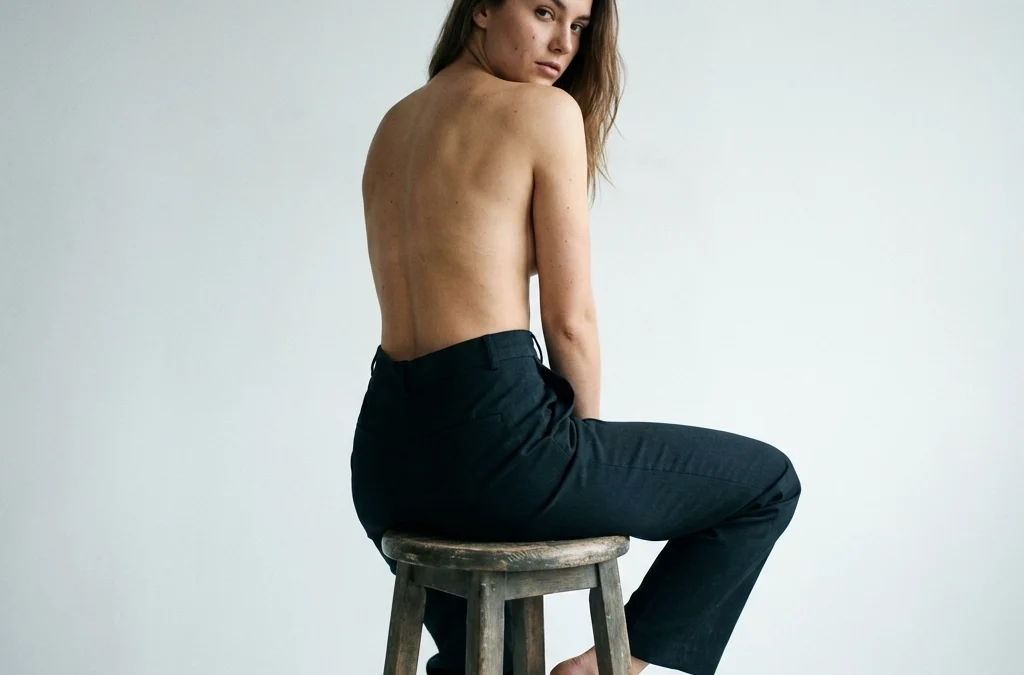
There is a thin, vibrating line between a simple snapshot and a masterpiece of erotic nude photography. Most people think it’s just about having a beautiful woman in front of the lens, but professionals know better. It’s about the tension, the light, and the way a single shadow can tell a story that words can’t touch. If you’ve ever looked at a high-end editorial and wondered why your shots feel "flat" compared to theirs, you’re in the right place. We’re pulling back the curtain on the secrets that separate the amateurs from the masters of fine art nude photography.
The Geometry of Seduction: Master the Pose
When you’re shooting nude photography, the body is your architecture. You aren’t just looking for skin; you’re looking for shapes. Professional photographers rely heavily on geometric shapes: specifically triangles and S-curves: to create a sense of movement and grace.
Think about it: a body standing straight up is static. It’s boring. But the moment you have your model bend a knee, shift her weight to one hip, or bring an elbow up behind her head, you’ve created a series of triangles. These shapes lead the viewer’s eye through the frame, lingering on the curves and dips of the female form. We often use these techniques in our fine art nude tutorials to show how a subtle shift in a shoulder can change the entire mood of a session.
Don't forget the hands. "Idle hands" are the enemy of a great erotic photograph. A hand resting softly on a thigh, gently pulling at hair, or trailing along the collarbone adds a layer of tactile intimacy. It makes the viewer feel the texture of the scene. If you’re struggling to visualize how these poses should look before your model arrives, tools like CandyAI can be a great way to experiment with different aesthetics and character archeal types to get your creative juices flowing.

Sculpting with Light: Beyond the Basics
Lighting for nude photography isn't about illuminating everything. It’s about choosing what to hide. In the world of high-end erotic nude photography, shadows are just as important as the highlights.
Most pros prefer diffuse, soft lighting for a classic "fine art" look. Large softboxes or even a north-facing window can wrap around the curves of a woman's body, smoothing the skin and creating a gentle transition from light to dark. This is often referred to as "high-key" lighting, and it lends a romantic, ethereal quality to the work.
However, if you want something rawer and more intense, you have to embrace the "low-key" approach. This involves using a single, hard light source to create deep shadows. By positioning the light to the side (rim lighting), you can trace the silhouette of the body, highlighting only the edge of a breast, the curve of a hip, or the line of the spine. This creates a high-contrast, moody vibe that feels incredibly sophisticated and voyeuristic.
The Lens and the Perspective
Your choice of glass dictates the intimacy of the shot. While a wide-angle lens can be great for environmental erotic photography: where the setting is as much a character as the model: it can also distort the body if you get too close.
Most professionals swear by the 50mm or 85mm prime lenses. An 85mm lens, in particular, is a "gold standard" for art nude photography. It allows you to stay at a comfortable distance from the model while providing a shallow depth of field (that beautiful, blurry background) that makes the subject pop. It also compresses the features slightly, which is generally very flattering for the female form.

Varying your angles is another "secret" that isn't really a secret, but many people forget it in the heat of a shoot. Don't just shoot from eye level. Get down low to make the model look statuesque and powerful, or shoot from above to create a sense of vulnerability and softness. When you’re looking for fresh perspectives, browsing the galleries of a premium membership can give you a clear view of how different professionals tackle the same subject from vastly different angles.
The Psychological Connection: Trust and Vulnerability
You can have the best camera in the world and the perfect lighting setup, but if your model isn't comfortable, the photos will look stiff. Erotic photography requires a high level of trust. A professional fine art photographer spends as much time communicating as they do clicking the shutter.
Before the clothes even come off, talk about the vision. Show her mood boards. Let her know exactly what you’re trying to achieve. During the shoot, keep the energy positive and professional. Compliment the lines she’s creating, not just her body. When a model feels like she is a co-creator in an artistic project rather than just a subject being "watched," she will give you those raw, authentic expressions that make a photograph truly erotic.
This vulnerability is what separates "pornography" from "art." It’s the look in her eyes, the slight part of her lips, or the way she carries herself when she knows she’s being captured as a work of art.

Texture, Props, and the Environment
While the focus is always on the woman, the environment plays a massive role in the narrative of erotic nude photography. You don't always need a multi-million dollar studio. A rumpled bed, a velvet chair, or even a stark concrete wall can provide the perfect textural contrast to soft skin.
Props should be used sparingly and purposefully. Think of things that enhance the tactile nature of the shot: silk sheets, a fur throw, or even the steam in a bathroom. These elements invite the viewer to imagine the temperature, the scent, and the feel of the room. It builds a world around the model.
If you're ever feeling uninspired by your surroundings, I often suggest using AI-driven inspiration platforms like CandyAI to generate "vibe checks" for your next shoot. Sometimes seeing a specific color palette or a unique lighting setup in an AI-generated image can be the spark you need to rearrange your own studio space.
Post-Processing: The Final Polish
The secret to professional-grade nude photography often lies in what happens after the shoot. In the fine art world, less is usually more. You want the skin to look like skin: pores and all. Over-smoothing can make a model look like a plastic doll, which kills the eroticism immediately.
Instead, focus on "dodge and burn." This technique allows you to manually brighten the highlights and darken the shadows, essentially re-sculpting the body in post-production. It adds a three-dimensional quality that makes the image jump off the screen. Color grading also plays a huge role; a warm, golden tint can make a shot feel intimate and sun-drenched, while a cool, desaturated blue can make it feel edgy and modern.

Level Up Your Art
Mastering the art of the nude is a lifelong journey. It requires a balance of technical skill, psychological intuition, and a deep appreciation for the female form. Whether you are just starting out or you are a seasoned pro looking to refine your style, there is always something new to learn about light, shadow, and the power of a well-placed curve.
If you’re ready to dive deeper into the world of professional eroticism and see how the masters do it, we invite you to join our community. You'll get access to exclusive galleries, high-end tutorials, and a network of creators who are dedicated to the craft of the human form. To take your work to the next level and see the full potential of this art form, sign up for our membership today and start your journey into the elite world of fine art nude photography.