
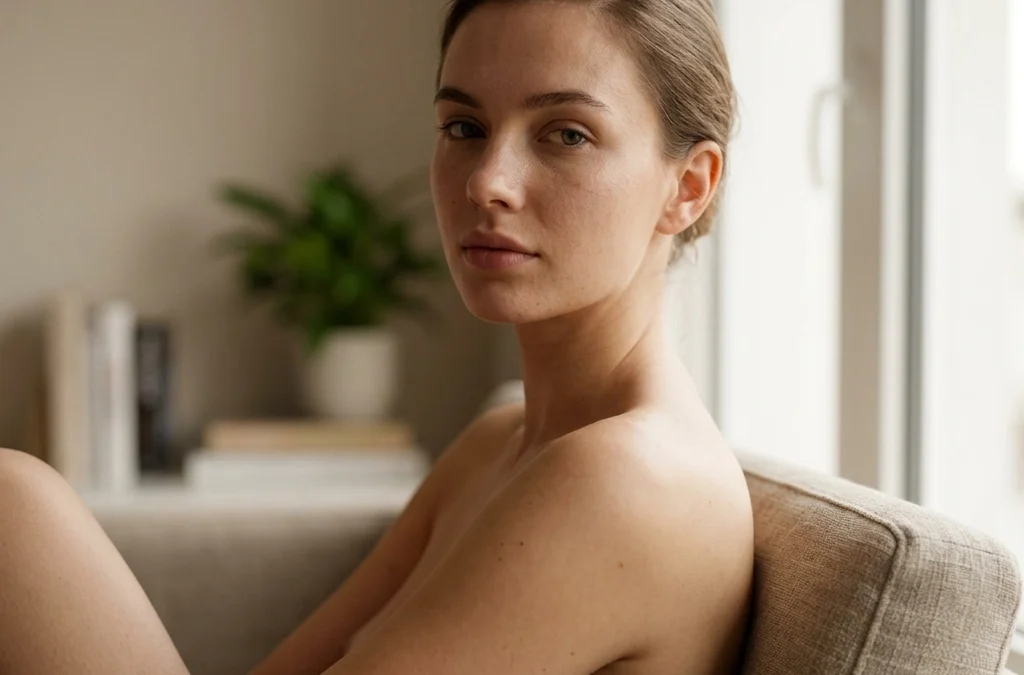
There is something inherently raw and honest about the way natural light interacts with the female body. While high-end studio strobes and complex modifiers have their place in the industry, the most breath-taking erotic nude photography often happens when you strip away the artifice and let the sun do the work. Natural light doesn’t just illuminate; it caresses, it highlights, and it leaves just enough to the imagination through the deep, velvety shadows it creates.
If you are just starting your journey into art nude photography, the prospect of managing a shoot can feel overwhelming. However, by mastering the simplest light source available: the sun: you can create images that feel intimate, professional, and deeply erotic. This guide will walk you through the essential nude photography tips to help you transition from a hobbyist to a creator who understands the nuance of skin, light, and shadow.
The Power of the Window
The humble window is perhaps the most versatile tool in your arsenal. When you’re learning how to photograph nude models, the window acts as a massive, free softbox. The key is understanding how the direction and quality of that light change throughout the day.
North-facing windows provide a soft, consistent light that is perfect for a clean, light and airy aesthetic. South-facing windows, however, can provide harsh, direct rays that are incredible for high-contrast erotic nude photography. When the sun beams directly into a room, you can use it to create "chiaroscuro" effects: where the model’s curves are dramatically defined against a dark background.
If you find the direct sun is too harsh, a simple sheer white curtain can transform that light into a soft, glowing haze. This setup is a staple for black-lingerie shoots where you want the texture of the lace to pop against the model’s skin without losing the softness of her features.

Sculpting the Form with Directional Light
In the world of erotic photography, shadows are just as important as the light itself. Shadows provide depth, dimension, and mystery. They are what turn a flat image into a piece of fine art. To master lighting for nude photography, you must stop thinking about "lighting the model" and start thinking about "sculpting the form."
Side lighting is your best friend here. By positioning your model at a 90-degree angle to the window, the light will fall across her body, highlighting the ridge of her hip, the curve of her breast, and the line of her spine, while leaving the other side in shadow. This creates a three-dimensional look that emphasizes the physical reality of the body.
If you're ever feeling stuck on how to visualize a specific pose or how light might fall on a certain body type, experimenting with creative AI tools can be a great way to prep. For instance, using CandyAI allows you to play with different visual concepts and lighting moods before you even step into the room with a model, helping you refine your artistic vision.
Posing Nude Models for Natural Light
Posing is where many beginners struggle. The goal in erotic nude photography is to find poses that feel natural yet intentional. When working with natural light, you have to be mindful of how the model’s body creates its own shadows. An arm positioned across the chest might cast an awkward shadow across the torso, or a chin tucked too low might disappear into the darkness of the neck.
Encourage your model to move slowly and fluidly. Ask her to arch her back slightly to catch the light on her collarbones, or have her sit in a way that allows the light to hit the tops of her thighs. If you are shooting a beach set, use the expansive open light to your advantage, but watch for the "raccoon eyes" that overhead midday sun can cause.
For more detailed breakdowns on specific movements, our fine art nude tutorials offer a deep dive into the choreography of a successful shoot, ensuring you know exactly how to direct your subject for maximum impact.

Texture, Skin Tone, and Contrast
One of the most beautiful aspects of using natural light is how it renders skin. Whether you are shooting a model with ivory skin or deep, rich ebony tones, natural light brings out the unique textures and undertones that make each woman beautiful.
Different skin tones react to light in fascinating ways. Darker skin tones often have a stunning reflective quality that catches "specular highlights": those bright spots of light: beautifully. This can make the body look like it’s been sculpted from polished bronze. Lighter skin tones tend to catch the softness of the light, creating a porcelain-like glow.
Don't be afraid to experiment with props to enhance these textures. A pair of black lace panties or even just the subtle glint of black shoes can provide a point of contrast that makes the skin look even more radiant. The interplay between the matte texture of the skin and the sheen of silk or leather is a classic trope in erotic photography for a reason: it works.
Embracing the Moody and Dark
Not every shoot needs to be flooded with light. Some of the most provocative art nude photography happens in the half-light. "Low-key" photography is a style where most of the frame is dark, and only the essential parts of the model are illuminated.
To achieve this with natural light, find a room where you can control the light source almost entirely. Close the blinds or curtains until only a sliver of light is coming through. Position your model so that only her profile or a single curve: like an amber topless standing pose: is caught in that sliver. This creates a sense of voyeurism and intense intimacy that is hard to replicate with artificial lights.
Technical Settings for Beginners
You don't need the most expensive camera in the world to get started, but you do need to understand how to use the one you have. For natural light nude photography, I recommend the following:
- Wide Aperture: Use a low f-stop (like f/1.8 or f/2.8) to create a shallow depth of field. This keeps the focus on the model’s skin and features while blurring out the background, making the image feel more intimate.
- Shoot in RAW: This is non-negotiable. RAW files retain all the data from your sensor, allowing you to recover details from the shadows or highlights during post-processing.
- Watch Your ISO: Try to keep your ISO as low as possible to avoid "noise" or grain, unless you are intentionally going for a vintage, gritty look.
- White Balance: Natural light changes color temperature throughout the day (blue in the morning, golden in the afternoon). Setting your white balance to "Daylight" or "Cloudy" can help maintain consistent skin tones.
Finding Your Unique Voice
The technical side of photography is just the foundation. The real magic happens when you start to develop your own "eye." What attracts you to a scene? Is it the way the light hits a woman's hair? Is it the curve of her waist when she's bottomless?
Every photographer sees the world differently. Some prefer the clean, minimalist lines of boudoir photography poses, while others want something more raw and edgy. Don't be afraid to take risks. Some of your best shots will come from "mistakes": a lens flare you didn't expect, or a shadow that fell in a way you didn't plan.

Joining the Community
Mastering erotic nude photography is a journey, and you don't have to walk it alone. Surrounding yourself with other artists, professional models, and high-quality educational content is the fastest way to improve your craft. Whether you’re looking for posing inspiration, technical advice, or just a place to share your work with like-minded creators, there is a seat for you at the table.
If you’re ready to take your skills to the next level and get exclusive access to behind-the-scenes content, professional tutorials, and a curated gallery of the world’s most beautiful models, now is the time to membership. Joining our community gives you the tools and the inspiration to turn your vision into reality.
Natural light is a gift to the photographer. It is ever-changing, always available, and infinitely beautiful. By learning to work with its moods and nuances, you can create erotic art that stands the test of time. So, grab your camera, find a beautiful window, and start shooting. The light is waiting.