
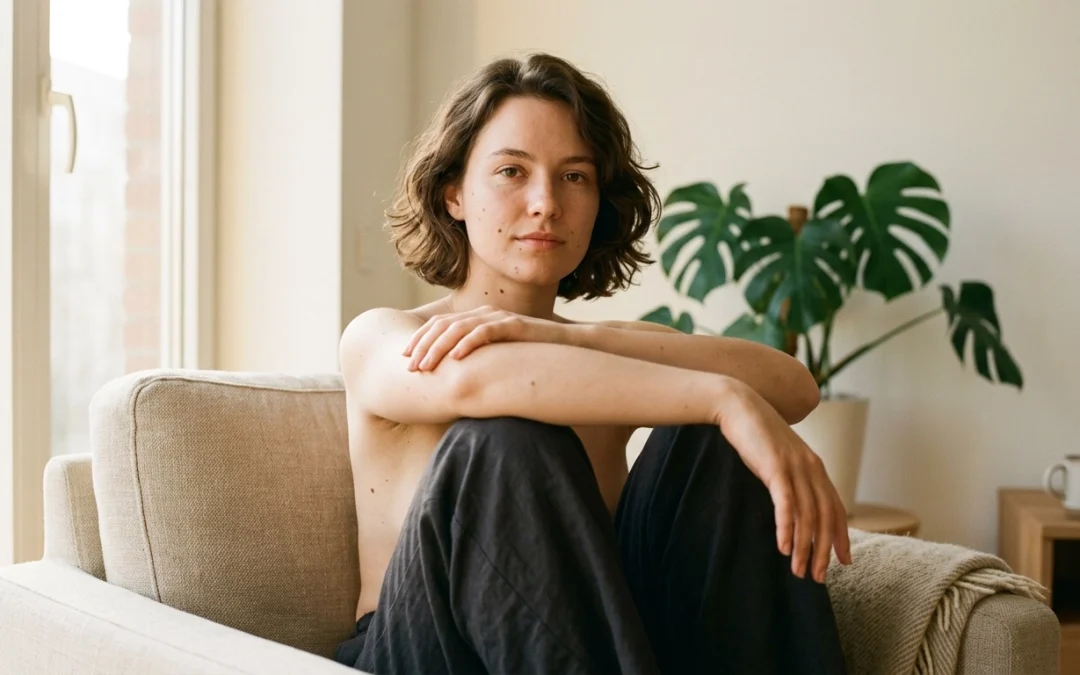
In this stunning capture, Roseanne showcases the power of soft cinematic lighting in a modern apartment setting. The warmth of the golden hour highlights the raw skin texture and natural imperfections that define high-quality erotic nude photography, creating a mood that is both intimate and artistically refined.
Stepping into the world of erotic nude photography is about more than just taking off clothes; it’s about capturing the soul of a moment, the curve of a silhouette, and the raw, tactile reality of the human form. For beginners, the challenge often lies in moving beyond the explicit to find the artistic. Whether you’re shooting in a minimalist studio or a sun-drenched apartment, mastering mood and texture is what separates a snapshot from a masterpiece.
At the Fine Art Nude Club, we pride ourselves on showcasing the very best in this genre. From the delicate play of light on skin to the high-contrast drama of chiaroscuro, our galleries are a masterclass in how to photograph nude models. If you’re looking for inspiration to kickstart your journey, exploring our curated collections is the perfect first step toward understanding the nuances of the craft.
Setting the Scene: The Foundation of Mood
Mood is the emotional heartbeat of your photograph. It’s what makes a viewer stop and feel the intimacy of the scene. In fine art nude photography, mood is primarily dictated by your lighting choices and the environment you create for your model.
Soft and Sensual: The Power of Natural Light
For those just starting out, natural light is your best friend. A large window with diffused light: think a thin white curtain or an overcast day: creates soft, romantic transitions on the skin. This "high-key" approach emphasizes softness and fantasy. When you’re working with a model like Roseanne, using this gentle light allows you to capture a dreamy, approachable eroticism that feels authentic and warm.
Dark and Intense: Mastering Chiaroscuro
On the opposite end of the spectrum is low-key lighting. By using a single, directional light source and letting deep shadows swallow the rest of the frame, you create mystery. This is where "chiaroscuro": the dramatic contrast between light and dark: comes into play. It’s a technique we dive into frequently in our fine art nude tutorial series, as it’s essential for sculpting the body and adding a layer of erotic tension.

Shaylene’s form is sculpted by intense side-lighting in this low-key erotic photography piece. The deep shadows draw the eye to the smooth curves of her legs and feet, while the visible skin pores and natural textures on the silk sheets add a gritty, realistic depth to the image.
Capturing the Tactile: Why Texture Matters
Texture is what makes a photo feel "real." In the digital age, it’s tempting to airbrush skin until it looks like plastic, but true erotic nude photography thrives on the raw details. We’re talking about visible pores, natural skin sheen, and the subtle imperfections that make every woman unique.
To capture these details, you need to pay attention to your "angle of incidence." Side lighting is the secret to making texture pop. When light hits the skin at an angle, it casts tiny shadows in every pore and highlight on every curve, giving the image a three-dimensional feel. When you’re looking for a reference for your next shoot, or even just looking for a virtual muse to test out concepts, using a tool like CandyAI can help you visualize how different lighting setups interact with various skin tones and body types.
The Contrast of Surfaces
Texture isn't just about the skin; it’s about the environment. Pair the smoothness of a model’s back with the roughness of a concrete wall or the delicate weave of lace. These contrasts heighten the tactile experience for the viewer. When you see a shot of the Scorpio Sisters, notice how the interaction between their forms creates a new layer of visual texture that is both complex and deeply erotic.

This dual-model composition featuring the Scorpio Sisters emphasizes the artistic beauty of human connection. The soft cinematic lighting brings out the raw skin texture and natural imperfections, making this a prime example of how to use art nude photography to tell a story of intimacy.
Posing and Expression: Beyond the Basics
Posing nude models requires a blend of direction and intuition. For beginners, the goal is to create "flow." Encourage your model to move naturally, transitioning from one pose to the next rather than holding a rigid position.
- Emphasize Curves: Have the model arch their back slightly or point their toes to elongate the limbs.
- Focus on the Details: Sometimes, the most erotic shot isn't a full-body reveal. A close-up of the neck, the curve of a hip, or slightly parted lips can be incredibly powerful.
- Eye Contact vs. Anonymity: Direct eye contact creates an intense, personal connection. However, looking away or hiding the face in shadow adds a layer of voyeuristic mystery.
Scarlet, for instance, is a master of the subtle expression. By focusing on her lips and the softness of her neck, we can create a sense of longing that a more explicit shot might miss. This is the heart of art nude photography: suggesting a narrative that the viewer can finish in their own mind.

Scarlet’s close-up captures the essence of erotic allure through subtle details. The sharp focus on her lips and the visible skin pores on her neck, combined with deep shadows, creates an intimate atmosphere that defines high-end fine art nude photography.
Technical Tips for Success
You don’t need a room full of gear to master nude photography, but you do need to understand the tools you have.
- Lenses: A 35mm lens is fantastic for environmental portraits, while an 85mm lens is perfect for flattering the body and compressing features.
- Aperture: Shooting wide open (around f/1.8) allows you to isolate the subject with a shallow depth of field, making the skin texture the undisputed star of the show.
- Post-Processing: Keep it light. The goal is to enhance the raw photo, not rewrite it. Adjust your contrast to make the shadows deeper and use a bit of grain to give the image a timeless, film-like quality.

This study of Roseanne’s back highlights the importance of shape and shadow in erotic photography. The cinematic chiaroscuro lighting accentuates the natural sheen and texture of the skin, proving that the most compelling art nude photography often focuses on the elegance of the human silhouette.
Join the Club
Mastering erotic nude photography is a lifelong journey of exploration and refinement. Whether you’re a hobbyist looking to improve your skills or an enthusiast who simply appreciates the beauty of the female form, there is always something new to learn.
At Fine Art Nude Club, we offer more than just galleries; we offer a community and a resource for anyone passionate about this art form. By becoming a member, you gain exclusive access to thousands of high-resolution images and deep-dive tutorials that will help you take your work: or your appreciation: to the next level. Ready to see the world through a more artistic lens? You can sign up for our membership today and start exploring the raw, unedited beauty of our world-class models.
Remember, the best photos aren't just seen: they're felt. Focus on the mood, respect the texture, and let the natural beauty of your subject lead the way.