
Capturing the female form is perhaps the oldest obsession in the history of art. From charcoal sketches on cave walls to high-end digital sensors, the goal remains the same: to immortalize the raw, intoxicating beauty of the human body. But when it comes to fine art nude photography, there is a very thin line between a masterpiece that stirs the soul and a snapshot that feels awkward, flat, or just plain cheap.
If you’ve been feeling like your work is missing that "wow" factor: that high-end, erotic elegance that defines the greats: you’re likely falling into one of a few common traps. Photography in this genre isn't just about nudity; it’s about light, trust, and the deliberate sculpting of flesh. Let’s dive into the seven most common mistakes photographers make when shooting art nude and, more importantly, how you can fix them to elevate your portfolio.
1. You’re Shooting Erotica, Not Art (The Intent Gap)
The biggest mistake is starting a shoot without a concept. Many photographers go into a session thinking, "I have a beautiful model, she’s naked, the rest will happen." This usually results in poses borrowed from the world of adult entertainment: overly suggestive, biologically impossible arches that lack emotional depth. While there is a place for pure erotica, fine art demands more.
The Fix: Start with a concept. Are you focusing on the geometry of the body? The way the shadows of a window blind fall across an ebony back? Or perhaps the contrast between soft skin and a harsh, industrial background? Before you click the shutter, ask yourself what the story is. If you find yourself stuck for creative inspiration or need a muse to help you visualize a specific character or setting before the model arrives, exploring the AI-generated beauties on CandyAI can be a fantastic way to experiment with different aesthetics and personas to find your next "look."
2. Ignoring the Power of Communication and Comfort
If your model is cold, nervous, or feels like an object rather than a collaborator, it will show in her eyes and her posture. Tension in the shoulders, "claw" hands, and a forced expression are the death of a fine art nude photograph.
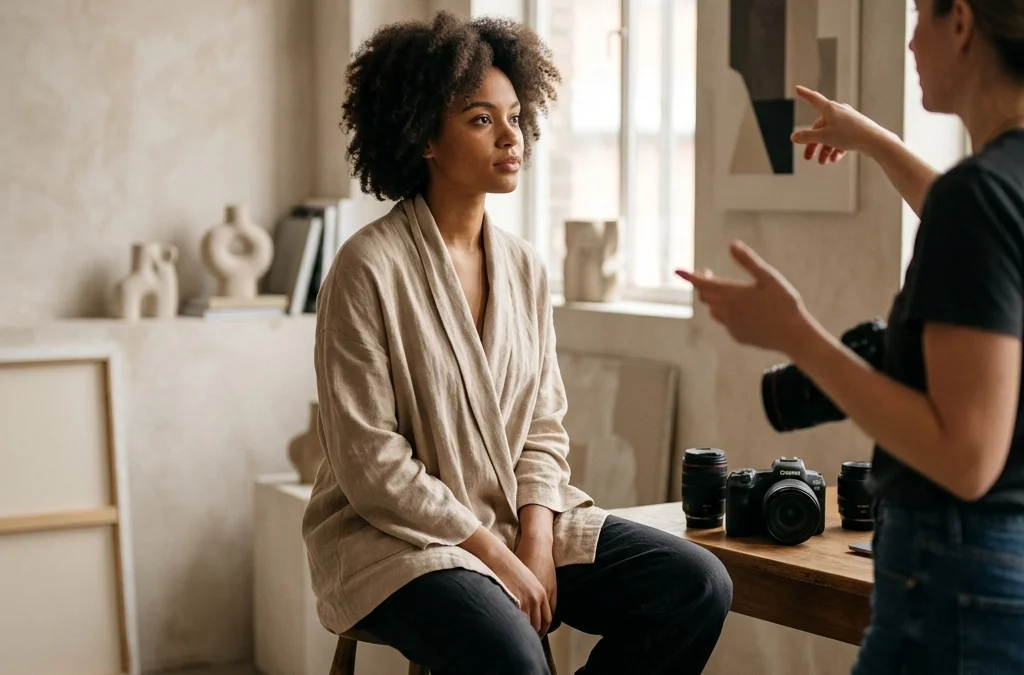
The Fix: Treat the "vibe" of the room as your most important piece of gear. Keep the studio warm: models are naked, you are not. Play music that fits the mood. Most importantly, talk through the shoot before she ever takes off her robe. Explain your vision, show her some reference images, and maintain a constant dialogue. When she feels safe and respected, she will give you those raw, authentic expressions that turn a photo into art. If you're looking for more tips on how to build this rapport on set, our deep-dive fine art nude tutorial covers the psychological side of directing models in detail.
3. Posing That Flattens or Distorts the Form
Using the wrong lens or the wrong angle can turn a gorgeous woman into a distorted mess. A wide-angle lens used too close will make hands or feet look giant and the torso look small. Conversely, posing a model in a way that "squashes" her skin against a floor or chair can create unflattering lines that distract from her natural beauty.
The Fix: Stick to focal lengths between 50mm and 85mm for most nude photography to keep proportions natural. When it comes to posing, look for the "S-curves." Have your model tilt her head, arch her back slightly (but naturally), and point her toes. Watch for "foreshortening": ensure her limbs aren't pointing directly at the camera. Instead of having her sit flat on a surface, have her shift her weight to one hip to create a more dynamic, sculptural shape.
4. Flat, Uninspired Lighting
Flat lighting is the enemy of the nude form. If you are using a single flash pointed directly at the model, you are washing out the very curves you’re trying to celebrate. Fine art nude photography is as much about the shadows as it is about the skin. Without shadow, there is no depth; without depth, the body looks two-dimensional.
The Fix: Use directional lighting. Side-lighting (rim lighting) is a classic technique for a reason: it catches the edge of a shoulder, the curve of a breast, and the line of a leg while leaving the rest to the imagination. Whether you’re using a massive softbox for a gentle, "painted" look or a harsh spotlight for a high-contrast noir vibe, make sure the light is sculpting the body. You want the light to wrap around her, highlighting the texture of her skin and the definition of her muscles.
5. Letting the Background Fight the Subject
We’ve all seen it: a beautiful nude shot ruined by a messy bed, a distracting power outlet, or a busy wallpaper pattern that "grows" out of the model's head. In erotic photography, the focus should be 100% on the woman. Anything that draws the eye away from her is a failure of composition.
The Fix: Simplify. If you’re shooting in a bedroom, use solid-colored sheets. If you’re in a studio, a seamless paper backdrop or a simple textured wall is your best friend. Look for "visual mergers": lines in the background that intersect with the model's body in awkward ways. Your goal is to create a clean stage where her form can take center stage. Remember, negative space (the "empty" parts of the frame) is a powerful tool to emphasize the subject’s vulnerability and grace.
6. Being Too Static (The "Statue" Problem)
Many photographers treat a nude shoot like a still life, keeping the model frozen in one position for minutes at a time. This leads to stiff photos that feel clinical. Real skin has movement, and real art has soul.
The Fix: Introduce motion and texture. Use a fan to catch her hair, or have her move slowly through a pose while you shoot in a burst. This is also where fabric comes in. A sheer silk robe, a piece of tulle, or even water can add a layer of mystery and elegance. When the model moves, her body reacts in natural, sexy ways: muscles flex, skin shifts, and the light catches different angles. To see how these dynamic elements are used by world-class photographers, you should definitely join the club at Fine Art Nude Club and get access to our exclusive galleries and behind-the-scenes content.
7. Over-Retouching (The "Plastic" Trap)
In the age of social media filters, it’s tempting to retouch every pore, mole, and "imperfection" until the model looks like a CGI character. This is a fatal mistake in fine art. The beauty of nude photography lies in its honesty. Real skin has texture, goosebumps, and tiny flaws that make the image human and relatable.
The Fix: Use a "less is more" approach to post-processing. Clean up temporary blemishes like a stray bruise or a scratch, but leave the skin's natural texture intact. Avoid heavy frequency separation that makes skin look like plastic. A high-end erotic image should feel like you could reach out and feel the warmth of her skin. If you lose the texture, you lose the intimacy.
Mastering the Art of the Nude
Fine art nude photography is a lifelong journey of learning how light interacts with the female form. It’s about more than just a naked body; it’s about the confidence of the woman in front of the lens and the vision of the artist behind it. Whether you’re capturing the soft glow of a porcelain-skinned blonde or the deep, rich tones of a mahogany-skinned goddess, the principles remain the same: respect the form, master the light, and never stop experimenting.
By avoiding these seven mistakes, you’ll find that your work takes on a more professional, artistic, and undeniably sexy edge. If you’re ready to take your skills to the next level and learn from the best in the business, make sure to explore our full range of fine art nude tutorials where we break down lighting setups, posing guides, and post-production secrets.
The world of fine art is waiting for your unique perspective. Don't just take photos: create art that lingers in the mind long after the viewer has looked away. For more inspiration and to see how the pros do it every single day, become a member of the Fine Art Nude Club today.