
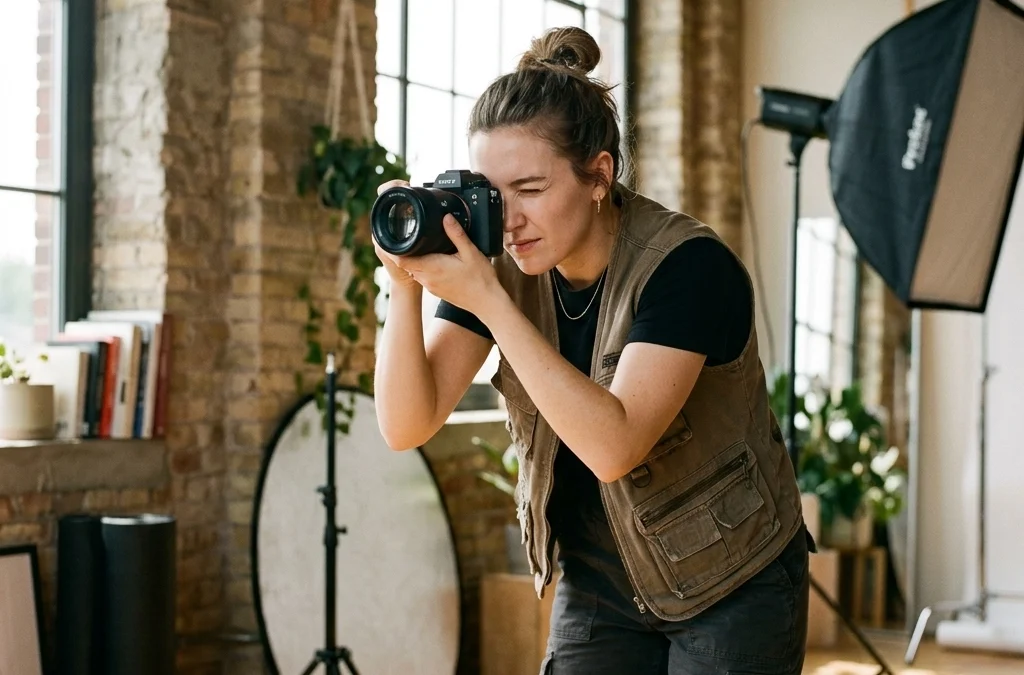
Erotic photography is an intoxicating blend of technical precision and raw, unadulterated emotion. It isn’t just about the absence of clothes; it’s about the presence of a vibe, a tension that exists between the lens and the subject. Whether you are looking to capture the soft, ethereal glow of a morning session or the gritty, high-contrast shadows of a late-night studio shoot, mastering erotic photography requires more than just a good camera. It requires a mindset that respects the art while embracing the heat.
In this guide, we’re going to strip away the fluff and get down to what actually works. From understanding the nuances of nude photography to the psychological game of directing a model, this is your roadmap to creating images that don’t just show skin, they tell a story.
Defining the Vision: Eroticism vs. The Rest
Before you even pick up your camera, you need to know what you’re trying to say. Art nude photography and erotic nude photography often overlap, but the intent is what sets them apart. Fine art tends to focus on the body as a landscape of shapes and textures. Erotic photography, however, leans into the sensuality. It’s about desire, fantasy, and the gaze.
It’s often helpful to visualize your concepts before the model ever steps into the room. If you’re struggling to nail down a specific look or want to experiment with how different lighting setups interact with various body types, using a tool like CandyAI can be a fantastic way to generate reference images and inspiration. It allows you to play with aesthetics and moods, helping you sharpen your creative eye before you ever hit the shutter.
Building the Foundation: Ethics and Connection
The most important piece of gear in your bag isn't a lens, it's trust. When you are learning how to photograph nude models, the atmosphere you create on set is everything. A model who feels safe and respected will give you a performance that is leagues beyond someone who feels like an object.
Always start with a clear conversation. Discuss the level of nudity, the specific shots you’re aiming for, and what is strictly off-limits. Professionalism doesn't mean being clinical; it means being a leader who ensures the environment is comfortable. This connection is the secret sauce behind every legendary fine art nude photography session. When that wall comes down, the camera captures something authentic.
Lighting for Nude Photography: The Language of Shadow
Lighting is where the magic happens. In erotic photography, what you hide is often just as important as what you reveal. If you blast a model with flat, even light, you lose the contours that make the female form so captivating.
To really make skin pop, you need to understand the direction of light.
- Side Lighting: This is your bread and butter. By placing your light source to the side, you create shadows that define the waist, the curve of the hip, and the muscles of the back.
- Backlighting: If you want to create a silhouette or a soft "rim" of light around the body, place the light behind the model. This is perfect for art nude photography where you want to emphasize shape over detail.
- Natural Light: Never underestimate a large window and a sheer curtain. The softness of natural light is incredibly flattering for all skin tones, from deep Ebony to porcelain.
If you’re looking to dive deeper into specific setups, our fine art nude tutorial section breaks down these lighting techniques in a way that’s easy to replicate in your own space.
Posing Nude Models: Flow and Tension
Direction is an art form in itself. You aren't just telling someone where to stand; you’re choreographing a mood. When posing nude models, look for "S-curves." The human body is rarely attractive when it’s straight and stiff. Ask your model to shift her weight to one leg, arch her back slightly, or tilt her chin.
Think about boudoir photography poses but turned up a notch. Instead of just "sitting on a bed," think about how the limbs interact. Crossed legs create interesting negative space. Hands running through hair or resting lightly on a thigh add a sense of touch and realism.
Directing is about micro-adjustments. A slight part of the lips or a heavy-lidded gaze can transform a standard portrait into a piece of powerful erotic photography. Remember, you’re looking for a balance between comfort and tension. If a pose feels too strained, it will show in her face.
Gear and Technical Settings
You don't need a $10,000 rig to succeed, but you do need to know your tools. For nude photography, prime lenses are usually the winners. A 50mm or 85mm lens with a wide aperture (like f/1.8 or f/1.4) allows you to blur the background, making the model the undisputed star of the frame. This shallow depth of field creates an intimate, "dreamy" feel that works perfectly for sensual imagery.
- Aperture: Keep it wide for portraits, but don't be afraid to stop down to f/8 if you’re doing a full-body architectural shot where every detail of the skin texture matters.
- ISO: Keep it as low as possible. You want the skin to look buttery smooth, not grainy, unless you’re intentionally going for a vintage, raw film look.
- Shutter Speed: If you’re working with natural light, make sure your shutter speed is fast enough to avoid blur from the model’s breathing or minor movements.
Composition: The Art of the Crop
Composition in erotic nude photography is about leading the eye. Use the lines of the body, the spine, the long line of a leg, the curve of the neck, as leading lines. Sometimes, the most erotic shot isn't a full-body reveal. It’s a tight crop of the small of the back, the collarbone, or the way a hand grips a silk sheet.
Don't be afraid to get close. Detail shots add variety to a gallery and allow the viewer’s imagination to fill in the blanks. This "tease and reveal" style is a hallmark of high-end erotic art. It moves the work away from the "explicit" and into the "intriguing."
Post-Production: Refining the Heat
Editing should be the final polish, not a total reconstruction. In fine art nude photography, the goal is to enhance the mood you captured on set.
- Color Grading: Warm tones feel inviting and classic. Cool, blue tones feel cinematic and modern. Black and white is a timeless choice for focusing purely on form and light without the distraction of color.
- Skin Retouching: Be careful here. You want the model to look like a real person, not a plastic mannequin. Remove temporary blemishes or distracting marks, but keep the natural texture of the skin.
Consistency is key. If you’re building a portfolio, your editing style should feel cohesive. This helps you establish a "brand" that clients and models will recognize. For those who want to see the end result of these professional workflows, the Fine Art Nude Club membership gives you access to a massive library of high-end galleries and behind-the-scenes content that shows exactly how these images look when they’re finished.
Building Your Portfolio and Finding Your Voice
To truly succeed in this niche, you need to showcase diversity. Celebrate beautiful women of all races and body types. Your portfolio should prove that you can handle the unique challenges of different skin tones and curves under various lighting conditions.
Start small. Collaborate with models who share your vision. Use every shoot as a learning experience. As you grow, you’ll find that you gravitate toward a certain style: maybe it’s the high-fashion edge of erotic photography or the soft, romantic feel of boudoir.
Final Thoughts
Erotic photography is a journey of constant discovery. It’s about the thrill of the click when the light, the pose, and the expression all align perfectly. It’s a challenging, rewarding, and deeply artistic field that demands both technical skill and emotional intelligence.
If you’re ready to take your craft to the next level and see how the pros do it, there’s no better place to start than by surrounding yourself with world-class inspiration. Check out our latest galleries and join a community of creators by signing up for a Fine Art Nude Club membership. Whether you’re a hobbyist or an aspiring pro, the resources and the inspiration you’ll find there are exactly what you need to turn your vision into a reality. Now, grab your camera, find your muse, and start shooting.