
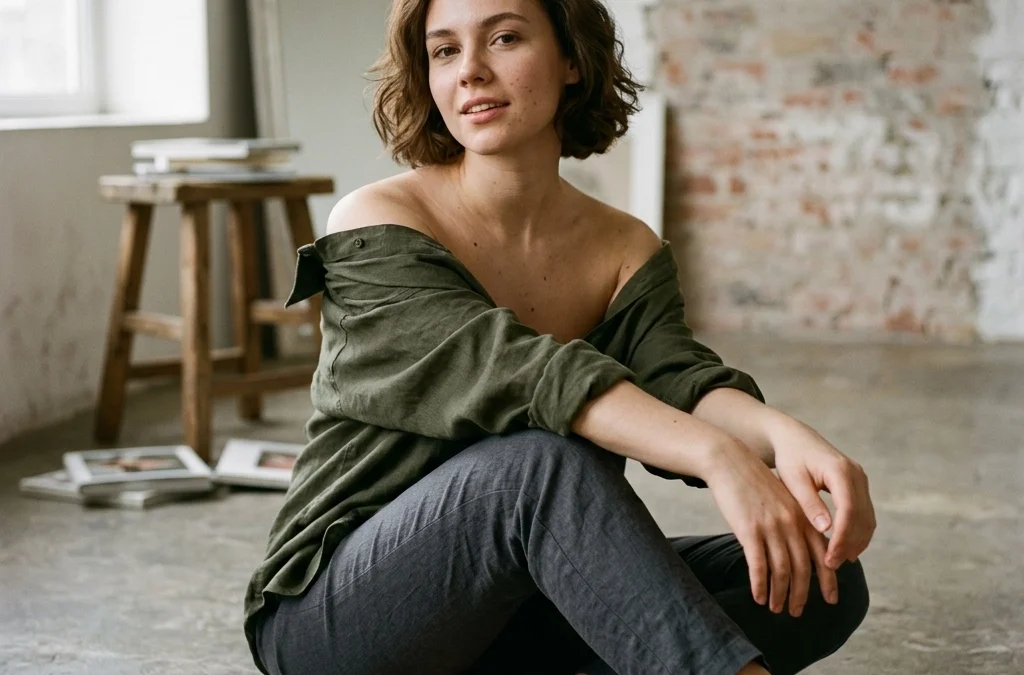
There is something visceral about the human form. Stripped of fashion, status, and the armor of the everyday world, the body becomes a landscape of light, shadow, and raw emotion. Fine art nude photography isn’t just about the absence of clothing; it’s about the presence of a soul through the medium of skin and bone. If you are just starting your journey into this world, you likely realize that the transition from standard portraiture to erotic nude photography is a steep climb. It requires a different eye, a different level of trust, and a mastery over the subtle language of the body.
The female form is arguably the most versatile subject in art history. Whether you are capturing the soft, mahogany glow of a model in low light or the sharp, architectural angles of a pale torso against a dark backdrop, posing is the heartbeat of your image. A single inch of movement can transform a photo from a clinical study into a high-end piece of art nude photography. This guide is here to help you navigate those inches, ensuring your sessions are professional, artistic, and undeniably sexy.
The Foundation: Trust and the Art of Communication
Before you even pick up your camera, you need to understand that the most important tool in your kit isn't a lens: it's communication. When you are photographing nude models, you are asking for a level of vulnerability that most people never show. You have to be the anchor in the room. Your tone should be casual but authoritative; you are the director of an erotic masterpiece, not a voyeur.
Start by discussing the mood. Is the shoot meant to be soft and ethereal, or sharp and edgy? Show your model mood boards or reference images. If you’re looking for a quick shot of inspiration to show a model the kind of "digital muse" energy you’re going for, checking out the AI-generated beauties at CandyAI can be a great way to visualize lighting and complex poses before the real session begins. When a model knows you have a clear vision, she can relax into the pose, and that’s when the real magic happens.
Mastering the Language of Curves
The primary goal of posing nude models is to create flow. You want the viewer’s eye to travel across the body like it’s following a winding road. This is where the concept of the "S-curve" comes into play. In fine art nude photography, standing straight and flat to the camera is rarely the goal. Instead, you want to create angles and depth.
Ask your model to shift her weight to one leg. This naturally drops one hip and raises the other, creating that classic, seductive silhouette. Have her arch her back slightly to emphasize the curve of the spine. When you’re dealing with different body types and races, the way light catches these curves changes. A woman with deep, obsidian skin will reflect highlights in a way that creates incredible contrast, while a fair-skinned model might require more delicate shadow play to define her shape.
Sitting and Reclining: The Vulnerability of the Pose
Seated poses offer a sense of intimacy that standing poses often lack. They allow for a more compact composition, where limbs can overlap to create interesting negative spaces. When your model is seated, pay close attention to her midsection. Even the most fit models can have skin folds when sitting; to minimize this, have her sit tall, "growing" through the top of her head.
Reclining poses are a staple of erotic nude photography for a reason: they are inherently sensual. However, they can be tricky. Perspective is everything. If you shoot from a low angle near the feet, they will look disproportionately large. Instead, try shooting from a higher angle or from the side to emphasize the length of the legs and the arch of the back. For those who want to see how these angles are perfected in a professional studio setting, our deep-dive fine art nude tutorials break down these reclining setups step-by-step.
The Power of the Limbs: Hands and Feet
Nothing ruins a beautiful art nude photography piece faster than "claw hands" or "stump feet." Hands should always be soft. If a model is touching her own body: which is a great way to add a layer of eroticism: the touch should be light, barely grazing the skin. Heavy pressure causes the skin to indent and looks clumsy.
Feet should almost always be "pointed" or "floated." Think like a ballerina. This elongates the leg and adds a sense of grace. Even in a raw, aggressive erotic shoot, a flexed foot can look accidental and distracting. Remind your model to keep tension through her toes but relaxation in her fingers. This balance of tension and ease is what separates a beginner from a master.
Lighting for Nude Photography: Sculpting the Form
You can have the most beautiful model in the world in the perfect pose, but if your lighting is flat, the photo will die. Lighting for nude photography is about sculpting. You aren't just lighting a face; you are lighting a landscape.
One of the most effective techniques is side lighting. By placing your light source at a 90-degree angle to the model, you create deep shadows on one side and bright highlights on the other. This emphasizes the musculature and the texture of the skin. If you’re aiming for a more boudoir photography poses feel, use a large softbox to wrap the light around her body, creating a gentle, inviting glow.
If you are shooting in a darker, more "erotic" style, try using a rim light: a light placed behind the model that catches the edges of her body. This "halo" effect separates her from the background and makes the silhouette pop. It’s a classic move in erotic nude photography that never fails to impress.
Negative Space and Composition
In fine art nude photography, what you don’t show is often as powerful as what you do show. Negative space: the area around and between the subject: is a character in itself. Use the gaps between an arched arm and a torso, or the space between thighs, to create geometric shapes.
Don't be afraid to crop tightly. Sometimes a photo of just the curve of a hip or the nape of a neck is more evocative than a full-body shot. The human eye loves to fill in the blanks. By leaving something to the imagination, you invite the viewer to engage more deeply with the work. To see how these compositional rules are applied to produce world-class imagery, you should join the club and gain access to our exclusive galleries of master-level work.
The Psychology of the Shoot
Beyond the technical nude photography tips, you must manage the energy in the room. A model who feels "watched" will look stiff. A model who feels "seen" as an artistic collaborator will give you expressions and poses you never could have coached. Keep the music playing, keep the conversation flowing, and never stop giving positive reinforcement. "That’s perfect," "Look at that line," or "The light is hitting you beautifully" are phrases that should be on repeat.
If you find yourself stuck or the energy is dipping, take a break. Looking at art in different forms can reset your brain. Sometimes I’ll even pull up a tool like CandyAI just to look at the way their algorithms interpret "sensual lighting": it’s a modern way to spark a new idea for a pose or a color grade that you hadn't considered before.
Technical Refinement and Post-Processing
Once the shoot is over, the work is only half done. Post-processing in fine art nude photography should be handled with a light touch. You want to enhance the skin, not turn it into plastic. Retain the pores, the fine hairs, and the natural variations in tone. This "realness" is what makes the image erotic and relatable.
Focus on dodging and burning: brightening the highlights and deepening the shadows. This further "sculpts" the body and gives it a three-dimensional feel. If you’re shooting in black and white, pay attention to the grain. A little bit of texture can give the photo a timeless, cinematic quality that elevates it from a digital file to a piece of art.
Conclusion: Your Journey into the Fine Art Nude
Mastering the art of posing nude models is a lifelong pursuit. Each woman you photograph brings a new set of lines, a new personality, and a new challenge to your lens. Don't be afraid to fail, and certainly don't be afraid to experiment. Whether you're aiming for the high-gloss world of erotic nude photography or the quiet, contemplative halls of art nude photography, the key is to stay curious and stay respectful.
The female form is a masterpiece waiting to be captured. By focusing on communication, understanding the geometry of curves, and mastering the play of light and shadow, you are well on your way to creating something iconic. For those who are serious about taking their skills to the professional level, checking out our fine art nude tutorials is the best way to bypass years of trial and error.
Ready to see the full potential of this art form? There’s an entire community of creators and enthusiasts waiting for you. Don’t just stand on the sidelines: join the club today and start your journey toward mastering the most beautiful subject on earth.