
Nude photography is an intimate dance between the lens and the human form. It is the purest expression of art, stripping away the distractions of fashion and trends to focus on the raw, erotic allure of the body. But let’s be real: capturing a truly breathtaking fine art nude isn't just about having a high-end camera and a beautiful woman in front of you. It’s about mastery over the silhouette, the light, and, most importantly, the posing.
When you step into a studio or a bedroom for a shoot, you aren’t just a photographer; you are a director of desire and aesthetics. Knowing how to guide a model into a pose that highlights her best features while maintaining an artistic edge is what separates a snapshot from a masterpiece. Whether you are aiming for something soft and ethereal or a bold, erotic statement, this guide will walk you through the essential techniques of posing nude models.
The Foundation of the Form: Communication and Comfort
Before the first click of the shutter, the most important element of the shoot must be established: trust. A model who feels uncomfortable or unheard will look stiff, and that tension will ruin even the best-composed shot. Your job is to create an environment where she feels empowered and safe.
Always talk through the vibe of the shoot beforehand. Are we going for a moody, low-key look using black lingerie? Or are we heading to the beach for something sun-drenched and natural? Once the clothes come off, maintain a professional distance. Never touch a model to adjust a pose; instead, use your own body to demonstrate the movement or use verbal cues.
When you're stuck for inspiration or want to see how a specific lighting setup might look on a different body type, I often recommend playing around with CandyAI to spark new creative ideas for your next session. It’s a great tool for visualizing concepts before you ever step foot in the studio.
Mastering the "S" Curve and Tension
In erotic and fine art photography, the "S" curve is your best friend. The human body is a series of interconnected lines, and by introducing twists and shifts in weight, you create a sense of movement and visual interest.
The Weight Shift: Never have a model stand with her weight evenly distributed on both feet. It’s flat and boring. Have her shift her weight to one leg, which naturally drops one hip and raises the other. This simple move creates an immediate curve in the waist and accentuates the roundness of the glutes.
The Power of Tension: Tension creates drama. A slightly arched back, a pointed toe, or fingers lightly grazing the skin can add a layer of erotic intensity. For those who want to see these concepts in action with real-time feedback, our fine art nude tutorials provide an over-the-shoulder look at how we direct models in the studio to achieve that perfect balance of grace and grit.
Standing Poses: Presence and Power
Standing poses are perfect for showcasing the full length of the model’s body. They convey confidence and can be incredibly striking when paired with the right lighting.
- The Over-the-Shoulder Look: Have the model stand with her back to you, perhaps slightly angled. Ask her to look back over her shoulder. This highlights the curve of the back and the line of the jaw. If you’re working with a model like Amber Bassick, you’ll see how this pose can be both vulnerable and incredibly dominant.
- The Wall Lean: Using a wall for support allows the model to arch her back more comfortably. It provides a point of contact that can lead to more relaxed, natural-looking eroticism. Have her raise one arm above her head to elongate the torso, pulling the skin tight across the ribs for a lean, athletic look.
- The Profile: A side profile is the best way to capture the silhouette of the breasts and the curve of the stomach. Experiment with having her pull her hair up or let it fall forward to hide or reveal parts of her face.
Seated and Floor Poses: Intimacy and Detail
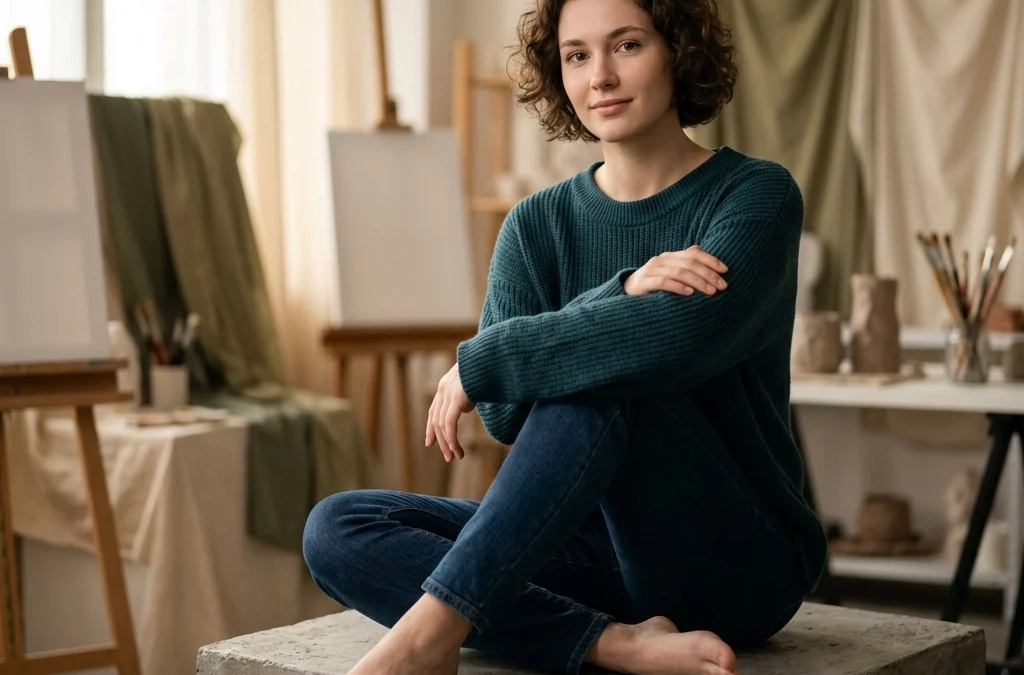
Seated poses often feel more intimate and "closer" to the viewer. They allow for a lot of variation in leg positioning, which can be used to lead the eye toward specific parts of the body.
When a model is seated, pay close attention to the midsection. Even the leanest models can have skin "bunch" when sitting. To avoid this, encourage her to sit tall, lengthening the spine, or to lean back on her arms to stretch the torso.
- The Cross-Legged Lean: A classic seated pose where the model sits with legs crossed but leans forward slightly. This can create beautiful "triangles" with the limbs, which are visually satisfying in a composition.
- The Kneeling Pose: Kneeling can be incredibly erotic, especially when the model is bottomless. It highlights the thighs and can be paired with a slight arch in the back to emphasize the chest.
If you’re looking for a specific example of how to execute these transitions perfectly, check out the Ashley video tutorial. Seeing the flow of movement between poses is often more helpful than just seeing the final result.
Reclining and Erotic Nuance
Reclining poses are the bread and butter of boudoir and high-end erotic photography. Whether she’s on a bed, a rug, or a cold studio floor, the reclining position suggests a level of surrender and raw availability that is incredibly powerful.
The "V" Shape: Have the model lie on her back and bring her knees up toward her chest, or spread them wide. This is a bold, provocative stance that demands attention. You can soften the look by having her use her hands to cover her breasts or by using a piece of black lace to add a layer of mystery.
The Side Lying Pose: Lying on the side is the ultimate way to emphasize the "hourglass" figure. Ensure the model lifts her waist slightly off the ground to keep the lines clean. This pose works exceptionally well with low-key lighting, where the highlights only catch the very edge of her hip and shoulder.
Lighting the Pose
A pose is only as good as the light that defines it. In nude photography, light is your "clothing." It covers what you want to hide and reveals what you want to celebrate.
- Side Lighting (Rembrandt): This creates deep shadows and high contrast, perfect for muscular or athletic models where you want to show every ripple of the form.
- Backlighting (Rim Light): This is essential for silhouettes. By placing the light behind the model, you create a glowing halo around her body, emphasizing the shape without revealing skin texture or color.
- Softbox Overheads: This mimics a natural, "window light" feel, making the eroticism feel more grounded and real.
Final Thoughts: Finding Your Artistic Voice
Posing isn't a set of rigid rules; it’s a language. The more you practice, the more you’ll find your own style. Some photographers prefer the geometric precision of a perfectly placed limb, while others want the raw, messy energy of a model in motion.
If you are ready to stop guessing and start creating high-end art that actually stands out in a crowded digital world, you need to be learning from the best in the industry. We dive deep into the technical and the primal aspects of this craft every single day. Stop guessing and start creating high-end art by becoming a part of our community when you join the club.
Photography is an obsession. Posing is the heartbeat of that obsession. Go out there, find your light, and don't be afraid to push the boundaries of what is possible with the human form.