
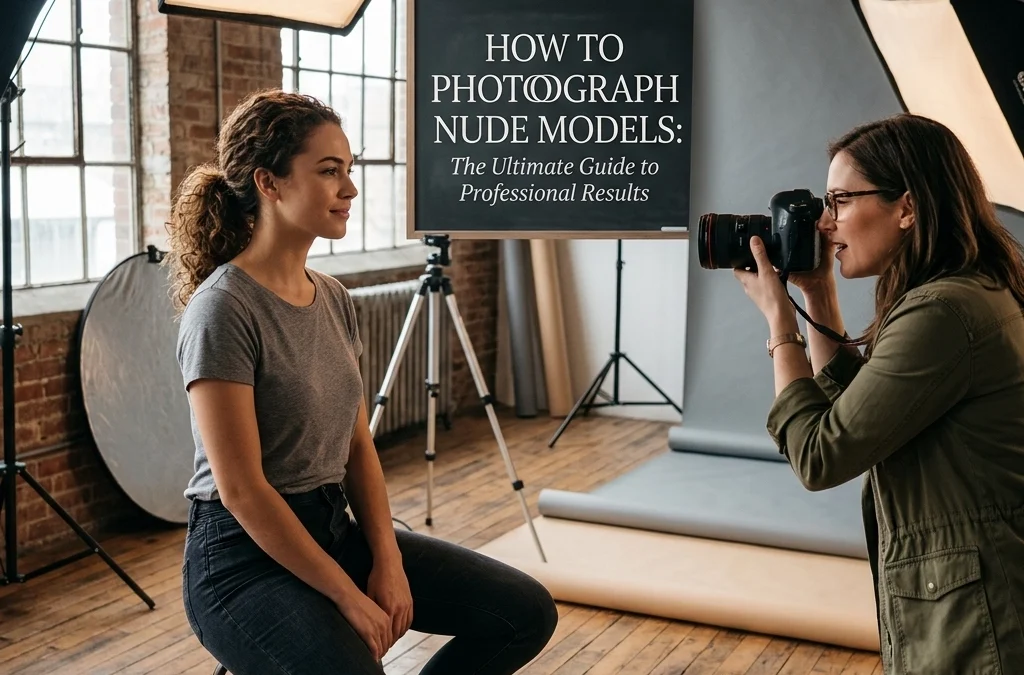
Capturing the human form is the oldest pursuit in art, but in the world of high-end photography, it’s about more than just skin. It’s about the tension, the shadow, and the raw, unapologetic beauty of a woman’s body. Whether you are aiming for moody, evocative shadows or bright, high-key elegance, erotic photography requires a balance of technical precision and artistic intuition. This isn’t just about pointing a camera; it’s about mastering the dance of light and anatomy.
To get professional results, you have to move past the amateur mindset. You aren't just taking a picture; you are creating an atmosphere. In this guide, we’re going to dive deep into the world of fine art nude photography, exploring the techniques that separate the hobbyists from the masters.
Setting the Scene and Building the Vibe
Before the first piece of clothing hits the floor, the success of your shoot is already being decided. The atmosphere of your studio or location dictates the energy the model brings to the frame. For art nude photography to feel authentic and high-end, the model needs to feel like a collaborator, not an object.
Start with the basics: warmth. A cold studio is the quickest way to end a shoot. If your model is shivering, her muscles will tense, and you’ll lose those soft, fluid lines that make the female form so captivating. Use a space heater, play some music that fits the mood, and always have a soft robe ready for her between setups.
Communication is your most powerful tool. Before you start, discuss the visual direction. Are we going for something raw and gritty, or something ethereal and soft? If you’re struggling to articulate a specific look, sometimes it helps to visualize the "character" you’re shooting. Some photographers even use tools like CandyAI to experiment with different aesthetics, lighting styles, or character archetypes before the shoot to help define the specific vibe they want to capture in real life.
Lighting for Nude Photography: The Secret to Depth
If you get the lighting wrong, the rest doesn't matter. In erotic nude photography, light is your paintbrush. You aren't just lighting a subject; you are sculpting a body.
Soft Light for Elegance
Large softboxes or natural window light on a cloudy day are your best friends for creating that creamy, high-end look. This type of lighting fills in the "flaws" and wraps around the curves of a woman's hips and breasts, creating a gentle transition from highlight to shadow. It’s flattering, timeless, and gives that classic fine art feel.
Hard Light for Drama
If you want to emphasize muscle tone, the arch of a back, or the texture of the skin, you need hard light. A single speedlight or a focused spotlight can create deep, cinematic shadows. This is where you play with "Chiaroscuro": the contrast between light and dark. By keeping parts of the model in total darkness, you invite the viewer’s imagination to fill in the gaps, which is the cornerstone of sophisticated erotic photography.
The Rim Light
One of the most essential nude photography tips is the use of the rim light. By placing a light source behind and slightly to the side of your model, you create a thin line of light that traces the silhouette of her body. This separates her from the background and highlights the graceful curves of her shoulders, waist, and legs. It’s a technique that adds immediate professional polish to any shot.
Posing Nude Models: Flow and Form
Posing is where many photographers stumble. The goal is to create lines and shapes that lead the eye through the frame. You want to avoid "flat" poses where the model is standing straight on to the camera. Instead, focus on angles.
The Power of Triangles
Whenever you bend an arm or a leg, you create a triangle. Triangles add dynamic energy to a composition. Ask your model to bring a knee up, place a hand on her neck, or arch her back. These small adjustments create negative space: the gaps between her limbs and her body: which are just as important as the body itself.
The "Ski Slope" and the S-Curve
The S-curve is the holy grail of boudoir photography poses. By having the model shift her weight onto one hip and slightly twist her torso, you emphasize the natural hourglass figure. The "ski slope" pose: where the model lies on her stomach and arches her back while pushing her chest up: creates a stunning line from the neck down to the lower back, highlighting the elegance of the spine.
When you’re directing, be specific. Instead of saying "look sexy," say "drop your chin and look through your lashes," or "inhale and hold it to tension the core." If you’re looking for a deep dive into the technicalities of these movements, our fine art nude tutorial section offers step-by-step breakdowns of how to guide a model through a professional flow.
Skin and Texture: The Finishing Touches
Professional results often come down to the details that amateurs overlook. Skin texture is everything. You want it to look touchable and real.
Ask your model to avoid wearing tight clothing or bras for at least two hours before the shoot to prevent "pressure marks" on the skin. During the shoot, a little bit of body oil can go a long way. Don't drench her: just a light mist to catch the highlights on the collarbones, the tops of the thighs, and the curve of the buttocks. This creates a "glow" that makes the skin pop under your lights.
Diversity is also your strength. Every skin tone: from deep ebony to porcelain white: interacts with light differently. Darker skin tones look incredible with gold reflectors and warm rim lighting, while lighter skin tones can handle high-key, airy setups with ease. Celebrate the unique textures and tones of every woman you photograph; that authenticity is what makes art nude photography resonate.
Essential Gear and Settings
You don't need a million dollars' worth of gear, but you do need the right lens. A 35mm lens is great for environmental shots where you want to show the room, but it can distort the body if you get too close. For professional erotic photography, an 85mm or a 50mm prime lens is the standard. These lenses provide a flattering perspective and allow for a shallow depth of field, which blurs the background and keeps all the focus on the model’s form.
Keep your aperture wide (f/1.8 to f/2.8) if you want that soft, dreamy look. If you’re doing a more architectural, "body-as-landscape" shot where every detail needs to be sharp, stop down to f/8 or f/11.
Remember, the camera is just a tool. The real magic is in the vision. However, having a community of like-minded creators to learn from is how you truly sharpen that vision. To see these principles in action and gain access to exclusive content that pushes the boundaries of the craft, you should join the Fine Art Nude Club today. Our community is dedicated to the highest standards of the art form, providing the inspiration you need to level up your work.
The Professional Mindset: Ethics and Artistry
The most important "setting" on your camera is your professionalism. Respect is the foundation of every great erotic photography session. Never touch a model to adjust her pose without asking first. Always show her the "back of the camera" periodically so she can see how amazing she looks; this builds her confidence and leads to better, more relaxed expressions.
Nude photography is a journey of constant learning. You’ll find that as you master the lighting for nude photography and the nuances of posing, your style will evolve from simple documentation to true artistic expression. Don’t be afraid to experiment, to fail, and to try again. The female body is an infinite canvas of inspiration.
By focusing on the connection between light, shadow, and the incredible diversity of the female form, you’ll move beyond the "nude" and into the realm of "art." Keep shooting, keep exploring, and keep pushing the limits of what you can capture behind the lens. The world of fine art is waiting for your unique perspective.