
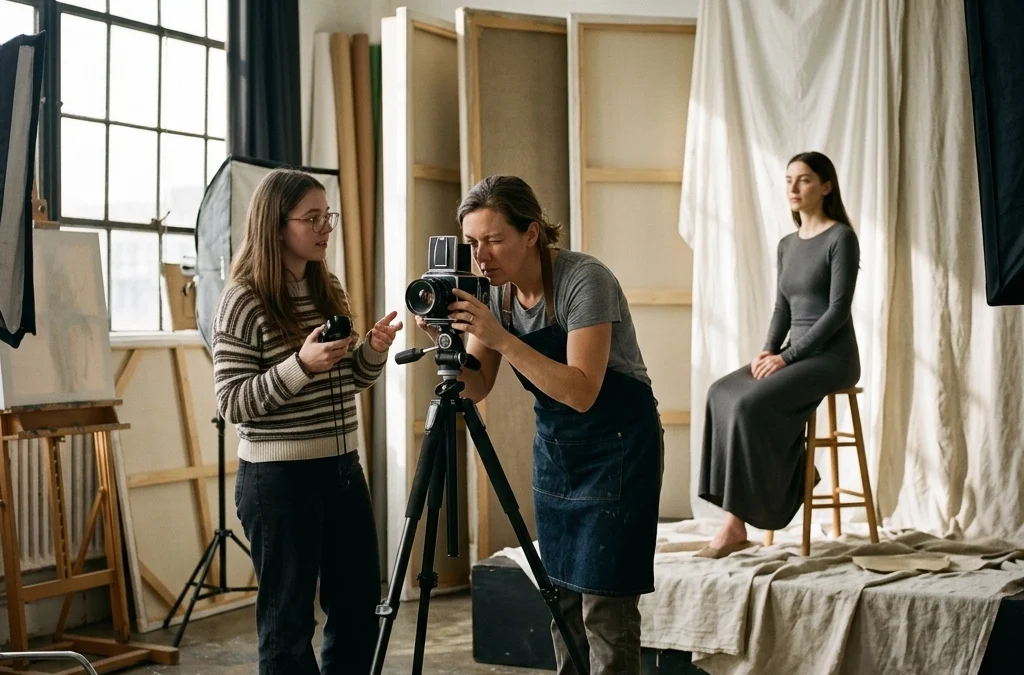
There is something inherently raw and electric about the human form. When you strip away the fashion, the trends, and the literal fabric of society, you’re left with the most honest subject on the planet. But let’s be real: there’s a massive difference between a snapshot of a naked woman and a piece of fine art nude photography. One is a document; the other is a mood, a story, and a masterpiece of light and shadow.
If you’re just starting out, the world of erotic photography can feel a bit like a minefield. You want to capture the heat, the sensuality, and the raw beauty of your model without crossing the line into the clinical or the mundane. You want to create art nude photography that stops people in their tracks: not because of what they’re seeing, but because of how it makes them feel.
Welcome to your 101 guide. We’re going to dive into the technical, the artistic, and the psychological aspects of mastering artistic erotica.
The Mindset: Art Over Objectification
The very first thing you need to master isn't your camera: it's your intent. In fine art nude photography, the model isn't just a body; she’s a collaborator. Whether she’s a professional muse or someone exploring her own sensuality for the first time, your job is to elevate her.
Beginners often get nervous, which leads to stiff posing and awkward vibes. You need to be the anchor in the room. Professionalism is your best tool here. Talk to her, share your vision, and never stop communicating. If you find yourself struggling with how to visualize a concept or want to experiment with different aesthetics before you even pick up the camera, using a tool like CandyAI can be a fantastic way to generate reference images and explore various lighting styles or body types to refine your artistic eye.
Lighting: The Language of the Body
In erotic nude photography, light is your paint. If you use flat, bright lighting, you’re going to end up with something that looks like a medical textbook. If you want drama, you need shadows.
- Chiaroscuro and Contrast: This is the classic "light and dark" technique. By using a single light source (like a large softbox or even a window with a sheer curtain), you can highlight the curves of a woman’s waist or the arch of her back while letting the rest of her body fade into the darkness.
- Side Lighting: This is the gold standard for lighting for nude photography. It emphasizes texture and form. It shows the strength in her shoulders and the softness of her skin.
- Natural Light: Never underestimate a good window. The soft, directional light of a late afternoon can create a dreamy, intimate atmosphere that is perfect for boudoir photography poses.
Posing: Directing the Flow of Sensuality
One of the biggest hurdles for beginners is knowing how to photograph nude models in a way that feels natural. The human body is full of lines and triangles. Your goal is to guide those lines into a composition that draws the eye.
When posing nude models, start with the basics. Ask her to shift her weight to one leg: this naturally pops the hip and creates that classic "S" curve. Tell her to breathe through her mouth to relax her jaw. Small details, like the placement of her fingers or the way her hair falls over her shoulder, can make or break the shot.
If you’re looking for a deep dive into specific techniques, our fine art nude tutorials offer step-by-step breakdowns on how to achieve these high-end looks. You want her to feel powerful and beautiful, not just "exposed." When she feels confident, it translates through the lens.
Gear: Keep It Simple, Keep It Sharp
You don’t need a $10,000 rig to start making world-class art. In fact, too much gear can actually get in the way of the connection between you and your subject.
- Lenses: A 50mm or 85mm prime lens is your best friend. These focal lengths are incredibly flattering to the human form, providing a natural perspective without the distortion you get from wide-angle lenses. Plus, the wide aperture (like f/1.8 or f/1.4) allows you to create that creamy background blur that makes the skin look absolutely divine.
- Camera Settings: Keep your ISO as low as possible to avoid digital noise. You want the skin to look like silk, not sandpaper. If you're working in a studio, keep your shutter speed high enough to avoid any motion blur from slight movements.
Composition and the "Tease"
The most captivating erotic photography often leaves something to the imagination. You don’t have to show everything to tell a sexy story. Sometimes, a close-up of a hand resting on a thigh or the curve of a neck is more provocative than a full-frontal shot.
Use nude photography tips like "framing within a frame." Use doorways, bedsheets, or even shadows to partially obscure the model. This creates a sense of voyeurism and intimacy that is central to the "Fine Art" label. You aren't just taking a picture; you're inviting the viewer into a private, stolen moment.
The Importance of the Environment
Where you shoot matters just as much as what you shoot. If you’re aiming for a high-end, artistic vibe, your background should be clean. A messy bedroom or a cluttered studio will distract from the beauty of the model.
Think about textures. Silk sheets, rough concrete walls, or even the soft glow of a neon sign can add a layer of narrative to your work. If you’re shooting in a minimalist setting, the model’s body becomes the landscape. Every freckle, every curve, and every shadow becomes a landmark.
Post-Processing: Polishing the Gem
Editing is where your personal style really comes to life. In the world of fine art nude photography, less is usually more. You want to enhance the natural beauty, not erase it.
- Color Grading: Warm tones can make a shot feel intimate and inviting, while cool, blue tones can make it feel cinematic and edgy.
- Skin Retouching: Avoid the "plastic" look. Keep the pores, keep the character. Use dodge and burn techniques to subtly emphasize the highlights and shadows you captured during the shoot.
If you’re ever stuck for inspiration or want to see how different color palettes work on various skin tones, checking out the AI-generated masterpieces on CandyAI can give you a fresh perspective on what’s possible in digital art.
Taking the Next Step in Your Journey
Mastering this craft takes time, patience, and a hell of a lot of practice. You’re going to take some bad photos: everyone does. But the key is to keep shooting, keep experimenting, and keep learning from those who have spent years perfecting their style.
There is a community of creators waiting to help you sharpen your skills. Whether you're looking for lighting diagrams, posing guides, or just a curated collection of world-class inspiration to study, joining a dedicated community is the fastest way to level up.
If you're serious about moving beyond the basics and truly mastering the art of the female form, you need to surround yourself with the best in the business. Stop guessing and start creating. You can access our exclusive community and library here to start your journey toward becoming a master of the lens.
Fine art nude photography is a celebration. It’s a celebration of the woman in front of the camera, the light in the room, and the creative fire inside you. Pick up your camera, find your muse, and start making something beautiful. The world has enough boring pictures( make yours count.)