
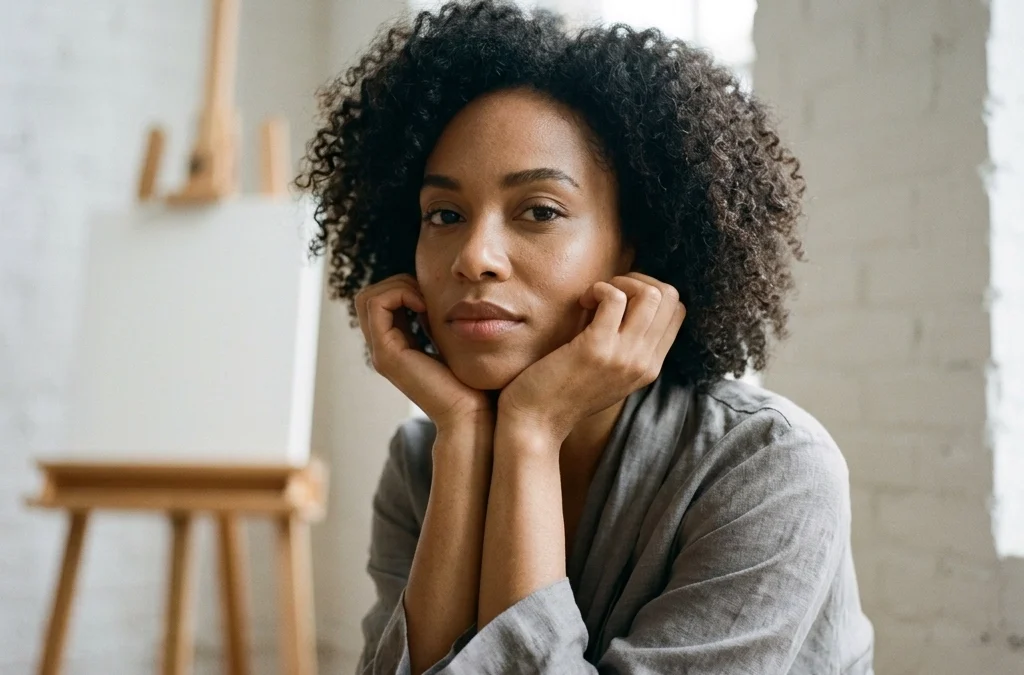
There is something inherently visceral about the human form. When you strip away the fashion, the trends, and the fabric, you’re left with the rawest subject matter a lens can capture. Fine art nude photography isn't just about the absence of clothing; it’s about the presence of soul, shape, and shadow. It is a dance between the light and the skin, a technical challenge that demands both precision and a deep sense of erotic intuition.
If you’re just starting your journey into erotic photography, you’ve likely realized that it’s far more complex than it looks. It’s one thing to see a beautiful woman; it’s another thing entirely to translate that beauty into a high-end, timeless image. This guide is your foundation: the first step in moving from snapshot curiosity to artistic mastery.
The Mindset: Beyond the Lens
Before you even pick up your camera, you have to check your mindset. This isn't clinical, and it isn't "just business." To succeed in art nude photography, you need to approach the session with a sense of reverence for the female form. Your model is your collaborator, not just a subject. The energy you bring to the set: your confidence, your vision, and your respect: will be reflected in the final image.
The best nude photography tips always start with communication. A model who feels safe and empowered will give you a performance that is raw and authentic. If the energy is stiff, the photos will be too. You want to capture that fleeting moment of vulnerability or that sharp, powerful gaze that defines high-end erotic nude photography. When you're looking for inspiration or trying to visualize a complex lighting setup before a shoot, playing with tools like CandyAI can help you conceptualize poses and light interactions in a digital space, allowing you to walk into the studio with a clear, focused plan.
Lighting the Curves: The Erotic Play of Shadow
In fine art nude photography, light is your primary tool for sculpting the body. You aren't just lighting a person; you’re lighting landscapes of skin. If you want to master how to photograph nude models, you must master the shadow.
High-key lighting: bright, airy, and soft: is fantastic for creating a dreamlike, ethereal vibe. It softens the skin and creates a sense of purity. However, many masters of the craft prefer low-key lighting. This is where you use deep shadows to hide certain parts of the body while highlighting the peak of a curve or the line of a spine. This "chiaroscuro" effect is what elevates a simple nude into a piece of art.
- Side Lighting: This is the "gold standard" for lighting for nude photography. By placing your light source at a 90-degree angle to the model, you emphasize the texture of the skin and the three-dimensional depth of her muscles and curves.
- Backlighting: Creating a rim of light around the silhouette can be incredibly sexy. It defines the shape of the body while keeping the details of the face and torso a mystery.

Posing: The Language of the Body
When it comes to posing nude models, the goal is to create lines that draw the eye through the frame. You’re looking for "S" curves and triangles. A flat, square-on pose rarely does justice to the female form. You want to encourage the model to shift her weight, arch her back slightly, or use her limbs to create negative space.
In boudoir photography poses, the focus is often on comfort and intimacy. In fine art, the focus is on the graphic nature of the body. Ask your model to elongate her neck, point her toes, or twist her torso. These small adjustments create tension and flow. If you ever feel stuck on how to direct, our fine art nude tutorial library offers deep dives into specific posing flows that work for every body type.
Remember, the body is a series of interconnected shapes. If a pose feels "off," it’s usually because a limb is cutting through a line or a joint is pointing too sharply at the camera. Soften the hands, relax the jaw, and watch how the mood shifts from clinical to erotic.
The Gear: Keeping it Simple
Beginners often get bogged down in gear. The truth? A high-end mirrorless camera is great, but your choice of lens is what really matters. For nude photography, a 50mm or 85mm prime lens is your best friend. These focal lengths provide a natural perspective that doesn't distort the body, and the wide apertures allow you to melt the background into a soft, buttery blur.
Avoid wide-angle lenses (anything below 35mm) when you’re close to the model, as they can make limbs look disproportionately large or warped. You want to represent the woman as she is: beautiful, balanced, and alluring.

The Environment: Setting the Stage
Your studio or location is the "vessel" for your art. It needs to be warm, literally. A cold model is a tense model. Beyond the temperature, the aesthetic of the room should complement the vibe of the shoot. Are you going for a raw, industrial look with concrete and shadows? Or a lush, velvet-heavy boudoir feel?
Even if you’re shooting in a simple home studio, the details matter. Keep the space clean, have music playing to set the mood, and always have a robe and water ready for your model. Professionalism is the foundation upon which great erotic photography is built.
Post-Processing: Enhancing the Rawness
The shoot doesn't end when the shutter clicks. Post-processing in fine art nude photography should be about enhancement, not reconstruction. You want to draw out the tones in the skin, balance the highlights, and perhaps add a touch of grain to give the image a cinematic, "film-like" quality.
Don't over-retouch. The "plastic" look is the enemy of fine art. You want to see the texture of the skin, the subtle freckles, and the reality of the human form. High-end eroticism thrives on authenticity. Use your editing software to guide the viewer’s eye toward the focal point of your composition: whether that’s the curve of a hip or the intensity in the model’s eyes.
Why You Need to Join the Club
Mastering this art form is a lifelong pursuit. You can read every guide on the internet, but the real growth happens when you immerse yourself in a community of like-minded creators and see how the pros do it. There is a specific "eye" for nude photography that only develops through constant exposure to high-quality work and expert instruction.
If you are serious about taking your work to the next level and want to see the raw, unedited process behind some of the most stunning erotic imagery being produced today, you need to join the club. You’ll get access to exclusive galleries, behind-the-scenes content, and a community that values the artistic integrity of the female form.

Final Thoughts for the Beginner
Every great photographer started exactly where you are: wondering how to balance the technical with the creative. Fine art nude photography is perhaps the most challenging and rewarding genre you can explore. It requires you to be a technician, a director, and an artist all at once.
Don't be afraid to fail. Your first few sessions might feel awkward, and your lighting might be a bit off. That’s part of the process. Keep shooting, keep experimenting with shadow, and keep pushing the boundaries of what you think is possible. Focus on the beauty of the woman in front of your lens, and the art will follow naturally.
The human body is the ultimate canvas. Go out there and start painting with light.