
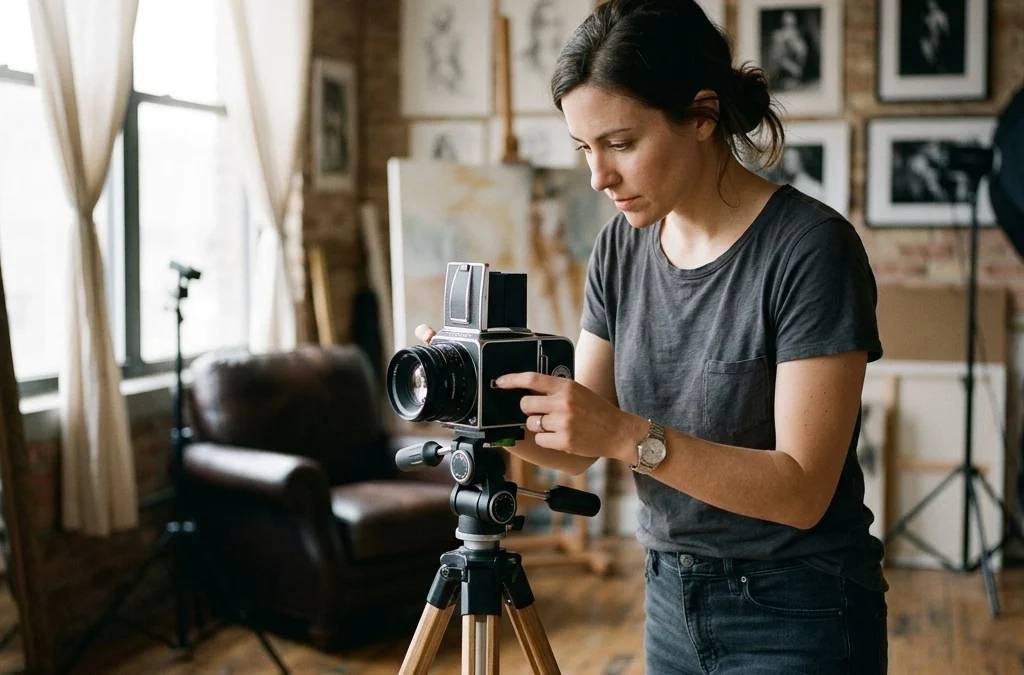
Capturing the human form is the oldest pursuit in art, yet it remains one of the most challenging and rewarding frontiers for a photographer. Fine art nude photography isn't just about taking clothes off; it’s about the raw intersection of light, shadow, and soul. It’s an unapologetic celebration of the female body in all its diverse glory. To succeed in this niche, you need more than just a high-end camera: you need a vision, a deep respect for your subject, and the technical chops to turn a moment of vulnerability into a timeless masterpiece.
Whether you are looking to master the high-contrast drama of erotic photography or the soft, ethereal glow of classic art nude photography, this guide is your roadmap to professional excellence.
The Philosophy: Beyond the Surface
Before you even pick up your camera, you have to decide what story you’re telling. Are you chasing the sculptural elegance of a silhouette, or the raw, intimate heat of erotic nude photography? Fine art is defined by intentionality. Every curve, every patch of skin, and every shadow should serve a purpose.
When I’m planning a session, I often look for inspiration in the most unlikely places. Sometimes, I’ll even use CandyAI to visualize different lighting scenarios and body types, helping me pre-visualize the mood of the shoot before the model even steps into the studio. This kind of prep work ensures that when the robe drops, you aren't guessing: you’re creating.
Setting the Stage: Gear and Environment
You don't need a million dollars' worth of gear to create stunning nude photography, but you do need the right tools for the job.
The Camera and Lenses
A full-frame sensor is your best friend here. It handles the subtle gradients of skin tones with a grace that smaller sensors can't match. When it comes to lenses, prime is king. A 50mm or 85mm f/1.4 or f/1.8 is the gold standard. These focal lengths allow you to capture the model without the distortion that wide-angle lenses bring, keeping her proportions natural and flattering.
The Environment
Your space needs to be a sanctuary. If the model is cold, it will show in her skin (goosebumps) and her expression. Keep the studio warm, play music that fits the vibe, and ensure total privacy. Whether you’re shooting in a gritty industrial loft or a plush hotel suite for boudoir photography poses, the environment dictates the narrative.

Mastering the Light: The Photographer’s Brush
In fine art nude photography, light is your clothes. It’s what hides, what reveals, and what creates depth.
Soft Light vs. Hard Light
- Soft Light: Using large softboxes or natural window light creates a gentle wrap around the body. This is perfect for art nude photography that emphasizes softness and femininity. It hides imperfections and creates a dreamlike quality.
- Hard Light: If you want to emphasize muscle tone, the arch of a back, or the sharp line of a jaw, go with hard, directional light. This creates deep shadows and high-contrast "low-key" images that feel modern and erotic.
For those who want to see these techniques in live action, our fine art nude tutorial section breaks down the specific lighting setups used by the pros to achieve that high-end, gallery-ready look.
Posing Nude Models: The Language of the Body
Posing is where most photographers stumble. A pose should never feel forced; it should feel like a captured moment of movement or repose.
Focus on the Spine and Limbs
The "S-curve" is a classic for a reason. By having the model shift her weight to one hip or arch her back slightly, you create dynamic lines that lead the eye through the frame. Pay attention to the "triangles": the spaces created by bent elbows or knees. These negative spaces are just as important as the body itself.
Hands and Feet
Nothing ruins a beautiful erotic photography shot faster than "claw hands" or awkward feet. Ensure the hands are soft and barely touching the skin. If she’s standing, have her go up on her toes to elongate the legs and tighten the calves.

The Model Connection: Ethics and Professionalism
Success in this industry is built entirely on trust. You are asking someone to be completely vulnerable in front of your lens. Your professional conduct must be impeccable.
- Never Touch: If a strand of hair is out of place or a pose needs adjusting, ask the model to do it herself or use a stylist.
- Communication: Keep talking. Silence on a nude set can feel awkward or even predatory. Tell her she’s doing a great job, explain the shot you’re trying to get, and show her the back of the camera occasionally so she knows how incredible she looks.
- The Robe Rule: The model should be in a robe until the moment you are ready to hit the shutter. As soon as you’re done with a sequence, the robe goes back on.
When you treat your models with this level of respect, they give you more in return: more emotion, more daring poses, and more "soul" in the final image.
Composition: How to Photograph Nude Models with Impact
Composition is what separates a "nude photo" from "nude art."
- The Rule of Thirds: Don't always center your subject. Placing the curve of a hip or the gaze of an eye along the grid lines creates a more balanced and interesting image.
- Leading Lines: Use the edges of the body or props like silk sheets to lead the viewer’s eye toward the focal point.
- Framing: Use the environment to frame the model. A doorway, a window frame, or even her own arms can act as a frame within a frame.

Post-Processing: The Final Polish
The goal of editing fine art is to enhance, not to reconstruct. In erotic nude photography, you want the skin to look like skin: texture is beautiful. Avoid the "plastic" look of over-smoothing.
Focus on:
- Color Grading: Warm tones feel intimate and inviting; cooler tones feel cinematic and detached.
- Dodge and Burn: This is the secret sauce. By manually brightening highlights and deepening shadows, you can "sculpt" the body even further in post-production.
- Consistency: Ensure your set has a cohesive look. Whether it’s a grainy black and white or a high-saturation color grade, consistency is the mark of a professional.
Building Your Portfolio and Finding Your Voice
The market for high-quality erotic and fine art photography is booming, but it’s also crowded. To stand out, you need a signature style. Maybe you specialize in moody, low-light silhouettes, or perhaps you’re the master of sun-drenched outdoor nudes.
Experimentation is key. Use every tool at your disposal, from traditional film to modern digital techniques. If you're looking for a boost in creativity, I've found that playing with the AI-generated concepts on CandyAI can spark ideas for wardrobe, lighting, and diverse model types that I hadn't previously considered.
Ultimately, your portfolio should reflect your unique perspective on beauty. Don't be afraid to be bold, to be provocative, or to push the boundaries of what is expected.

Join the Inner Circle
Fine art nude photography is a lifelong journey of learning. There is always a new way to see the light, a new way to interpret a curve, and a new way to connect with your subject. If you’re serious about mastering this craft and want access to the best tutorials, behind-the-scenes content, and a community of like-minded artists, you need to be where the pros are.
If you're ready to take your portfolio to the next level and truly understand the nuances of this incredible art form, join us at the club. You’ll get the education, the inspiration, and the community you need to turn your passion into a powerhouse career.
The human form is waiting. Are you ready to capture it?