
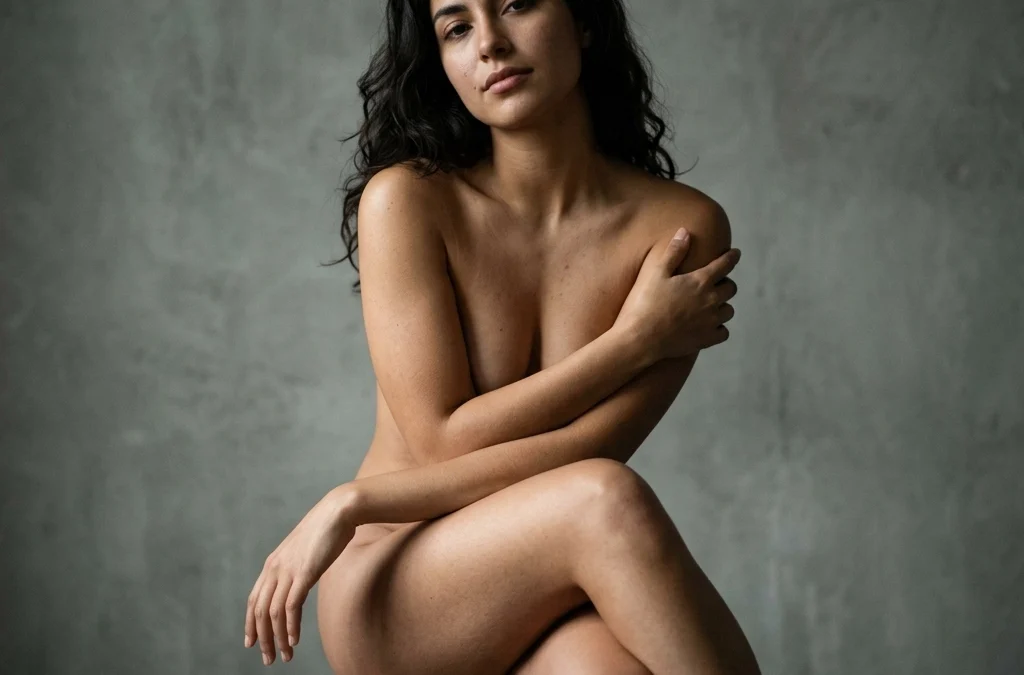
Let’s get one thing straight: taking a photo of a naked woman is easy, but creating a piece of erotic art is a completely different beast. When you step into the world of fine art nude photography, you aren't just documenting a body; you are sculpting with light, shadow, and emotion. You are capturing the raw essence of femininity, the curve of a hip, and the tension in a gaze.
Whether you’re a seasoned photographer looking to dip your toes into the sensual or a complete novice with a fresh camera, mastering composition is your first step toward creating something that doesn’t just look good, but feels provocative. It’s about moving beyond the "snapshot" and into the realm of the extraordinary.
The Vision: More Than Just Skin
Before you even pick up your camera, you need to have a vision. What story are you trying to tell? Is it a story of soft, morning vulnerability? Or is it a dark, moody exploration of power and desire? The most successful erotic photographers don't just "wing it." They understand that every frame is a choice.
A great way to sharpen your visual instincts is to constantly immerse yourself in high-quality imagery. If you’re ever stuck in a creative rut or need to visualize a specific aesthetic before your model arrives, experimenting with a tool like CandyAI can be a fantastic way to generate inspiration and see how different lighting and body types interact in a digital space before you bring that vision to life in the studio.
Sculpting with Light and Shadow
In nude photography, light is your paintbrush. Because you aren't dealing with clothing, textures, or busy patterns, the focus is entirely on the skin and the form. This makes lighting the most critical element of your composition.
The Power of Chiaroscuro
One of the most classic techniques in fine art nude photography is Chiaroscuro: the use of strong contrasts between light and dark. By letting half of the model’s body fall into deep shadow, you create mystery. You aren't showing everything at once; you’re inviting the viewer to fill in the blanks. This creates a much more erotic and high-end feel than simply blasting the model with flat, bright light.

Natural Light vs. Studio Strobe
Natural light is a beginner’s best friend. There is something incredibly sultry about the way window light wraps around a woman’s curves. It’s soft, it’s forgiving, and it feels authentic. However, don't be afraid to experiment with hard light. A direct sunbeam or a focused studio light can create sharp lines and dramatic silhouettes that highlight the muscle tone and the delicate arch of a back.
Compositional Techniques for the Nude Form
Composition in erotic photography is about leading the viewer's eye exactly where you want it to go. You want the gaze to linger on the beauty of the model, moving through the frame in a fluid, natural way.
The "S" Curve
The human body, particularly the female form, is full of natural "S" curves. When posing your model, look for these lines. A slight tilt of the head, a hand on the hip, or a pointed toe can accentuate these curves, making the image feel more dynamic and graceful. Avoid "flat" poses where the model is standing straight at the camera. Instead, encourage her to twist slightly or shift her weight to one leg to create those beautiful, winding lines.
Leading Lines
In a nude composition, the model’s limbs are your leading lines. A long leg extending toward the corner of the frame or an arm reaching over the head can guide the eye through the photograph. Pay attention to where the fingers and toes are pointing; they act as arrows that direct the viewer's attention.
The Rule of Thirds (And When to Break It)
While the rule of thirds is a great starting point: placing the model’s eyes or the curve of her breast on one of the intersecting lines: fine art often thrives on breaking these rules. Centering a model in a wide, empty space can create a sense of isolation or grandeur. Don't be afraid to experiment with "negative space" to make the subject feel more impactful.

The Model Relationship: Trust and Communication
You can have the best lighting and the most expensive gear in the world, but if your model isn't comfortable, your photos will look stiff and lifeless. Fine art nude photography is an intimate collaboration.
Start by talking. Discuss the mood of the shoot, show her your mood boards, and explain what you’re trying to achieve. When she feels like a partner in the creative process rather than just a subject, she’ll be more willing to push the boundaries of her poses. Always provide clear, positive direction. Instead of saying "that looks bad," try "let’s try shifting your weight to the left to catch the light on your shoulder."
If you’re looking to dive deeper into the technicalities of directing and specific gear setups, our fine art nude tutorial section is packed with professional insights that go beyond the basics.
Posing for Impact
Posing is where the magic happens. It’s the difference between a clinical photo and a piece of art.
- The Silhouette: If you have a beautiful backlit scene, focus on the silhouette. This strips away detail and focuses entirely on the shape of the woman. It’s incredibly erotic because it leaves everything to the imagination.
- The Close-Up: Don't feel like you always have to show the whole body. A tight shot of the nape of the neck, the curve of a buttock, or the way a hand rests on a thigh can be more powerful than a full-body shot.
- Interaction with the Environment: Whether it’s a velvet chair, a silk sheet, or a raw concrete wall, how the model interacts with her surroundings adds texture and story to the composition.

Gear: Keep It Simple
For beginners, don't get bogged down in gear. A 50mm or 85mm prime lens is usually the gold standard for erotic photography. These lenses provide a natural perspective and allow for a shallow depth of field, which helps "pop" the model off the background and create that creamy, artistic bokeh we all love.
The goal is to keep the technical side as seamless as possible so you can focus on the model and the composition. The less you are fiddling with buttons, the more you are engaging with the art.
Elevate Your Craft
Mastering erotic photography is a lifelong journey. It requires a keen eye, a respectful heart, and a constant desire to push the envelope. You have to be willing to fail, to take "bad" photos, and to keep shooting until you find that one frame where everything: the light, the pose, the expression: clicks perfectly.
If you’re ready to take your skills to the next level and see what the world’s top erotic photographers are creating, there is no better place to start than our community. You can see the work, learn the tricks, and find your own voice among the best. The most important step you can take today is to join the club and immerse yourself in the world of high-end, professional eroticism.
Stop taking pictures. Start creating art. The human form is the most beautiful canvas you will ever work with: treat it with the respect and the passion it deserves.
