
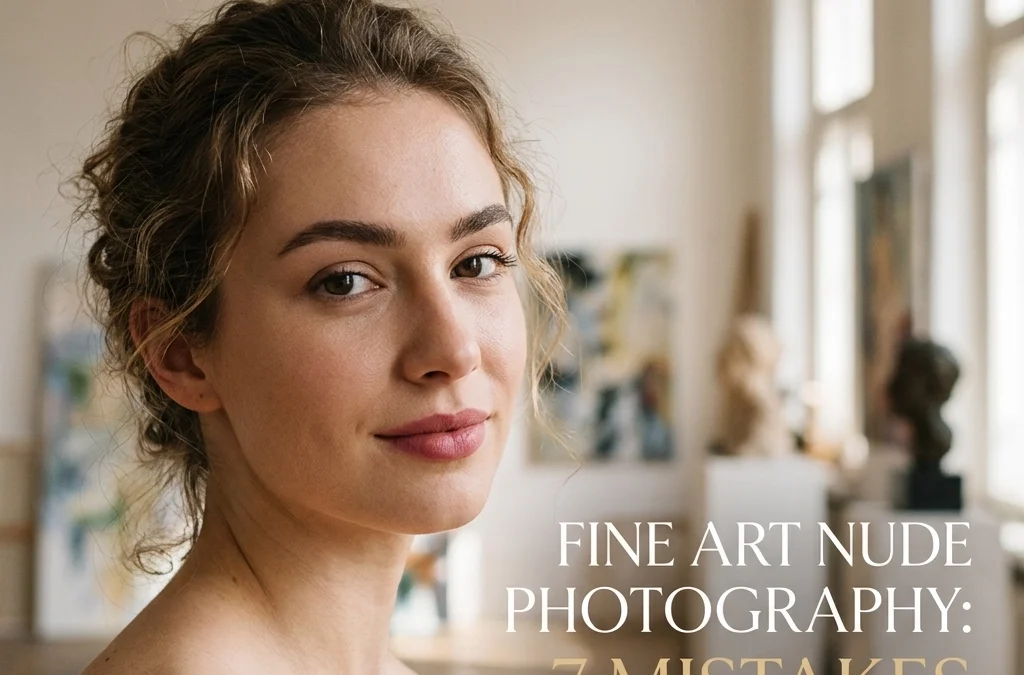
Creating high-end erotic nude photography isn't just about having a beautiful woman in front of your lens. It’s about the tension between light and shadow, the curve of a hip, and the unspoken narrative shared between the photographer and the subject. Whether you’re shooting your first boudoir session or you’re a seasoned pro looking to elevate your portfolio, there are common pitfalls that can turn a potentially masterpiece image into something mediocre: or worse, something that feels clinical and cold.
At Fine Art Nude Club, we see it all the time. Photographers focus so much on the technical gear that they forget the raw, human element that makes art nude photography truly breath-taking. If you’re ready to stop taking "naked pictures" and start creating erotic art, let’s dive into the seven biggest mistakes you’re making and, more importantly, how to fix them right now.
1. Using Flat, Boring Lighting
One of the quickest ways to kill the mood in nude photography is by using flat lighting. When you blast your model with light from the front, you’re effectively erasing the very thing that makes the female form so captivating: its dimension. Shadows are your best friend. They create depth, accentuate the muscularity of the back, and highlight the soft dip of the waist.
If you find your images looking a bit two-dimensional, stop using direct flash or massive, centered softboxes. Instead, move your light source to the side or behind the model. Rembrandt lighting or "rim" lighting is excellent for erotic photography because it leaves enough to the imagination while emphasizing the silhouette. If you’re feeling stuck on how to manipulate light to scream "fine art," checking out the deep-dive guides in our fine art nude tutorial section will give you the blueprints for high-contrast, moody setups.

2. The Wide-Angle Distortion Trap
It’s a common mistake: you want to capture the whole scene, so you reach for a 24mm or 35mm lens. While wide angles are great for landscapes, they are often a disaster for art nude photography. When you get close to your model with a wide-angle lens, her proportions will distort. Her hands might look giant, her nose might elongate, or her legs might look unnaturally warped.
To keep the female body looking its most alluring, stick to longer focal lengths. An 85mm or a 105mm lens is the gold standard for a reason. These lenses compress the features and provide a much more flattering, realistic depiction of the body. If you want to experiment with body types and see how different focal lengths might affect the "look" of a frame before you even step into the studio, playing around with the ultra-realistic AI models at CandyAI is a fantastic way to visualize anatomy and proportions in a digital playground.
3. Posing the Model "Dead"
There is a massive difference between a model who is relaxed and a model who looks like a statue. "Dead" posing happens when the photographer doesn't give enough direction, leading to stiff limbs, flat feet, and a lack of muscle tension. In erotic nude photography, you want life in the body.
Every limb should have a purpose. Ask your model to arch her back slightly, point her toes, or shift her weight to create an "S" curve. Even when she’s lying down, there should be a sense of dynamic tension. If she’s just lying there flat, she loses her shape. Encourage her to engage her core or reach overhead to elongate the torso. If you’re struggling with ideas, we have hundreds of galleries to browse for inspiration once you join the club, where you can see exactly how the pros manipulate movement and tension to create a "wow" factor.

4. Over-Retouching the Skin
We live in an age of filters, but in the world of high-end fine art nude photography, "plastic skin" is a cardinal sin. If you smooth out every pore, every stretch mark, and every natural skin texture, you strip the image of its humanity. The goal isn’t to make the model look like a CGI character; the goal is to celebrate her form.
Texture is sexy. The way light catches the fine hairs on a woman's arm or the subtle variations in skin tone is what makes a photograph feel intimate and real. When you’re in post-processing, use frequency separation sparingly. Keep the goosebumps. Keep the natural folds where the body bends. Real eroticism lives in the details of the flesh, not in a blur tool.
5. Cluttered and Distracting Backgrounds
Your subject is a beautiful, naked woman. Why on earth would you want a messy bookshelf or a bright red fire extinguisher in the background? A cluttered environment pulls the viewer’s eye away from the model and ruins the artistic flow.
When setting up your shoot, look at the background through the viewfinder before you even take the first shot. Is there a "tree" growing out of her head? Does a horizontal line from a window frame cut awkwardly through her neck? Simplify everything. Use solid-colored backdrops, simple linens, or deep shadows to isolate the model. If you’re shooting on location, use a wide aperture (like f/1.8 or f/2.8) to blur the background into an unrecognizable, buttery bokeh. This keeps the focus exactly where it belongs: on her skin.

6. Lack of Communication and Trust
This isn't a technical mistake, but it’s the one that will ruin a shoot faster than a dead battery. If your model doesn't feel comfortable, it will show in her eyes and her body language. A tense model results in tense photos.
The best erotic photography comes from a place of mutual respect and clear communication. Talk to your model throughout the shoot. Tell her when she looks great. Show her a few of the "hero" shots on the back of the camera so she can see the art you’re creating together. When she sees how incredible she looks in your lighting setup, her confidence will skyrocket, and she’ll give you those raw, vulnerable expressions that make an image iconic. Building this rapport is a skill in itself, often discussed in our community-driven fine art nude tutorial threads.
7. Playing It Too "Safe"
The final mistake many photographers make is being afraid to push the boundaries. Fine art nude photography should provoke a reaction. If you’re just taking safe, standard "glamour" shots, you’re missing the "art" part of the equation.
Don’t be afraid of extreme shadows. Don’t be afraid of unconventional crops: sometimes a shot of just the nape of the neck or the curve of a breast is more powerful than a full-body portrait. Lean into the eroticism. If the image feels a little "dangerous" or deeply intimate, you’re probably on the right track. Explore the depths of female beauty without the shackles of "traditional" portrait rules.
Elevate Your Vision
Avoiding these seven mistakes will instantly put you ahead of 90% of the photographers out there. It’s about moving beyond the basics and embracing the craft of erotic storytelling. Remember, your camera is just a tool; your eye and your connection to the subject are what create the art.
If you’re looking for a place to truly sharpen your skills, see what world-class photographers are doing, and get access to exclusive content that pushes the envelope, there’s only one place to be. Take your passion to the next level and become a member of the Fine Art Nude Club today. We’ve got the models, the tutorials, and the community to help you turn your vision into a stunning reality.
And if you ever find yourself between shoots and needing a bit of creative spark or a way to test out new concepts for poses and lighting, check out CandyAI. It’s a powerful tool for exploring the aesthetics of the human form in a way that can actually inform your real-world photography. Stop making excuses and start making art.