
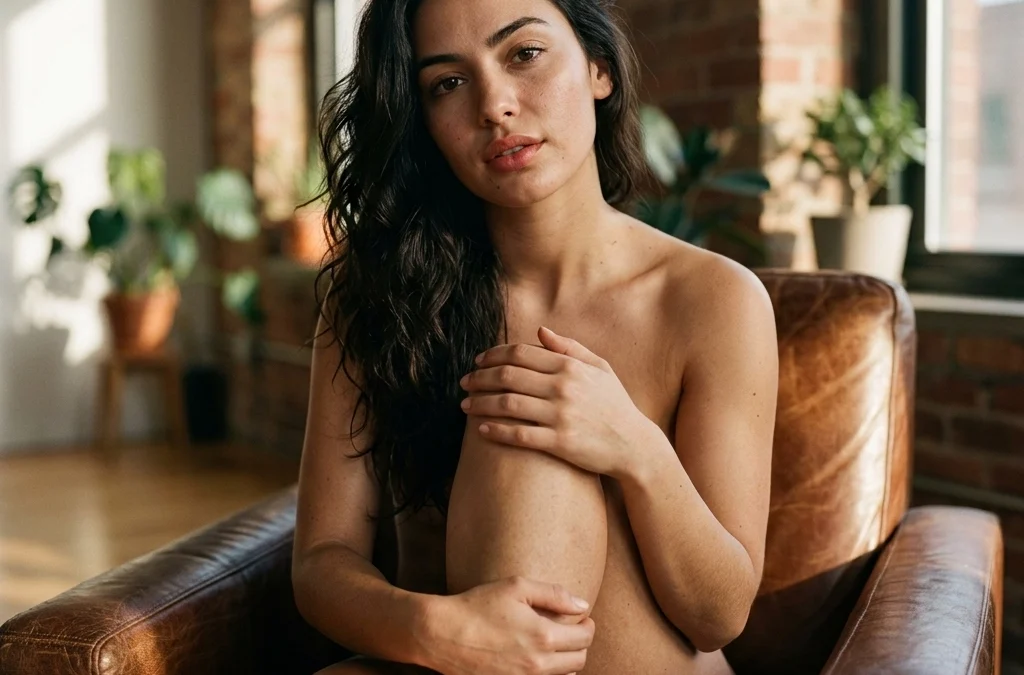
There is something visceral about the moment a model sheds her clothes and steps into the light. It’s raw, it’s vulnerable, and for a photographer, it’s the ultimate challenge. Erotic photography isn't just about capturing skin; it’s about the architecture of the human body and the tension created by a single, deliberate movement. If you want to move beyond simple snapshots and create high-end art nude photography, you have to master the art of the pose.
The difference between a mediocre shot and a masterpiece often comes down to an inch of movement: a slight arch of the back, a pointed toe, or a gaze that lingers just a second too long. In this guide, we’re diving deep into the mechanics of posing beautiful women to ensure your next session is nothing short of legendary.
The Psychology of the Shoot: Building Tension and Trust
Before you even pick up your camera, you need to understand that a great nude photography session is a collaboration. You aren't just taking a photo; you are directing a performance. The model’s comfort is your primary tool. If she’s tense, her muscles will look rigid, and the sensuality of the shot will vanish.
Start by setting the mood. Low music, a warm room, and clear communication are non-negotiable. When you’re working with professional models, they often have a repertoire of poses, but they still look to you for direction. Be direct. Don't be afraid to use evocative language to describe the "vibe" you’re going for: whether it’s aggressive and powerful or soft and inviting.
For those moments when you’re looking for fresh inspiration or want to visualize a specific aesthetic before the model even arrives, exploring digital muses on CandyAI can be a fantastic way to experiment with concepts of form and light in a virtual space. It helps to sharpen your eye for what works before you’re standing in the studio.
Mastering the "S" Curve: The Foundation of Desire
If there is one rule in art nude photography that you should never break, it’s the "S" curve. The human body is naturally full of curves, and your job is to accentuate them until they scream. When a woman stands flat-footed and square to the camera, she looks blocky. But when she shifts her weight to one leg, drops a shoulder, and tilts her pelvis, she creates a flowing "S" shape that is inherently erotic and visually stunning.
The "S" curve draws the viewer’s eye through the composition, starting perhaps at the curve of the neck, dipping into the small of the back, and sweeping over the swell of the hips. It emphasizes the waist-to-hip ratio and creates a sense of movement even in a still image.
Geometric Shapes and Triangles
While the "S" curve provides the flow, triangles provide the structure. When a model bends her arm to touch the back of her head, or pulls her knees toward her chest while reclining, she creates "negative space." These triangular gaps between her limbs and her body are essential for a high-end look.
Triangles add a level of complexity to the composition. They prevent the body from looking like a solid mass of flesh and instead turn it into a series of interesting shapes. Think about a seated pose: having the model tuck one leg under her while the other is extended creates a series of interlocking triangles that lead the viewer’s eye directly to the most intimate parts of the frame.
The Power of the Extremities: Hands, Feet, and Gaze
Beginner photographers often focus so much on the torso and the "money shots" that they forget about the hands and feet. This is a mistake. Clumsy hands or flat feet can ruin an otherwise perfect erotic nude photography piece.
The Hands
Hands should be soft and graceful. Avoid "flat" palms against the skin, which can look like she’s hiding something or in pain. Instead, encourage her to use her fingertips to lightly graze her skin, tracing the lines of her collarbone or the curve of her thigh. This adds a layer of self-sensuality that is incredibly provocative.
The Feet
Always have your model point her toes. It elongates the legs and adds a refined, dancer-like quality to the pose. Whether she’s standing on her tiptoes or reclining on a velvet chaise, a flexed foot is usually a distraction.
The Gaze
Where she looks tells the story. A direct gaze into the lens is a challenge: it’s bold and confrontational. Looking away, perhaps over a shoulder or with eyes closed, suggests a private moment of pleasure that the viewer is merely "stumbling" upon.
If you’re looking to dive deeper into the technicalities of these nuances, our fine art nude tutorials offer a wealth of knowledge on how to refine these details into a professional workflow.

Lighting the Form: Using Shadows as Clothing
In nude photography, light is your wardrobe. You use it to cover what you want to hide and highlight what you want to celebrate. Side lighting (Rembrandt lighting or split lighting) is often the most effective for highlighting the texture of the skin and the musculature of the body.
When the light comes from the side, it creates deep shadows in the "valleys" of the body: the spine, the waist, and the space between the breasts. This creates a three-dimensional effect that makes the model pop from the background.
Don't be afraid of the dark. Silhouettes are a staple of erotic photography because they leave just enough to the imagination. By placing the light behind the model (backlighting), you can highlight the fine "peach fuzz" on her skin and the exact outline of her silhouette, creating a halo effect that is nothing short of divine.
Posing for Different Body Types
Every woman is a different landscape. A pose that looks incredible on a lithe, athletic model might not translate the same way on a woman with lush, opulent curves. The key is to adapt.
- For Curvy Models: Focus on poses that emphasize the waist. High-waisted sitting poses or "arching" standing poses work wonders to showcase the transition from a narrow waist to full hips.
- For Athletic Models: Use hard light to emphasize muscle definition. Poses that require some tension: like a slight "plank" or a deep back arch: will make those lines stand out.
- For Petite Models: Use low angles to make the legs look miles long. Having her reach upward or stretch out on her side can elongate the frame beautifully.

Movement and Flow: The "In-Between" Moments
Some of the best shots happen when you aren't "posing" the model at all. After you’ve set up a static pose and taken your shots, ask her to move slowly to the next one. Keep your finger on the shutter. These transitional moments: a hand moving through hair, a slight shift in the hips, a natural breath: often result in the most authentic and raw erotic images.
This fluid approach to posing nude models ensures that the final result doesn't look staged. It looks like a captured moment in time, an intimate glimpse into a world that is usually kept behind closed doors.

Elevate Your Craft
Mastering these techniques takes time, patience, and a lot of practice. You have to be willing to fail, to try lighting that doesn't work, and to push your models (and yourself) out of the comfort zone. But when everything clicks: the light, the curve, the expression: it is one of the most rewarding forms of art on the planet.
If you’re ready to take your skills to the next level and get access to exclusive content, behind-the-scenes insights, and a community of like-minded creators, you should join the club and start your membership today. We provide the tools, the inspiration, and the network you need to turn your passion for nude photography into a professional-grade portfolio.
Remember, the body is your canvas. Treat it with respect, light it with intention, and pose it with passion. Your best work is just one shutter click away.