
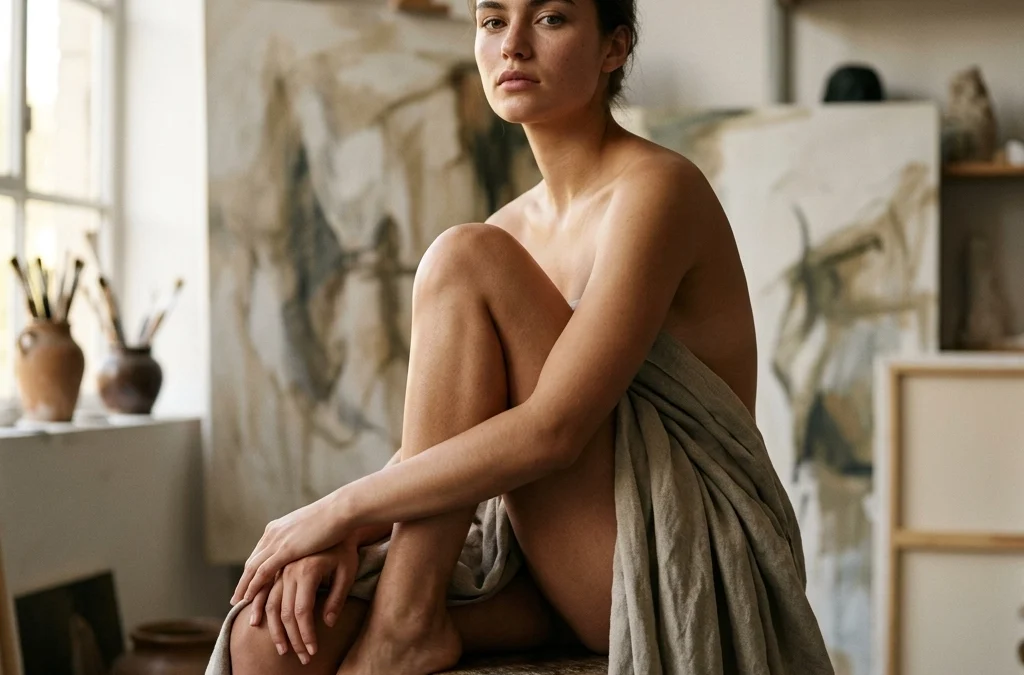
There is a raw, electric energy that happens the moment a woman sheds her layers and stands before the lens. Fine art nude photography isn’t just about the absence of clothing; it’s about the presence of soul, the architecture of the female form, and the intentional play of light against skin. To succeed in this world, you have to move beyond just "taking pictures" and start creating icons. Whether you’re aiming for high-end erotic photography or something more ethereal and painterly, the goal is the same: to capture a moment that feels both timeless and dangerously intimate.
In this guide, we’re going to strip everything down. We’ll talk about the technical precision required to make skin look like marble, the psychological game of directing a model, and the creative vision needed to turn a simple nude into a masterpiece of art nude photography.
The Technical Foundations: Gear and Settings
You can’t capture the perfect curve if you’re fumbling with your dials. Technical mastery is the floor; once you’ve mastered it, you’re free to be an artist. When it comes to nude photography, your settings should serve the mood.
For most erotic nude photography, you want a lens that mimics the human eye or provides a slight compression. A 50mm or an 85mm prime lens is your best friend. They offer that shallow depth of field that makes the subject pop, turning a messy background into a soft, creamy blur.
When it comes to aperture, shooting wide open at f/1.4 or f/1.8 is tempting for that dreamy look, but if you want to capture the texture of the skin: the goosebumps, the fine hairs, the subtle sheen of oil: stopping down to f/5.6 or f/8 will give you the sharpness you need. Keep your shutter speed high enough to avoid motion blur, especially if your model is in a dynamic, tension-filled pose. If you’re working with natural light and a slow shutter, make sure you’re using a tripod or directing your model to hold her breath to keep the edges crisp.

Mastering the Light: Shadow as a Subject
In fine art nude photography, what you hide is often more important than what you show. Light creates the image, but shadows create the drama.
Soft, diffused light is the industry standard for a reason. It wraps around the body, smoothing out imperfections and creating gentle transitions between highlights and shadows. Window light is the classic choice: position your model so the light "rakes" across her body, emphasizing the musculature and the silhouette. Using a simple white reflector can fill in the darkest shadows just enough to retain detail without losing the mystery.
If you want something more aggressive and raw, experiment with hard light. A single, focused light source can create high-contrast erotic photography that feels modern and bold. This is where you play with chiaroscuro, the Italian term for the contrast between light and dark. Let the light hit only the ridge of her spine or the curve of a hip, leaving the rest of the frame in total darkness.
Posing Nude Models: Direction and Flow
Posing is a dialogue, not a set of instructions. When you’re working with nude models, your job is to direct her in a way that feels natural but looks sculptural.
Avoid "flat" poses. You want to create triangles and diamonds with the limbs to add visual interest. Ask her to arch her back, point her toes, or twist her torso to create tension. Tension in the body translates to energy in the photograph. If she’s too relaxed, the image can feel stagnant.
Always communicate. Tell her exactly what you see through the viewfinder. If a pose looks incredible, tell her. If something feels off, adjust it with words, not touch. Professionalism is the foundation of erotic photography; once she trusts your vision, she’ll give you the raw, vulnerable expressions that make a photo stand out. For a deeper look at the mechanics of these shoots, check out our fine art nude tutorial series where we break down specific sessions step-by-step.

Composition and Perspective
Don’t just stand there at eye level. To excel at art nude photography, you need to explore every possible angle. Get low on the ground to make the model look like a towering goddess, conveying dominance and power. Or, get above her on a ladder to look down, creating a sense of submission or intimacy.
Walk around your subject. Sometimes the best shot isn't the one you planned; it’s the one you see when you’re moving from point A to point B. Look for the "negative space": the shapes formed by the gaps between her arms and her body, or the curve of her waist against the background.
Textures, Materials, and Creative Enhancements
Sometimes the skin needs a partner. Integrating materials like silk, organza, or even water can elevate a shoot from a standard nude to a high-concept piece of art. Wet skin catches light in a way that dry skin simply can't, adding a layer of eroticism and texture.
You can also use fabrics to partially veil the body. A translucent sheet of silk caught in a breeze can add movement and a sense of "now you see it, now you don't" that is central to erotic photography. If you’re stuck for ideas or need to visualize a concept before the model arrives, using a tool like CandyAI can be a great way to generate inspiration and explore different body types and lighting setups in a digital space. It’s an incredible resource for modern creators who want to push the boundaries of their imagination.
The Location: Choosing Your Canvas
The environment dictates the story. A minimalist studio with a single draped sheet says one thing; a rugged, sun-drenched beach says another. When scouting locations for nude photography, safety and privacy are your top priorities. You want your model to feel completely secure so she can focus on the performance.
Look for locations that complement the skin tone. Warm, earthy tones in a desert or forest can make the subject feel like a part of the landscape. Conversely, cold industrial settings can create a sharp, edgy contrast with the softness of the female form. Always check the light at the specific time you plan to shoot; a location that looks great at noon might be a shadow-less void by 4 PM.
Post-Processing: The Final Polish
The shoot is only half the battle. In the digital darkroom, you turn a great photo into a signature piece. Fine art nude photography often benefits from a "less is more" approach to editing. You’re not trying to plasticize the skin; you’re trying to enhance the mood.
Adjust your curves to deepen the blacks and make the highlights sing. Consider black and white for a classic, timeless feel that focuses entirely on shape and form. If you’re going for a more "painterly" look, you might experiment with digital layering or adding subtle grain to give the image a tactile, film-like quality. The goal is to ensure the viewer's eye goes exactly where you want it: to the curve, the gaze, or the shadow.

Final Thoughts: Finding Your Voice
Succeeding in this niche requires more than just a camera and a willing subject. It requires a point of view. What are you trying to say about beauty, power, or vulnerability? The more you shoot, the more your style will emerge. Don't be afraid to be bold, and don't be afraid to fail. Every "bad" shot is a lesson in what not to do next time.
If you’re serious about mastering this craft and want to see how the pros do it, you need to be part of a community that lives and breathes this art form. We’re constantly uploading new sets, behind-the-scenes looks, and advanced guides to help you sharpen your eye. You can join the club today to get full access to our exclusive gallery and start your journey toward becoming a master of the nude.
The female form is the ultimate canvas. Go out there and create something that lasts.