
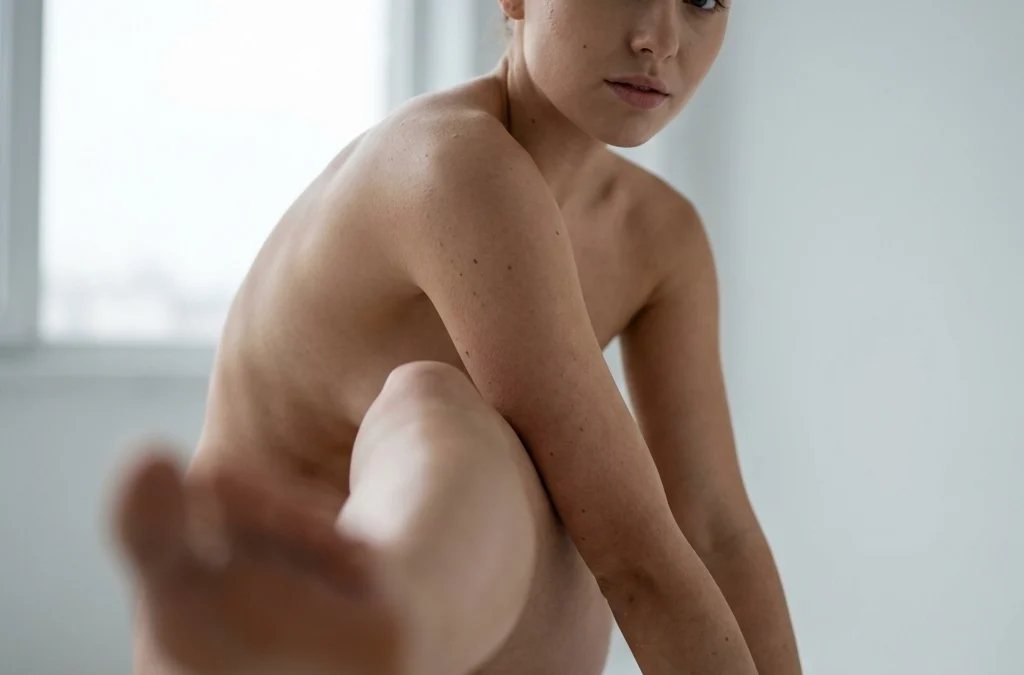
Let’s be real: there is a world of difference between a snapshot and a masterpiece. When you strip away the clothes, you aren’t just looking at a naked body; you’re looking at a canvas of light, shadow, and raw emotion. Fine art nude photography is about capturing the essence of the female form in a way that feels both timeless and provocative. It’s not just about what you see; it’s about what you feel.
If you’re just starting out, the transition from basic portraiture to erotic photography can feel a bit daunting. You’re dealing with more than just camera settings: you’re managing the energy in the room, the comfort of your model, and the delicate balance between high-end art and raw sensuality. This guide is designed to help you navigate those waters and start creating images that demand attention.
The Vision: Conceptualizing the Flesh
Before you even pick up your camera, you need a plan. Walking into a session without a concept is a recipe for mediocrity. Fine art nude photography requires you to look at the human body as a landscape. Think about the way a hip bone creates a ridge, or how the curve of a spine mimics a winding path.
When I’m brainstorming a new set, I like to visualize the mood first. Is it dark, moody, and secretive? Or is it bright, airy, and celebratory? If you’re ever stuck for inspiration, I’ve found that playing around with AI tools can actually spark some incredible ideas. Sometimes I use CandyAI to quickly generate a few "mood board" concepts to see how different lighting styles or poses might look on a specific body type before the model even arrives. It’s a great way to prep your brain for the visual feast ahead.
Don't be afraid to sketch your ideas down. You don’t need to be an artist, but having a rough blueprint of where you want the shadows to fall or how you want the model to twist will give you confidence once the clothes come off.

Lighting: The Secret to High-End Erotic Photography
Lighting is everything. In nude photography, light isn't just there to make things visible; it’s there to sculpt. You can have the most beautiful woman in the world in front of your lens, but if your lighting is flat, the photo will be boring.
For beginners, natural light is your best friend. A single window can provide all the drama you need. Side-lighting is particularly powerful for art nude photography because it emphasizes the texture of the skin and the three-dimensional quality of the body. It creates those deep, "Chiaroscuro" style shadows that separate professional work from amateur snapshots.
If you’re working in a studio, keep it simple. A single large softbox or even a bare bulb can create stunning results. The goal is to highlight the curves: the "landscape" we talked about: while letting other parts of the body fade into the darkness. We go into a lot more detail on specific light placements and modifiers in our fine art nude tutorial section, which is a must-read if you're looking to graduate from natural light to professional studio setups.
Directing the Model: The Art of the Pose
Posing nude models is a psychological game as much as a visual one. Your model needs to feel safe, respected, and empowered. If she’s stiff or uncomfortable, it will show in her eyes and her posture.
Start with a conversation. Talk through your concepts and show her your sketches or reference images. Once the shoot starts, keep a steady stream of positive reinforcement going. Don't just say "that's good." Explain why it's working. "The way the light is hitting your shoulder right there is incredible: hold that."
When it comes to the actual boudoir photography poses, think about triangles. Creating angles with the elbows and knees adds dynamic energy to the frame. Avoid flat, "police lineup" shots. Have her twist her torso, arch her back, or point her toes to elongate the limbs. Remember, the goal of erotic nude photography is to celebrate the form, so look for poses that highlight her best features while maintaining that artistic edge.

Composition and Perspective
Stop shooting from eye level. It’s the most common mistake beginners make. To truly master fine art nude photography, you need to move. Get on a ladder. Crawl on the floor. Change your perspective to make the model look like a towering goddess or a delicate work of art.
Framing is also crucial. You don't always need the whole body in the shot. Sometimes, a close-up of the small of the back or the curve of a breast tells a more compelling story than a full-body nude. Use "leading lines": the natural lines of the body: to draw the viewer's eye exactly where you want it to go.
Be careful not to "clip" limbs at the joints. Cutting off a foot at the ankle or a hand at the wrist can look accidental and sloppy. If you’re going to crop, do it with intention. Crop mid-thigh or mid-bicep to keep the flow of the image intact.

Technical Mastery: Settings and Gear
You don't need a $10,000 setup to take world-class nude photography, but you do need to know how to use what you have.
- Aperture: I generally recommend staying around f/5.6. It’s sharp enough to capture the texture of the skin but shallow enough to give you a bit of a soft background if you need it. If you’re going for a very soft, romantic look, you can drop down to f/2.8 or f/1.8, but be careful with your focus.
- Focus: Always focus on the eyes if they are visible. If the eyes aren't in the shot, focus on the part of the body closest to the camera or the area where the light is most dramatic.
- File Format: Always shoot in RAW. Erotic photography often relies on subtle gradients of skin tone and shadow. You need the extra data of a RAW file to make sure those transitions stay smooth during the editing process.
Expect to take hundreds of photos to get that one "hero" shot. It takes time for a model to find her rhythm and for you to find the perfect angle. Don't rush it. This is a slow, sensual process.
Post-Processing: The Final Polish
Editing is where your personal style really comes to life. Whether you prefer a gritty, high-contrast black and white look or a soft, warm, painterly aesthetic, the "digital darkroom" is your friend.
When editing skin, less is usually more. You want to remove temporary blemishes, but don't airbrush your model into a plastic doll. The beauty of art nude photography lies in the reality of the skin: the pores, the subtle freckles, the way the flesh reacts to touch. Keep it real, keep it raw, and keep it sexy.

Taking the Next Step
Mastering the aesthetic of fine art nude photography is a journey, not a destination. It requires constant practice, a keen eye for detail, and a deep respect for the women who step in front of your lens. Every shoot is an opportunity to learn something new about light, composition, and human connection.
If you’re serious about making this your craft, you need to surround yourself with inspiration and high-quality education. That’s exactly why we built this community. Seeing how the pros do it: from the initial concept to the final edit: is the fastest way to level up your own work.
The female form is the ultimate subject, and capturing it with dignity and desire is what we live for. So, if you're ready to take your craft to the next level and see what's truly possible when you combine passion with technique, join the club and get access to our full archives and exclusive tutorials. Let's start creating something beautiful together.