
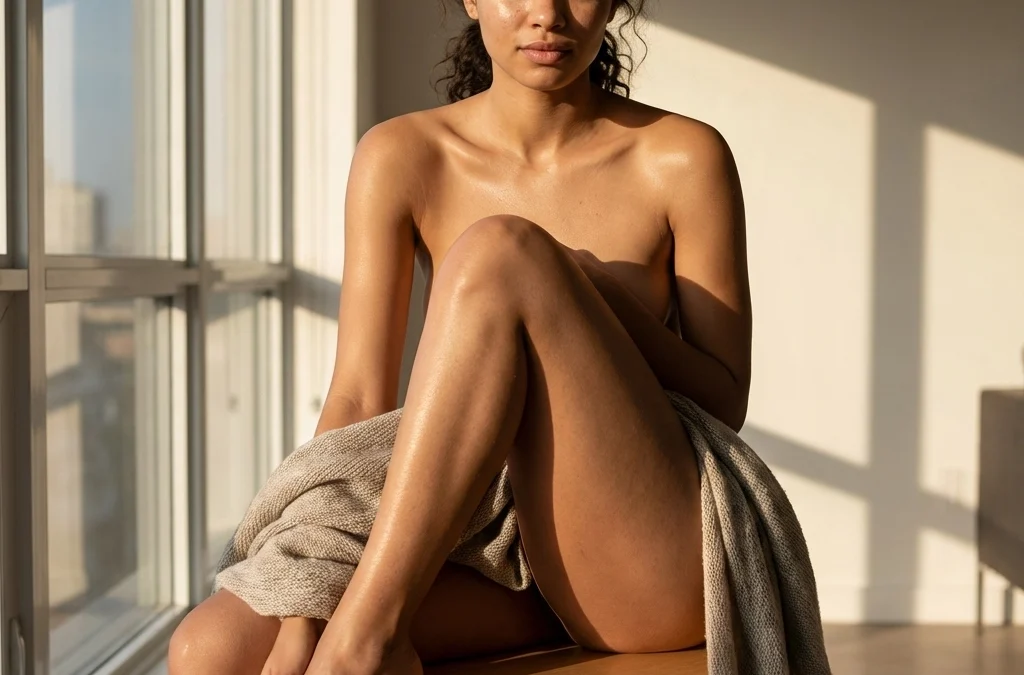
Capturing the raw, unfiltered beauty of the female form is an obsession that many chase, but few truly master. It’s not just about getting a girl to drop her clothes; it’s about the interplay of light and shadow, the curve of a hip, and the electricity in the air between the lens and the subject. Fine art nude photography is a high-stakes game of aesthetics and intimacy. Whether you’re aiming for a moody, high-contrast look or a soft, ethereal vibe, success depends on your ability to see the body as more than just skin: it’s a landscape of desire and art.
In this guide, we’re stripping away the fluff and getting into the technical and creative heart of what makes an erotic image stand the test of time. From camera settings that preserve every succulent detail to the way you direct a model to move, we’re covering it all.
The Technical Foundation: Precision in the Dark
Before the model even steps into the light, your gear needs to be ready. Fine art nude photography demands a level of technical precision that leaves no room for error. If your focus is off by a hair, the magic is gone.
Start with your aperture. While many think a wide-open f/1.8 is the way to go for "dreamy" shots, you often lose the texture of the skin. Setting your camera to f/5.6 provides a sweet spot: enough depth of field to keep the model’s entire form sharp while still letting the background melt away. When you’re working with long exposures, especially in low-light boudoir settings, a tripod is your best friend. For relaxed, static poses, don't be afraid of 1-second exposures or longer; they can capture a certain softness that a fast shutter speed misses.
Focus is the next hurdle. If you’re shooting manually or in a dark studio, mark the floor or use a focus string at eye level to ensure your model hits the mark. Once she’s in position, the sharpness of her eyes or the curve of her spine should be the focal point of the narrative.

Lighting: Sculpting the Female Form
Lighting isn’t just about seeing the subject; it’s about defining her. In erotic photography, what you don’t see is often just as important as what you do. Shadows create mystery, drama, and depth. They turn a flat image into a three-dimensional experience.
Natural window light is the gold standard for a reason. It wraps around the body, highlighting skin imperfections in a way that feels real and tactile. Use a white reflector to bounce a little light back into the shadows if they get too dark, or keep it moody by letting the model fall into the blackness. If you’re looking for a specific look or want to experiment with different lighting scenarios before you ever pick up your camera, exploring the visual styles on CandyAI can provide a wealth of inspiration for how light interacts with various body types and environments.
When using artificial light, softboxes are great for a commercial look, but if you want high-end erotic art, try using grids or barn doors to narrow the beam. You want to highlight the arch of the back, the swell of the breasts, and the long line of a leg while keeping the rest in a seductive gloom.
Composition and the Power of Perspective
If you stand in the same spot for the entire shoot, your gallery is going to be boring. Movement is key. You need to work the room. Walk around your model, see how the light changes as you move from her side to her front.
Varying your camera height changes the power dynamic of the shot. Shooting from a low angle, looking up at a model, conveys strength, confidence, and a certain untouchable goddess energy. Conversely, shooting from a ladder or looking down on her can create a sense of vulnerability and intimacy. Treat the body like a landscape. Zoom in on the details: the small of the back, the nape of the neck, the texture of a stray hair. These "macro" moments are often the most erotic because they invite the viewer to look closer.

Directing the Model: The Dance of Intimacy
The secret to a successful fine art nude shoot is the connection between the photographer and the model. You are the director, and she is the lead. You must be clear, professional, and direct. Tell her exactly where you want her hands, how you want her to arch her back, and where to look.
However, the best shots often happen in the moments between the "perfect" poses. Once you’ve directed her into a position, let her breathe. Let her move naturally. If she feels comfortable, she’ll give you expressions and movements that you could never plan. This collaborative energy is what separates a sterile studio shoot from a raw, erotic masterpiece. For those who want to dive deeper into the nuances of model interaction and specific posing workflows, our fine art nude tutorial library offers a wealth of professional advice from photographers who have been in the trenches for years.
Textures, Materials, and the Art of the Reveal
Adding tactile elements to a shoot can elevate it from a simple nude to a complex piece of art. Think about materials that interact with the skin. Soft silks, transparent organza, or even heavy velvet can create a contrast against the smoothness of a woman's body.
Slow shutter speeds combined with moving fabric create a sense of fluidity. If you have a fan in the studio, let the fabric blow around her, veiling her form and then revealing it. You can also experiment with skin textures: using body oils to make the skin catch the light or even water droplets for a raw, "just out of the shower" feel. These elements add a layer of sensory detail that makes the viewer feel like they could reach out and touch the image.
Black and White: The Language of Contrast
There is something inherently timeless about a black and white nude. By removing color, you remove distractions. The viewer is forced to focus on the lines, the shapes, and the contrast. It’s the ultimate way to highlight the architecture of the female body.
When you convert to black and white in post-processing, lean into the drama. Push your blacks until they are deep and inky, and let your highlights pop. This technique helps bridge the gap between "explicit" and "artistic," allowing the viewer to appreciate the aesthetic form of the model without getting hung up on the literalness of the scene.
Post-Processing: Refining the Vision
The work doesn't end when the shutter clicks. Post-processing is where you refine the mood. Whether you're doing basic skin retouching or complex digital layering for a painterly effect, the goal should always be to enhance what’s already there.
Don't over-process. In the world of high-end erotic photography, "perfection" is boring. Keep some of the raw edges. Keep the skin looking like skin. Use dodging and burning to further sculpt the model's form, emphasizing the highlights you captured in-camera. If you’re looking for a community of like-minded artists to share your work with or to find your next muse, don't forget that your journey truly begins when you secure your Fine Art Nude Club membership, where the world’s best erotic photography is celebrated and taught.

Final Thoughts on the Craft
Fine art nude photography is a lifelong pursuit. Every woman you photograph is a new canvas, and every lighting setup is a new challenge. It requires a balance of technical mastery and emotional intelligence. You have to be a technician, a director, and an artist all at once.
Stay curious. Keep experimenting with new angles, new models, and new ways to tell a story with the human body. The more you shoot, the more you’ll find your own signature style: that specific way you see the curve of a breast or the intensity of a gaze that makes a photo uniquely yours. The world of erotic art is vast and beautiful; it’s time you made your mark on it.