
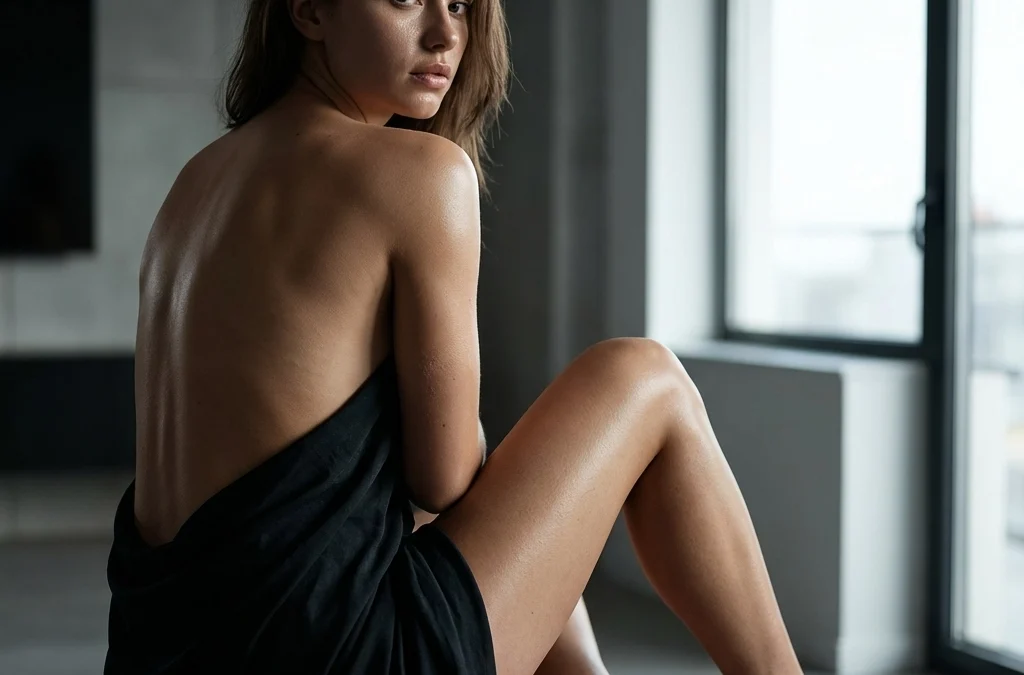
Capturing the female form isn’t just about pointing a camera at a naked body; it’s about the raw, visceral connection between light, shadow, and skin. Fine art nude photography is an intimate dance where the technical meets the primal. Whether you’re looking to create something hauntingly beautiful or provocatively erotic, the goal remains the same: to tell a story through the curves and contours of your subject.
If you’ve been following my work at Fine Art Nude Club, you know I don’t believe in fluff. I believe in results. To succeed in this niche, you need more than just a lens: you need a vision, a deep respect for the art, and a mastery of the tools at your disposal. This guide is your roadmap to taking images that don’t just show skin, but evoke emotion.
The Technical Foundation: Controlling the Narrative
You can’t capture high-end erotic photography on autopilot. If you want your work to look professional, you have to take full control of your gear. I always recommend starting with a full-frame camera. The sensor size gives you the dynamic range necessary to capture those subtle transitions from deep shadows to glowing skin tones.
When it comes to glass, prime lenses are your best friends. A 50mm or an 85mm lens is ideal for nude photography because they offer a natural perspective that doesn't distort the body's proportions. A wide aperture: think f/1.4 or f/1.8: allows you to create that creamy, shallow depth of field that makes your subject pop. However, for most studio work, shooting at f/5.6 ensures the entire form is sharp while still maintaining a beautiful aesthetic.
Manual mode is non-negotiable. You need to be the one deciding exactly how bright or dark those highlights are. In this world, the way light hits a woman’s hip or the arch of her back is everything. If you find yourself struggling to visualize how certain lighting setups or body types might translate to a finished piece, playing around with a tool like CandyAI can be a fantastic way to experiment with concepts and composition before you even step into the studio.

Lighting: The Heartbeat of Erotic Art
Lighting is the difference between a snapshot and a masterpiece. In fine art nude photography, light is your paintbrush. You aren't just lighting a person; you are sculpting a form.
The Power of Low-Key Lighting
For that high-end, moody aesthetic, low-key lighting is king. By using a single light source: like a softbox or even a window: you can create dramatic edge lighting that defines the subject's silhouette. This technique highlights the curves while letting the rest of the body fade into the mystery of the shadows. It’s inherently erotic because it leaves something to the imagination.
Soft Light vs. Hard Light
Soft, diffused light is incredibly flattering. It wraps around the body, smoothing out imperfections and giving the skin a soft, ethereal glow. On the other hand, hard light can be used to emphasize texture and muscle definition. If you’re shooting a model with a particularly athletic build, hard light can highlight the strength and grace of her physique.
If you want to see exactly how I set up my lights to get these results, I’ve broken it all down in our fine art nude tutorial series, where we go behind the scenes on real sets.
Posing: The Language of the Body
Posing is where most photographers stumble. It’s not about telling a model to "be sexy." It’s about understanding the lines of the body. You want to create triangles, curves, and leading lines that guide the viewer’s eye through the frame.
Boudoir Photography Poses as a Starting Point
While we aim for a more artistic or raw erotic feel, classic boudoir photography poses are a great foundation. Think about the "S-curve": having the model shift her weight to one hip to create a more dynamic and feminine shape. Encourage her to arch her back slightly or use her arms to frame her face or torso.
Direction and Connection
The best images come from a place of collaboration. Talk to your model. Give her clear, step-by-step guidance, but also give her the space to move naturally. Sometimes the most evocative shots are the ones that happen between the "official" poses. When she’s adjusting her hair or taking a breath, that’s when the raw, authentic moments happen.

Environment and Texture
Your location sets the mood. A minimalist studio allows all the focus to remain on the woman, whereas an on-location shoot: like an abandoned house or a lush beach: adds a narrative layer to the work.
Don't be afraid to introduce elements that interact with the skin. Soft fabrics like silk or lace can add a tactile quality to the image. Water is another powerful tool; the way it beads on skin or dampens hair creates a primal, erotic energy that is hard to replicate. When you’re scouting locations, look for how the natural light interacts with the space. A sliver of light coming through a shutter can be more effective than a thousand-dollar strobe if used correctly.
Post-Production: Polishing the Vision
Post-production in art nude photography should be about enhancement, not reconstruction. You want the skin to look like skin: pores, textures, and all. Over-retouching can kill the soul of an image, making it look plastic and lifeless.
Focus on color grading to establish the mood. Deep blues and greens can feel cold and melancholic, while warm ambers and oranges feel intimate and inviting. Use dodging and burning to further sculpt the body, accentuating the highlights you captured during the shoot. This is where you truly turn a photograph into a piece of fine art.

Ethics, Safety, and Professionalism
This is the most important part of the guide. Working with nude models requires a high level of professionalism and a clear set of ethics.
- Consent is Mandatory: Always have a signed model release. Discuss the level of nudity and the types of shots you’re aiming for before the clothes even come off.
- Comfort is Key: Keep the studio warm. Have a robe and water ready. Ensure she feels safe and respected at every moment.
- No Touching: Never touch a model to adjust a pose without asking first. It’s better to demonstrate the pose yourself or give verbal cues.
Building a reputation as a photographer who is both talented and respectful is how you get the best models to work with you. If you’re looking to join a community of like-minded creators who value both the art and the ethics of this industry, joining the membership at Fine Art Nude Club is your next logical step.

Constant Evolution
The world of nude photography is constantly evolving. From the classic black-and-white film look to the high-contrast digital era, there is always something new to learn. Don't get stuck in one style. Experiment with different perspectives: kneel, stand on a chair, or get right up close for a macro shot of a specific detail.
The human body is an endless landscape of inspiration. By mastering the technicalities of light and the nuances of human connection, you can move beyond simple photography and start creating art that resonates.

Success in this field doesn't happen overnight. It takes practice, a sharp eye, and the willingness to push boundaries. Keep shooting, keep learning, and never stop looking for the beauty in the shadows. We’re here to help you every step of the way, providing the tutorials and the community you need to elevate your craft to the next level. Now, go grab your camera and start creating.