
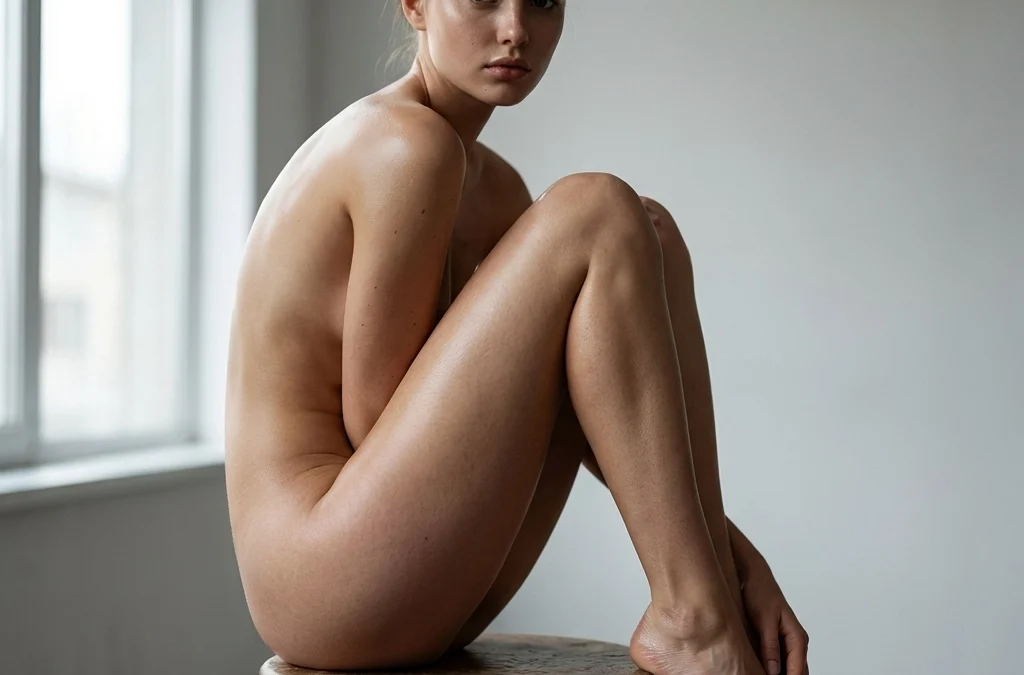
Let’s be honest: taking off the clothes is the easy part. Capturing the raw, pulse-pounding essence of a woman’s body in a way that feels like high-end art? That’s where most photographers stumble. Fine art nude photography isn’t just about the absence of fabric; it’s about the presence of light, shadow, and a deep, unyielding connection between the lens and the subject.
If you’ve ever looked at your shots and felt they were missing that "spark": that visceral, erotic energy that separates a snapshot from a masterpiece: you’re probably making a few common mistakes. We’re going to strip those bad habits away and get down to the bone of what makes art nude photography truly compelling.
1. The "Wing It" Mentality: A Lack of Pre-Visualization
The biggest killer of a mood is a photographer who doesn't know what they want. When a model is standing there, bare and vulnerable, the last thing she needs is for you to be fiddling with your settings or scratching your head about the next pose.
Professional erotic photography requires a blueprint. You need to see the final image in your mind before you even pick up the camera. This means rehearsing the flow. I often suggest photographers use tools like CandyAI to experiment with different aesthetics, body types, and lighting moods in a virtual space first. It helps you visualize how light hits a curve or how a specific shadow might fall across her hips before you're under the pressure of a live shoot. When you walk into that room with a clear vision, the model feels your confidence, and that’s when the magic starts to happen.
2. The Silent Treatment: Poor Direction and Connection
A nude shoot is an intimate dialogue. If you’re silent behind the camera, you’re leaving your model in a vacuum. She can’t see what you see. She doesn't know if her arch looks incredible or if the light is catching her skin just right.
Failing to direct is a fast track to stiff, awkward photos. You need to talk. You need to guide her through the breath, the tension, and the release. Instead of saying "move your arm," try describing the feeling: "Reach for something just out of grasp," or "Let your fingers graze your inner thigh like you’re alone in the room." This kind of evocative direction creates a narrative. If you’re looking for specific inspiration on how to lead a session, our fine art nude tutorials dive deep into the psychology of model direction.

3. Neglecting the Extremities: The "Dead Hand" Syndrome
You can have the most beautiful lighting and a stunning model, but if her hands are stiff or her feet are flat, the whole image falls apart. In art nude photography, every inch of the body is a compositional element.
One common mistake is letting the hands go "dead." Hands should be soft, expressive, and barely touching the skin. If she’s pressing too hard against her thigh or her breast, it flattens the tissue and creates unflattering lines. The same goes for the feet. A flat foot can make a leg look heavy; a pointed toe or a slight lift of the heel elongates the line and adds a sense of grace and tension. Pay attention to the details: the tips of the fingers, the arch of the foot, the tilt of the chin. These are the raw details that turn a nude into a work of art.
4. Playing It Safe with Camera Angles
Stop shooting everything from eye level. It’s boring, it’s predictable, and it does nothing to highlight the architecture of the female form. Beginner photographers often make the mistake of standing in one spot and zooming in and out.
To capture the true eroticism of a woman like Amber, you have to move. Get on the floor. Look up at the way her silhouette breaks against the light. Climb a ladder and look down at the patterns of her hair and the curve of her spine. Changing your perspective changes the power dynamic of the photo. A low angle can make a woman look like a powerful, untouchable goddess, while a high angle can create a sense of soft, inviting vulnerability. Don't be afraid to get uncomfortable to get the shot.

5. Lighting Without Soul: Fear of the Dark
Many photographers are so obsessed with "correct" exposure that they blow out the very shadows that give the body its shape. In fine art nude photography, the shadow is just as important as the light.
Mistaking "bright" for "good" is a classic error. Flat, even lighting is for catalogs; moody, high-contrast lighting is for art. You want to see the way the light wraps around the ribs, the way it highlights the texture of the skin, and the way it disappears into the dip of the waist. Use a single light source to create drama. Experiment with chiaroscuro: the play between intense light and deep shadow. This is how you emphasize the raw, physical reality of the body. If you’re struggling with this, practicing with different lighting prompts on CandyAI can be a great way to understand how light interacts with various skin tones and textures without needing a full studio setup.
6. Overlooking the Environment and Styling
Just because she’s nude doesn’t mean the surroundings don't matter. A cluttered background or a location that doesn't vibe with the model’s energy will kill the shot. Whether you’re shooting on a beach or in a minimalist studio, the environment should complement the skin, not compete with it.
Consider textures. The contrast between soft skin and rough stone, or the sheen of black lace against a smooth back, adds layers to the visual story. Styling isn't just about clothes; it’s about hair, skin prep, and even the "messiness" of the bedsheets. If the hair is messy in a way that looks accidental rather than intentional, it distracts. Every element in the frame must be there for a reason.

7. Breaking the Vibe: The Importance of Professionalism and Trust
The biggest mistake: the one you can’t fix in post: is failing to build and maintain trust. Fine art nude photography requires a high level of vulnerability from the model. If she doesn't feel safe, respected, and seen as an artist herself, it will show in her eyes and her posture.
Respecting boundaries is paramount. Never touch a model to adjust her pose without asking first, and always keep the set at a comfortable temperature. When the model is comfortable, she can give you those raw, unfiltered expressions that make a photograph legendary. This professional bond is the foundation of every successful shoot we feature.
To truly master these techniques and see how the pros handle every detail from lighting to the final edit, join the club and gain access to our exclusive library of behind-the-scenes content and high-end tutorials.
Capturing the Raw Essence
Fine art nude photography is an ever-evolving journey of seeing the body in new ways. It’s about more than just the technicalities of a camera; it’s about the soul you pour into the frame. By avoiding these seven mistakes, you’re not just taking better pictures: you’re creating a space where beauty and eroticism can coexist in their most powerful form.
Keep pushing your boundaries, keep experimenting with light, and never stop looking for the raw details that others miss. Whether you're working with a seasoned pro or just starting your journey into the world of art nude photography, remember that every curve tells a story. Your job is to make sure it’s heard. For more inspiration and to see these principles in action with the world's most beautiful models, make sure you're part of the Fine Art Nude Club membership. Together, we’ll turn your vision into something unforgettable.