
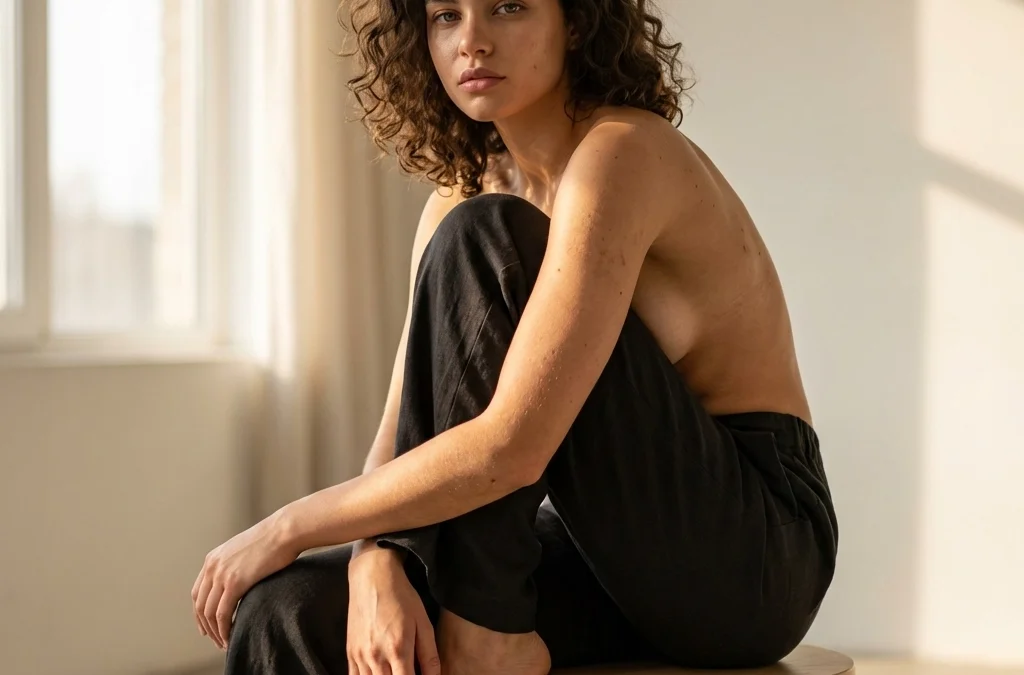
So, you want to dive into the world of fine art nude photography. Welcome to the club. There’s something undeniably electric about capturing the human form in its rawest, most vulnerable state. But let’s get one thing straight: there’s a massive difference between a "naked picture" and a piece of high-end erotic art. One is a snapshot; the other is a story told through skin, shadow, and soul.
Whether you’re a seasoned pro looking to transition into the erotic space or a complete beginner with a fresh DSLR and a vision, mastering explicit detail requires more than just technical skill. It requires a specific mindset, a deep respect for your subject, and an eye for the subtle textures that make a woman’s body a masterpiece.
In this guide, I’m going to break down the essentials: from the gear you need to the way you should talk to your models: to help you elevate your work from "explicit" to "exquisite."
The Mindset: Art Meets Desire
Before you even pick up your camera, you need to understand what you’re trying to achieve. Fine art nude photography is about the architecture of the body. You aren't just looking for a "sexy" shot; you’re looking for the way light catches the curve of a hip, the way shadows pool in the small of a back, or the raw intensity in a model’s eyes.
Working with beautiful women requires a level of professionalism that can’t be faked. You need to be confident, direct, and respectful. If you’re nervous, she’ll be nervous, and that tension will show up in every frame. If you’re struggling to visualize a specific pose or lighting setup before your model arrives, playing around with the AI generations at https://candyai.gg/home2?via=ptn1me can actually be a great way to spark some fresh, provocative ideas for your next set. It helps you see how different body types react to light without the pressure of a live session.

Gear Up: Tools of the Trade
You don’t need a $50,000 medium format camera to get started, but you do need the right glass. In erotic photography, your lens is your primary storyteller.
- The Prime Advantage: Forget your zoom lenses for a minute. Prime lenses like a 50mm or an 85mm are the gold standard for art nude photography. Why? Because they’re fast, sharp, and offer a wide aperture (think f/1.4 or f/1.8). This allows you to create that creamy, shallow depth of field that makes the skin look buttery smooth while keeping the focus tack-sharp on a specific detail: like the arch of a foot or the texture of an areola.
- Full-Frame is King: If you can afford it, go full-frame. The way a full-frame sensor handles low light and skin tones is superior. You want to capture every pore, every fine hair, and every subtle gradient of color.
- The Distance Factor: Using a longer lens like an 85mm allows you to give the model some breathing room. It creates a professional distance that helps her feel less "watched" and more "observed," which is a subtle but vital distinction in a nude shoot.
Lighting the Form: The Dance of Shadow
Lighting is where the magic: or the disaster: happens. In fine art nude, your goal isn't necessarily to light everything perfectly. In fact, what you don’t light is often more important than what you do.
Chiaroscuro is a term you’ll hear a lot in art circles. It’s the use of strong contrasts between light and dark to give a sense of volume and three-dimensionality. When shooting erotic nude photography, using a single light source can create dramatic, moody shadows that wrap around the model's curves, emphasizing her shape in a way that flat, even lighting never could.
Try experimenting with "Rim Lighting." Place your light source behind the model so it catches the edges of her silhouette. This creates a glowing halo effect that separates her from the background and highlights the delicate contours of her body. We dive much deeper into the nitty-gritty of camera settings and lens selection in our https://fineartnude.club/tag/fine-art-nude-tutorial section, which I highly recommend if you want to skip the trial-and-error phase.

Posing for Impact: The Art of the "S" Curve
Posing a nude model is an art form in itself. You aren't just directing a person; you're sculpting a scene. The most classic and effective pose in the book is the "S-curve." By having the model shift her weight to one leg and tilt her shoulders in the opposite direction, you create a natural, flowing line that leads the viewer’s eye through the entire composition.
When you’re shooting explicit detail, remember that less is often more. A hand resting softly on a thigh, a slight arch of the back, or a gaze directed just off-camera can be far more provocative than a direct, full-frontal shot. Pay attention to the extremities: fingers should be soft and tapered, and toes should be pointed or relaxed, never flat.
Don't be afraid to move around. Instead of standing in one spot, get low or climb a ladder. Changing your perspective changes the proportions of the body, allowing you to emphasize certain features and create a more dynamic, artistic image.

Capturing Diverse Beauty
One of the most rewarding aspects of fine art nude photography is working with women of all backgrounds and races. Each skin tone reacts to light differently. For instance, shooting a woman with deep, rich skin tones allows you to play with high-specular highlights: that beautiful "sheen" that makes the skin look like polished bronze. On the other hand, fair skin can act like a softbox, reflecting light and creating a soft, ethereal glow.
Your job as a photographer is to celebrate these differences. Don't try to make every model look the same in post-processing. Lean into the unique textures and tones that make her who she is. This authenticity is what separates generic adult content from true art nude photography.
Post-Processing: The Finishing Touch
In the digital age, the shoot is only half the battle. Post-processing is where you refine your vision. The key here is subtlety. You want to enhance the natural beauty of the model, not turn her into a plastic mannequin.
Focus on:
- Contrast and Texture: Bring out the detail in the skin and the shadows.
- Color Grading: Use warm tones for an intimate, cozy feel, or cool tones for a more detached, "statuesque" vibe.
- Black and White: If a shot feels too "busy" or distracting, try converting it to B&W. It strips away the distraction of color and forces the viewer to focus purely on the form and the light.

Level Up Your Craft
Mastering the explicit detail of fine art nude photography is a journey, not a destination. It takes practice, a lot of "failed" shots, and a constant hunger to learn. But when you finally nail that one shot: the one where the light, the pose, and the expression all align perfectly: it’s a rush like no other.
If you’re ready to stop lurking and start creating, come see how the pros do it and get access to our exclusive galleries and in-depth guides by https://fineartnude.club/membership/. Joining the club gives you a front-row seat to the best erotic photography in the game, providing you with the inspiration and community you need to take your work to the next level.
Go out there, be bold, and start capturing the beauty that most people are too afraid to look at. The world has enough boring photos; it’s time you made something unforgettable.