
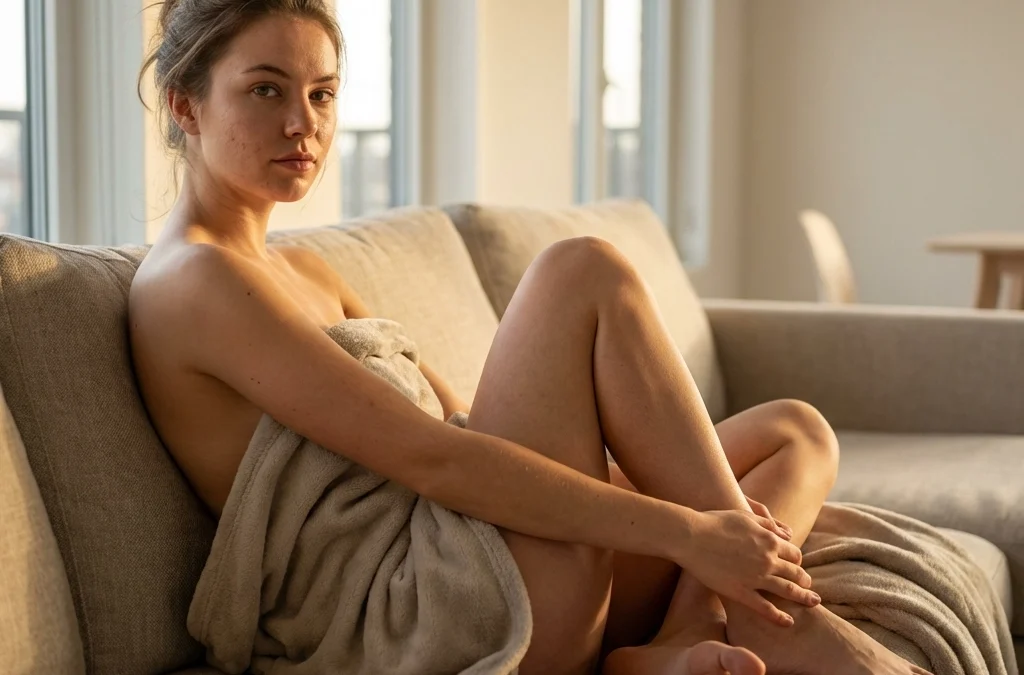
There is something visceral about capturing the human form in its most vulnerable state. Fine art nude photography isn't just about removing clothes; it’s about stripping away the noise of the world to reveal the raw, erotic essence of a woman. When you look through that viewfinder, you aren’t just seeing skin: you’re seeing architecture, texture, and a narrative of desire.
For the beginner, the transition from standard portraiture to erotic nude photography can feel like walking into a storm. It’s intense, it’s intimate, and it demands a level of technical precision that leaves no room for error. To master the hardcore detail of the female form, you need more than a camera; you need an eye for the subtle tension that makes a photo breathe.
The Philosophy of the Raw Form
Before you even touch your camera, you have to understand what you’re trying to say. Art nude photography thrives on the balance between what is shown and what is felt. You want to capture the weight of a curve, the goosebumps on a thigh, and the way light catches the moisture of a lip. This isn't about being "polite"; it’s about being honest with the camera.
When you’re stuck on a creative block or need to visualize a specific mood before the model arrives, using digital tools can be a game-changer. I often find that exploring hyper-realistic aesthetics through CandyAI can spark ideas for lighting and composition that I hadn't considered, allowing me to push the boundaries of my erotic photography before I even set foot in the studio.
Choosing Your Glass: Lenses for Intimacy
The lens you choose dictates the intimacy of the shot. In fine art nude photography, distortion is the enemy. You want to represent the body exactly as it is: beautiful, powerful, and real.
A 50mm prime is your "honest" lens. It sees what the human eye sees. But if you really want to dive into the hardcore detail of the skin and the subtle gradients of shadow, the 85mm f/1.8 is the gold standard. It allows you to stand back, giving the model her space, while compressing the background into a creamy blur that forces the viewer to focus on nothing but her. Using a wide aperture isn’t just about the "bokeh" look; it’s about isolating a single point of erotic interest: the curve of a hip, the arch of a foot: and letting everything else melt away.

Mastering the Light: Carving the Body
Lighting for nude photography is effectively the art of sculpting with shadows. You aren't just illuminating a subject; you are defining her shape. If you light a woman head-on with a flat, soft source, you lose the very details that make erotic nude photography so compelling.
Think about Chiaroscuro: the dramatic contrast between light and dark. Use a single light source from the side to create deep shadows that wrap around the waist or highlight the spine. Hard light can be your best friend here. While boudoir often calls for soft, diffused light, true fine art nude photography often benefits from a bit of grit. A harsher light source will emphasize skin texture, making the image feel more immediate and "hardcore." It shows the reality of the body, and in that reality, there is a deep, unapologetic sexiness.
Posing for Tension and Flow
Directing a model is where most beginners falter. You aren't just asking her to sit there; you’re asking her to create lines. Every limb should serve a purpose. A common mistake in boudoir photography poses is "flopping": where the body looks soft and unguided. Instead, look for tension. Ask your model to engage her core, to extend her neck, or to point her toes. This creates a sense of dynamic energy, even in a still photo.
If you’re looking to master the more complex aspects of body language, you should really dive into our Fine Art Nude Tutorials, where we break down the specific physics of erotic posing. Remember, the goal is to make the viewer feel the movement in the stillness. A hand resting lightly on a thigh shouldn't just be there; it should look like it’s about to slide higher. That’s the "implied" power of art nude photography.
The Power of Diversity and Skin Tone
One of the most beautiful aspects of this craft is the sheer variety of the female form. Fine art nude photography is the perfect medium to celebrate women of all races and backgrounds. The way light interacts with deep, melanated skin is entirely different from how it bounces off a pale, porcelain complexion.
For darker skin tones, you want to focus on the highlights. Use reflectors to catch the "rim" of the body, creating a glowing silhouette. For lighter skin tones, focus on the shadows to provide depth. Celebrating this diversity makes your portfolio richer and more authentic. Every woman has a different story written in her skin, and as a photographer, your job is to read it out loud.
Technical Settings: Don’t Let the Camera Get in the Way
When you’re in the middle of a high-intensity shoot, the last thing you want is to be fumbling with your ISO. Stick to manual mode.
- ISO: Keep it as low as possible (ISO 100 or 200). You want clean, noise-free shadows.
- Aperture: Between f/1.8 and f/4.0 is the sweet spot for isolating details.
- Shutter Speed: If you’re shooting handheld, keep it above 1/125s to avoid any micro-blur that would ruin the hardcore detail of the skin.
Use single-point autofocus. In erotic photography, the "eye" of the image isn't always the model's actual eye. It might be the small of her back or the tip of her breast. You need to be in total control of where that focus lands.
Post-Processing: Enhance, Don’t Erase
The "beginner" mistake in post-processing is over-smoothing. If you turn a woman's skin into plastic using heavy-handed retouching, you’ve failed. The eroticism of fine art nude photography lies in the pores, the fine hairs, and the natural variations of the skin.
Focus on color grading and contrast. If you’re shooting in black and white: a staple for art nude photography: crank up the blacks to give the image weight. If you’re shooting in color, look for warm, earthy tones that feel organic and inviting. Your goal in the digital darkroom is to refine the mood you captured on set, not to create a fake version of the woman who was standing in front of you.
Why You Need a Community
Learning how to photograph nude models isn’t something you do in a vacuum. It takes practice, critique, and a constant stream of inspiration. You need to see how the pros do it, how they handle lighting setups that look impossible, and how they direct models to get those raw, effortless expressions.
At Fine Art Nude Club, we don't just show you the finished product; we show you the process. If you’re ready to stop taking "pictures" and start creating erotic art that leaves an impact, it’s time to get serious. To take your craft to the next level and see the behind-the-scenes magic of these high-end shoots, you really should join the club and gain full access to our exclusive library of content.
Final Thoughts
Fine art nude photography is a journey into the heart of what makes us human. It requires a balance of technical mastery and emotional intelligence. You have to be a technician, a director, and an artist all at once. But once you capture that one shot: the one where the light, the pose, and the model’s energy align perfectly: you’ll realize why this is the most rewarding form of photography in the world.
Keep shooting, keep pushing boundaries, and never be afraid of the detail. The hardcore truth of the human body is the most beautiful thing you will ever capture.