
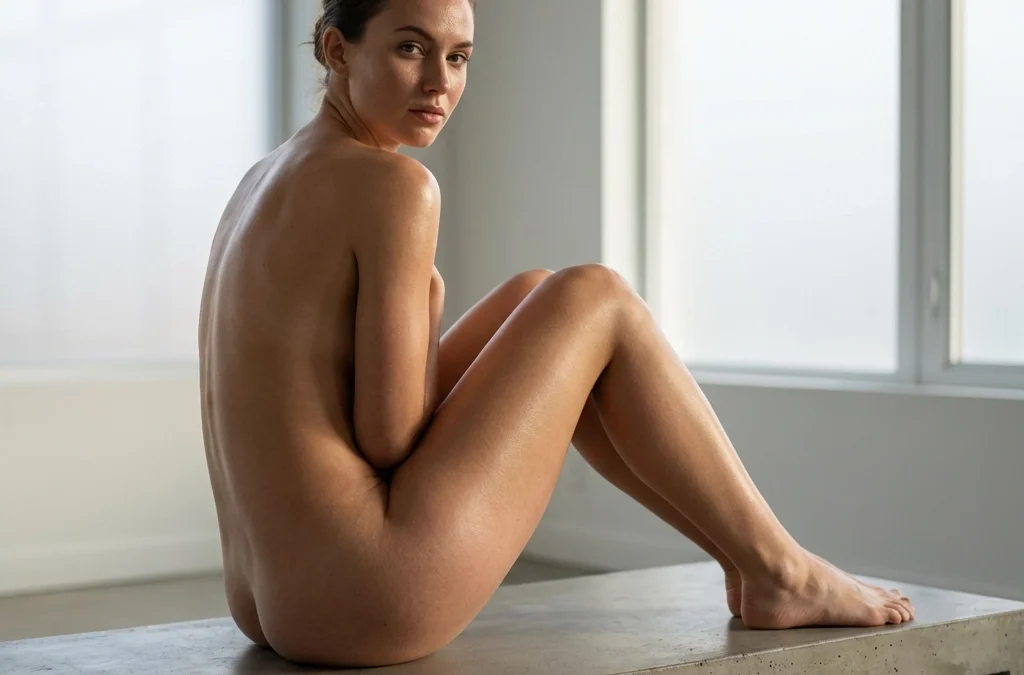
Lighting is the silent partner in every erotic nude photography session. It’s the difference between a photo that looks like a clinical medical textbook and one that captures the raw, pulsing energy of the human form. When you get it right, light strokes the skin like a lover; when you get it wrong, it exposes every flaw and flattens the very curves you’re trying to celebrate.
In the world of art nude photography, we aren't just taking pictures of bodies, we are sculpting with light. If you’ve been feeling like your shots are missing that "wow" factor, or if the skin looks muddy rather than luminous, you’re likely falling into one of these common traps. Here are seven mistakes you’re making with lighting for nude photography and exactly how to fix them to elevate your work to a professional, high-end level.
1. Embracing the "Flat" Look
One of the biggest mistakes beginners make is trying to light everything perfectly. They think that by flooding the model with light from the front, they are showing off her beauty. In reality, flat lighting kills the mood. It eliminates the shadows that define the musculature, the curve of the waist, and the subtle textures of the skin.
Nude photography tips often emphasize "seeing" the light, but you also need to see the dark. Shadows provide depth and dimension. To fix this, move your light source to the side. A 45-degree angle (Rembrandt lighting) or even 90-degree side lighting (split lighting) creates dramatic highlights and deep shadows that wrap around a woman's body, emphasizing the three-dimensional nature of her form.

2. Choosing Broad Lighting Over Short Lighting
When you are learning how to photograph nude models, understanding the geometry of the face and body is crucial. Broad lighting happens when you light the side of the model that is turned toward the camera. While it can work in some high-key commercial settings, in erotic nude photography, it often makes the subject appear wider and heavier than she actually is.
The fix is "Short Lighting." This is when you light the side of the face or body that is turned away from the camera. This technique casts the side closest to the lens into shadow, which has an immediate slimming and sculpting effect. It adds a layer of mystery and sophistication to the frame. If you find yourself struggling to visualize how light hits different body types, experimenting with digital models at CandyAI can be a fantastic way to practice your "eye" for lighting and posing before your next live session.
3. Letting Body Parts "Glow"
Nothing ruins a high-end erotic shot faster than a "hot spot" on a random body part. If a model is posing and her knee, elbow, or shoulder is closer to the light source than her face or torso, it will naturally appear brighter. In photography, the eye is drawn to the brightest part of the image. If her shoulder is glowing and her face is in shadow, you’ve lost the connection.
To fix this, use "feathering." Instead of pointing your light source directly at the model, rotate it slightly away so that only the edge of the light beam hits her. This creates a much softer, more gradual fall-off. You should also be mindful of your posing nude models technique; ensure that limbs are tucked or angled in a way that doesn't create awkward highlights that distract from the main focal point.

4. Fear of Negative Space and Deep Shadows
In the realm of art nude photography, what you don't see is often more erotic than what you do. Many photographers are afraid of "losing" detail in the shadows, so they over-light the scene. This results in a lack of mystery.
High-contrast lighting, often called Chiaroscuro, is a staple of fine art nude photography. By allowing large portions of the model’s body to fall into complete darkness, you invite the viewer’s imagination to fill in the gaps. Use a single light source with a grid or a snoot to control exactly where the light lands. Let her spine emerge from the blackness or have a single highlight trace the curve of her hip. This restraint is what separates amateur snapshots from gallery-quality art.
5. Using the Wrong Light Modifier for the Skin
Skin is a reflective surface. If you use a hard, direct light source like a bare flash, you’re going to get harsh, specular highlights and unflattering skin textures. Every pore and "imperfection" will be magnified. Conversely, if you use a massive softbox for everything, you might lose the "edge" that makes erotic nude photography feel raw and powerful.
The fix is matching the modifier to the mood. For a soft, boudoir photography poses look, a large octabox or a scrim will give you that creamy, romantic light. For something more edgy and "fashion," try a silver beauty dish or a smaller softbox with a grid. The goal is to highlight the skin’s natural luminosity without making it look oily or plastic.

6. Ignoring the Importance of Catchlights
They say the eyes are the windows to the soul, and this holds true even in erotic photography. A common mistake is positioning the light so high or so far to the side that the model's eyes become dark, empty sockets. Without a "catchlight", that tiny reflection of light in the eye, the model can look lifeless or even slightly creepy.
Even in a moody, low-light set, you want a hint of light in the eyes to maintain a sense of connection and humanity. You can fix this by using a small reflector just out of frame to bounce a tiny bit of light back into her face, or by adjusting the height of your main light. A well-placed catchlight adds a spark of intelligence and desire to the gaze that pulls the viewer in.
7. Relying on "Fixing it in Post"
We live in an age of powerful editing software, but you cannot "edit in" good lighting. Over-editing: smoothing skin until it looks like CGI or trying to digitally paint in shadows: almost always looks fake. Proper lighting technique should do 90% of the work for you.
When you get the light right in the camera, the post-production process becomes about enhancement rather than rescue. It allows the raw, organic beauty of the model to shine through. If you want to see the difference between "fixed in post" and "perfectly lit," our fine art nude tutorials walk you through the exact setups we use to get stunning results straight out of the gate.

Mastering the Art of the Glow
Nude photography is a lifelong study of the human form and how light interacts with it. It’s about more than just settings; it’s about feeling. When you stop making these common mistakes, you’ll find that your sessions become more fluid and your images more impactful. You’ll start to see light as a physical tool, something you can wrap around a woman’s body to tell a story of power, vulnerability, or raw eroticism.
If you’re serious about taking your work to the next level and want to learn from the best in the industry, there’s no better place to grow than within a community of like-minded artists. From exclusive behind-the-scenes content to deep dives into lighting setups that actually work, we provide the tools you need to stop guessing and start creating.
Stop settling for "okay" photos and start creating the high-end art you’ve always envisioned. Join the club today and get instant access to our full library of tutorials, galleries, and expert advice. Let’s turn those mistakes into masterpieces.
