
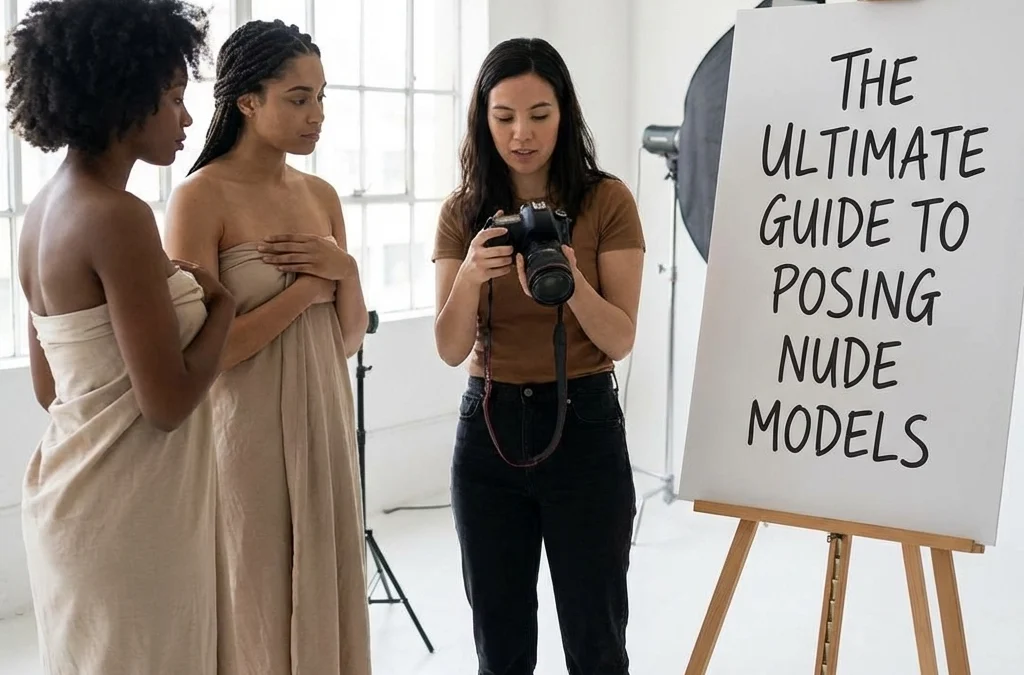
Nude photography is one of the most challenging yet rewarding genres in the world of art. It’s a delicate dance between light, shadow, and human form. But beyond the expensive glass and the high-end sensors, there is one element that makes or breaks a shot: the pose.
Posing a nude model isn't just about telling someone where to put their hands. It’s about creating lines, conveying emotion, and telling a story through the architecture of the body. When you strip away the clothing, you lose the distraction of fashion, leaving only the raw aesthetic of the skin and the silhouette. If the pose is clunky, the whole image falls apart. If the pose is fluid, you create a masterpiece.
Whether you are shooting in a high-end studio or a natural light setting, understanding the fundamentals of posing is essential. Let’s dive into the techniques that will take your work from "snapshots" to true fine art nude photography.
The Psychology of the Shoot
Before we get into the technicalities of leg placement and chin angles, we have to talk about the vibe. Posing for art nude photography is a vulnerable act. As the photographer, your first job is to make the model feel safe, respected, and comfortable.
Always communicate. Instead of saying, "Move your leg," try explaining why you want the move. "If we bring your knee up towards the camera, it’s going to create a beautiful leading line that draws the eye toward your face." When the model understands the artistic vision, they become a collaborator rather than just a subject.
If you ever find yourself hitting a creative wall or need to visualize a specific lighting setup before your model arrives, I’ve found that experimenting with digital tools can be a huge help. Using something like CandyAI allows you to play with different body types and lighting scenarios to see how shadows fall on the curves of the body, giving you a mental blueprint before the real session begins.
Core Posing Principles: Proximity and Foreshortening
The most basic rule of photography: especially nude and boudoir photography poses: is that whatever is closest to the lens will appear largest. This is the principle of proximity.
If a model points her knees directly at the camera while sitting, those knees will look disproportionately large compared to her torso. To create a more flattering, elongated look, have the model angle her limbs away from the lens or keep them parallel to the sensor.
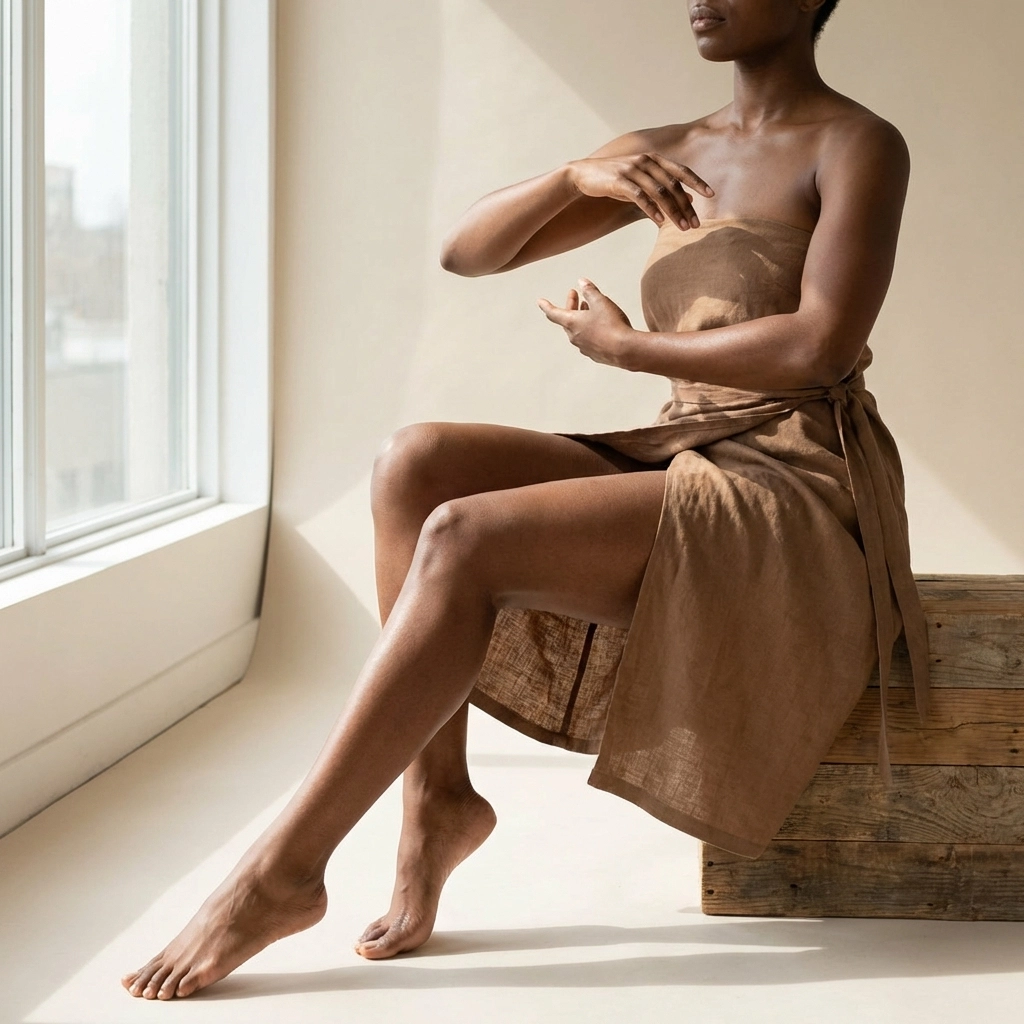
Every detail matters. A stray finger or an awkwardly bent wrist can ruin the flow of a curve. Watch the extremities. Ensure the hands are soft and graceful: think "ballet hands": and that the feet are pointed to elongate the leg line.
Mastering Lying Poses
Lying down is often where photographers start because it allows for a lot of stability and comfort. However, it’s easy for the body to look "heavy" when pressed against a surface.
The Side-Lying Silhouette
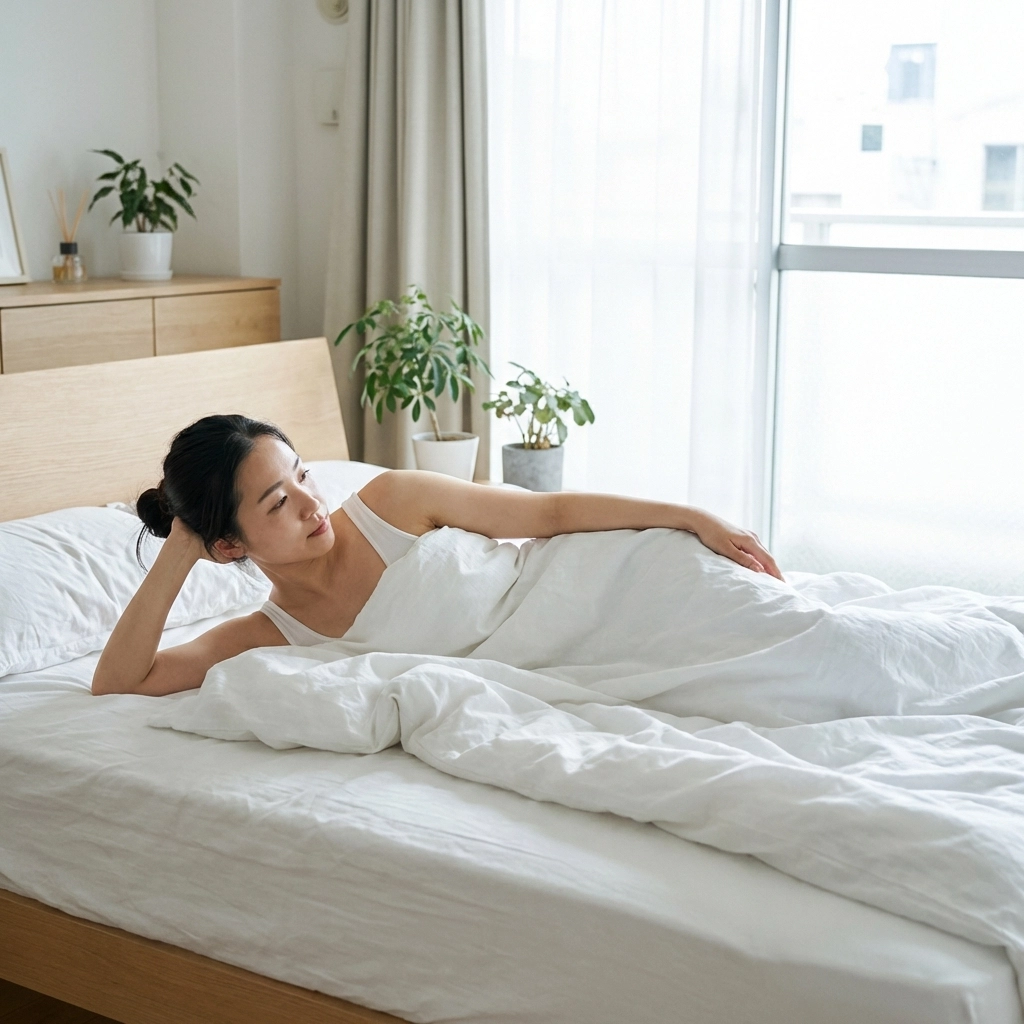
This is a classic for a reason. Have the model lie on her side, facing away or toward the camera. To avoid a flat look, ask her to lift her waist slightly off the ground or use her arm to prop up her upper body. This creates a "triangle" space under the armpit and emphasizes the curve of the hip.
The Triangle Classic
In glamour and erotic photography, the triangle pose is a staple. The model lies parallel to the camera and pushes her upper body up with one arm. The supporting hand should be turned slightly away from the body to avoid looking stiff. This pose is great for showing off the line of the neck and the tension in the torso.
The Prone (Back-Facing) Pose
Have the model lie on her stomach, looking back over her shoulder. This is a universally flattering pose because it naturally arches the back and highlights the glutes and the curve of the spine. It’s a powerful, artistic way to capture the back: a part of the body often overlooked but incredibly expressive in fine art nude photography.
Sitting Poses and Creating Shapes
Sitting poses are all about the "crunch." When we sit, our skin naturally folds, and our limbs can look compressed. The trick is to keep the spine long and the limbs active.
The Seated Profile
Have the model sit with her legs tucked or one knee raised. By shooting from the side, you capture the "S" curve of the spine. If she pulls her knees toward her chest, it creates a sense of vulnerability and intimacy. If she leans back on her hands, it projects confidence and power.
The Crossed-Leg Elegance
Sitting with legs crossed can look very formal or very relaxed depending on the angle. To keep it artistic, have the model lean slightly forward, resting an elbow on the top knee. This creates a series of interlocking triangles that keep the viewer’s eye moving around the frame.
For those of you looking to dive deeper into the technical execution of these shots, including the specific camera settings I use for each, our fine art nude tutorial section offers a wealth of behind-the-scenes knowledge that goes way beyond the basics.
Standing Poses: The Power of the Silhouette
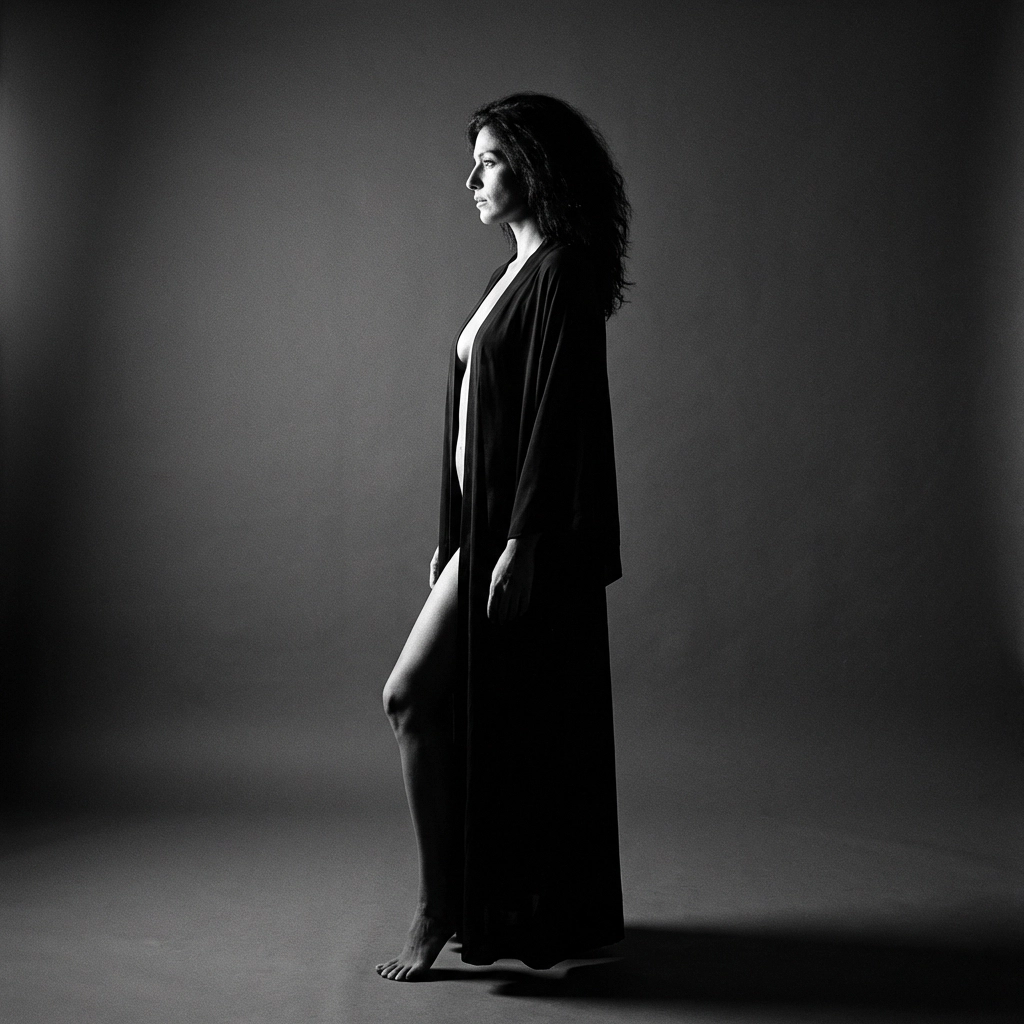
Standing poses are often the most dramatic. They allow for the full length of the body to be showcased and are perfect for playing with hard shadows and rim lighting.
The Counter-Pose (Contrapposto)
This is a technique used in classical sculpture for centuries. Have the model put most of her weight on one leg. This naturally causes the hips to tilt and the shoulders to counter-tilt, creating a dynamic, flowing line rather than a static, "straight-up-and-down" look.
The Back View with a Twist
A model facing away from the camera, turning her head just enough to catch the light on her cheekbone, is one of the most evocative shots you can take. It’s mysterious and focuses entirely on the form. Ensure she arches her back slightly and reaches one arm up to touch her hair or a wall; this elongates the entire side of the body.
Lighting for Nude Photography
You can have the perfect pose, but if the lighting is flat, the image will be boring. Nude photography is about 3D form, and light is what defines that form.
- Side Lighting: This is your best friend. By placing the light source at a 90-degree angle to the model, you create deep shadows that emphasize the musculature and the curves of the body.
- Rim Lighting: Placing a light behind the model creates a "halo" effect around her silhouette. This is particularly effective for art nude photography where you want to focus on the outline of the body rather than the skin texture.
- Softbox vs. Hard Light: Softboxes are great for a creamy, boudoir feel, but don't be afraid to use a raw flash or a narrow snoot to create dramatic, high-contrast "Chiaroscuro" effects.
Using Props to Enhance the Story
Props shouldn't be a distraction; they should be an extension of the pose. A simple silk sheet can be used to hide parts of the body, creating a "peek-a-boo" effect that is often more erotic than full nudity.
Furniture: like a vintage velvet chair or a minimalist wooden stool: gives the model something to interact with. It provides points of tension and allows for poses that wouldn't be possible in an empty space. Even something as simple as a wall can be a prop; having a model lean against a textured surface adds a tactile element to the visual story.
Conclusion
Posing is a language. The more you practice it, the more fluent you become. Remember to keep the lines clean, watch the hands and feet, and always prioritize the comfort of your model.
Every body is a unique landscape. Your job as a photographer is to find the angles that best tell the story of that specific landscape. Don't be afraid to experiment, to fail, and to try again. The art of the nude is a lifelong study of the human condition.
If you’re ready to take your skills to the next level and join a community of photographers who are dedicated to the craft of erotic and fine art photography, there’s no better place to be. You’ll get access to exclusive galleries, in-depth technical guides, and a network of professionals. Join the Fine Art Nude Club today and start transforming your vision into reality.