
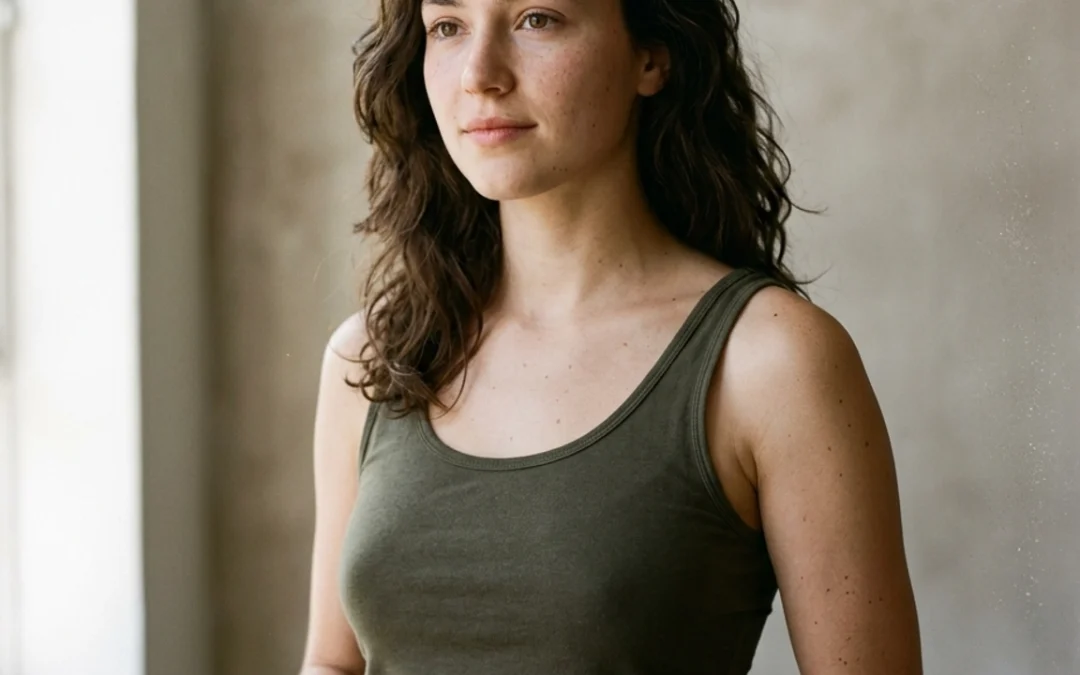
Roseanne stands in a minimalist studio, the soft cinematic side lighting highlighting the raw, hyper-realistic texture of her skin and the natural imperfections that make fine art nude photography so captivating.
In the world of high-end erotic photography, there’s a massive shift happening. We’re moving away from the plastic, airbrushed look that dominated the early 2000s and returning to something far more visceral: raw, honest skin. Whether you’re shooting for a gallery or building a portfolio for the Fine Art Nude Club, capturing the way light dances across a model’s pores, subtle freckles, and natural sheen is what separates the amateurs from the masters.
Capturing these details isn't just about having an expensive camera. It’s about understanding the physics of light and the intimacy of the human form. When you stop trying to hide "imperfections" and start celebrating them, your work takes on a depth that is both sexy and artistically profound.
The Gear: Prime Lenses and Raw Files
To get that "wow" factor, you need to start with the right glass. While zoom lenses are convenient, they often lack the micro-contrast needed to render skin textures with absolute clarity. For fine art nude photography, a 35mm or 50mm prime lens is your best friend. A 35mm lens, shot at a wide aperture like f/1.8, allows you to get close to the model while maintaining a natural perspective.
When you're looking for inspiration or perhaps a digital muse to practice your lighting concepts with, tools like CandyAI can be a fantastic resource for visualizing different female forms and textures before you even step into the studio.
Always shoot in RAW. If you’re shooting JPEGs, your camera’s processor is already making decisions for you: usually by smoothing out the very skin details you’re trying to preserve. Shooting RAW gives you the data needed to pull out every pore and highlight during post-processing.

Shaylene’s back is a canvas of detail; the cinematic chiaroscuro lighting creates deep shadows that emphasize the raw skin texture and the elegant curve of her spine.
Lighting for Texture: The "Skimming" Technique
The biggest mistake beginners make in nude photography is lighting the subject from the front. Frontal lighting is flat; it fills in the tiny "valleys" of the skin (the pores) and erases texture. To make skin look three-dimensional and raw, you need to use directional lighting.
Think of it as "skimming" the light. Place your light source: whether it’s a softbox, a strip light, or even a window: at a 90-degree angle to the model. This creates what we call micro-shadows. Every tiny bump, every hair follicle, and every curve of the muscle will cast a tiny shadow, making the skin pop off the screen. This technique is a staple in our fine art nude tutorial series, where we dive deep into advanced lighting setups that transform a simple pose into a masterpiece.
Using deep shadows and cinematic chiaroscuro doesn't just add drama; it adds realism. It makes the viewer feel like they could reach out and touch the model. It’s that sense of presence that makes erotic photography truly high-end.
Posing to Emphasize Form and Detail
Posing for fine art nudes is about more than just looking "sexy." It’s about creating tension and angles that catch the light. When a model twists her torso or arches her back, the skin stretches and moves, revealing different textures.
Encourage your models to be relaxed yet empowered. A confident gaze combined with a relaxed body creates a powerful dynamic. Focus on the details that often get overlooked: the arch of a foot, the texture of the lips, or the way the skin folds slightly at the waist. These are the elements that tell a story.

The Scorpio Sisters showcase the beauty of the female form; the golden hour light streams across their legs, revealing the subsurface scattering and intricate skin details that define high-end erotic photography.
If you’re looking to see how the pros handle these complex poses and lighting scenarios, becoming a member is the best way to learn. You can join the club here to gain exclusive access to thousands of high-resolution galleries and behind-the-scenes content that shows exactly how these shots are executed.
Post-Processing: Less is More
The goal of post-processing in fine art nude photography should be to enhance, not to correct. Avoid global "skin softening" filters like the plague. If you must retouch, do it locally. Use frequency separation if you need to fix a temporary blemish, but never at the expense of the natural skin grain.
Increase the "Texture" or "Clarity" sliders slightly in Lightroom to bring out the pores, but be careful not to overdo it, or the skin will start to look "crunchy." You want a subtle sheen, a hint of subsurface scattering where the light seems to glow from within the skin itself. This is what creates that hyper-realistic, raw look that is so sought after in modern erotic art.

Scarlet’s portrait captures the exquisite detail of her lips and the visible pores of her face, proving that in fine art nude photography, the rawest details are often the most beautiful.
Conclusion: Embracing the Raw Aesthetic
Mastering the art of capturing raw skin texture requires a shift in mindset. You have to stop seeing "imperfections" and start seeing character. When you combine the right gear, directional lighting, and a commitment to honest post-processing, your work will stand out in an industry often filled with over-processed imagery.
Whether you're a hobbyist or a professional, the journey of exploring the human form is endless. For more deep dives into the techniques that make these images possible, check out our fine art nude tutorial section. And if you're ready to see the full potential of raw, erotic photography, sign up for a membership today and see what our world-class models and photographers are creating every single day.
Remember, the most beautiful thing you can capture is the truth of the human body. Keep it raw, keep it real, and keep shooting.