
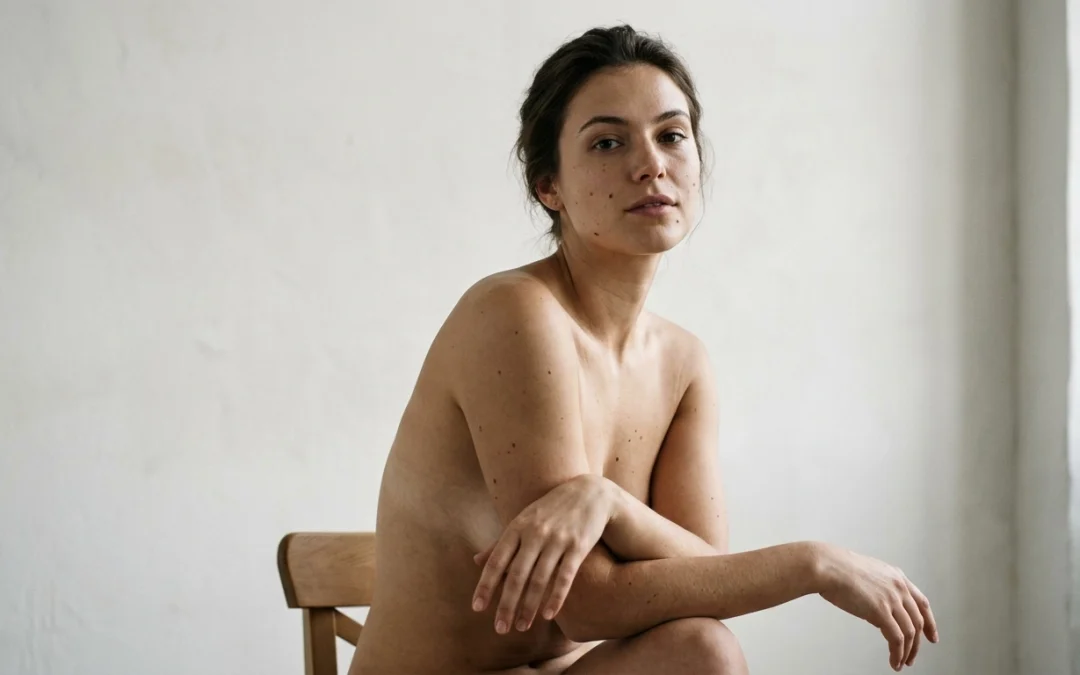
Captured in a minimalist studio, Roseanne embodies the essence of fine art nude photography with an empowered pose and soft cinematic lighting that highlights every natural skin pore and imperfection.
The human body is the most complex, beautiful, and expressive canvas in existence. In the world of fine art nude photography, our goal isn't just to document nudity; it’s to celebrate the raw, unfiltered essence of the female form. Whether you are a seasoned pro or just picking up a camera, mastering this craft requires more than just a technical eye: it requires a deep appreciation for the interplay of light, shadow, and the incredible women who bring these visions to life.
In this ultimate guide, we’re going to strip away the fluff and get down to the real techniques that make erotic photography transcend the ordinary. From the gear you need to the way you talk to your models, this is how you create images that stop people in their tracks.
The Philosophy: Art vs. Erotic
There is a fine line between a simple nude and a masterpiece of fine art nude photography. The difference lies in intention. When you approach a shoot, are you just looking for a "good shot," or are you trying to tell a story with the curves of her waist and the texture of her skin?
At the Fine Art Nude Club, we believe in a raw, hyper-realistic aesthetic. We aren't looking for airbrushed dolls; we want to see the subsurface scattering of light through the skin, the visible pores, and the natural imperfections that make every woman unique. If you're looking for inspiration for your next session, or perhaps an AI-driven muse to help visualize a concept, checking out tools like CandyAI can be a fantastic way to experiment with different looks and poses before you ever step into the studio.
Essential Gear and Technical Settings
You don’t need a mountain of equipment to succeed in art nude photography, but you do need the right tools. A high-resolution camera (think 8K or 45MP+) is essential for capturing that raw skin detail we crave.
The 35mm Advantage
While many photographers reach for an 85mm lens to "flatter" the subject, we often prefer the 35mm lens shot at f/1.8. Why? Because it puts you in the scene. It creates a sense of intimacy and realism that longer lenses lack. It forces you to be close to the model, capturing the heat and the energy of the moment.
Camera Settings for Raw Texture
- Format: Always shoot in RAW. You need every bit of data to manage skin tones and shadows.
- Aperture: f/1.8 to f/2.8 is the sweet spot for creating that creamy bokeh while keeping the focus tack-sharp on the eyes or the curve of an ass.
- ISO: Keep it as low as possible (ISO 100-200) to avoid digital noise that can ruin the natural grain of the skin.
- Shutter Speed: If you're shooting handheld, keep it fast enough (1/200s or higher) to avoid motion blur.

In this modern apartment setting, Shaylene demonstrates how cinematic chiaroscuro creates deep shadows that accentuate the natural curves of her legs and ass, a staple technique in erotic photography.
Lighting Mastery: Shadow is Your Best Friend
If you want to know how to photograph nude models effectively, you have to stop being afraid of the dark. Lighting for nude photography isn't about illuminating everything; it's about deciding what to hide.
Cinematic Chiaroscuro
This is the holy grail of fine art. By using a single, directional light source, you create high-contrast images where the body emerges from the shadows. This technique emphasizes the three-dimensional form of the body. Focus your light on the "edge" of the model: her spine, the side of her breast, or the length of her leg: to create a glowing rim that defines her shape against a dark background.
Golden Hour Realism
Nothing beats the warmth of natural light. If you’re shooting in a modern apartment, wait for that late afternoon sun to stream through the windows. It adds a natural sheen to the skin and creates a soft, cinematic vibe that feels both expensive and intimate. For those looking to dive deeper into these setups, our fine art nude tutorials offer step-by-step breakdowns of lighting rigs used by the pros.
Posing for Maximum Impact
Posing nude models is an art form in itself. The goal is to make the model feel empowered and relaxed. A tense model makes for a stiff photo.
Flow Posing
Instead of static positions, encourage your model to move slowly. This "flow" allows you to capture transition moments that feel more authentic. Focus on:
- The Spine: An arched back or a slight twist can transform a torso into a landscape.
- The Hands and Lips: These are the most expressive parts of the body. A hand grazing a hip or slightly parted lips can change the entire mood of the image.
- Negative Space: Ensure there is "air" between the arms and the torso or between the legs. This defines the silhouette and keeps the viewer's eye moving.

Scarlet's close-up shot captures the raw intensity of erotic nude photography, focusing on the fine details of her lips and the visible skin pores bathed in golden hour light.
Building Trust and Communication
The secret to the best erotic nude photography isn't a lens or a light: it's the relationship between the photographer and the model.
- Clear Direction: Never say "be sexy." Instead, give physical directions: "Drop your shoulder," "Look toward the light," or "Take a deep breath and exhale slowly."
- Consent and Comfort: Always have a warm robe ready and keep the studio temperature comfortable. Respect boundaries and always show the model the back of the camera so she can see how incredible she looks. This build-up of trust is what allows models like Roseanne or Shaylene to give such confident, empowered performances.
- Collaboration: Ask her how she likes to move. Often, a model knows her best angles better than you do.
Post-Processing: Keeping it Real
The biggest mistake you can make in nude photography tips is over-editing. We live in an era of plastic, airbrushed skin, and people are starving for something real.
When you get your RAW files into Lightroom or Capture One:
- Don't Blur the Skin: Avoid the "clarity" slider in the negative. Instead, use a bit of texture to enhance the pores.
- Color Grading: Stick to natural, earthy tones or a classic black and white. You want the viewer to feel the warmth of the skin.
- Subsurface Scattering: Use the "Dehaze" and "Shadows" tools to ensure the light looks like it's actually interacting with the skin, not just sitting on top of it.

Showcasing the sculptural beauty of the back, Scorpio Sisters highlights the importance of shadow and skin texture in creating high-end fine art nude photography.
Join the Elite
Mastering this craft takes time, practice, and a community of like-minded artists. If you’re ready to take your skills to the next level and gain access to thousands of high-resolution references from world-class models, you need to be part of our inner circle. By securing a Fine Art Nude Club membership, you get an all-access pass to our galleries and educational resources that will sharpen your eye and your technique.
Remember, the goal of fine art nude photography is to find the extraordinary in the human form. Keep your focus sharp, your lighting dramatic, and your respect for the craft even higher. Now, go grab your camera and start creating.