
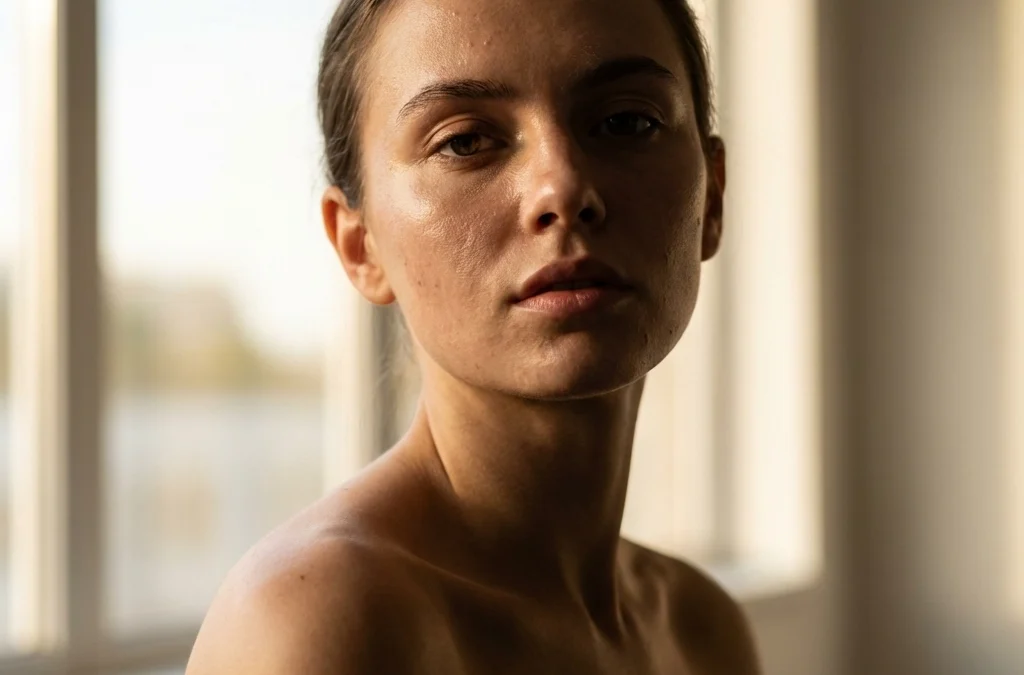
There is a massive difference between a photo that looks like a plastic mannequin and a shot that feels alive, raw, and undeniably erotic. Most photographers getting started with nude photography make the same fatal error: they try to make everything "perfect." They soften the light until the skin looks like CGI, and in doing so, they strip away the very thing that makes art nude photography compelling: the humanity.
If you want to capture the heat of a moment, you need to stop hiding the texture. Real skin has pores. It has goosebumps, fine hairs, and subtle variations in tone. If your lighting is washing those details away, you aren't shooting fine art; you’re shooting a blur.
Here are the seven most common mistakes you’re making with your lighting setups and how to fix them so you can capture every delicious detail of the female form.
1. You’re Over-Diffusing Your Light
The "soft and dreamy" look has its place, but in erotic photography, over-diffusion is the enemy of texture. When you wrap a model in massive octaboxes from every angle, you kill the micro-shadows that define skin pores. Without those tiny shadows, the skin looks flat and lifeless.
To get that raw, high-end feel, you need a bit of "bite" in your light. Try using a smaller modifier or even a silver reflector to bounce some harder light back onto the skin. This creates "specular highlights": those tiny white pips of light that reflect off the natural oils of the skin. That’s how you get pores to pop.
2. Lighting from the Front (The Death of Curves)
Nude photography is an exercise in 3D sculpting. If your light source is right next to your camera lens, you’re flattening the very curves you’re trying to celebrate. Front-lighting fills in all the shadows, making a beautiful woman look two-dimensional.
Instead, move your light to the side (short lighting) or even slightly behind the model (rim lighting). This creates a gradient across the skin, highlighting the peak of the curve and letting the rest fall into a deep, seductive shadow. If you’re having trouble visualizing how light interacts with different body types, playing around with a tool like CandyAI can be a great way to experiment with various aesthetics and "virtual" setups before you bring a real model into the studio.

3. Ignoring the Inverse Square Law
This sounds like a boring physics lesson, but it’s the secret to controlled erotic lighting. The Inverse Square Law essentially says that light falls off incredibly fast as it moves away from the source.
If your light is ten feet away, it hits the model and the background with almost the same intensity. If you bring that light just two feet away from her hip, the light will be bright on her skin but will fall off into total darkness by the time it reaches her feet or the wall behind her. This creates that "intimate" look where the model seems to emerge from the shadows. Learning to manipulate this fall-off is a core skill we cover in our fine art nude tutorials, where we break down exactly how to position your strobes for maximum drama.
4. Fear of the "Kicker" Light
A kicker (or rim light) is a light placed behind the model, angled back toward the camera. This is the "secret sauce" for separating a dark-skinned model from a dark background or highlighting the fine peach fuzz on a woman’s thigh.
Without a kicker, the edges of the body get lost. With it, you define the silhouette. When that light grazes the skin at a sharp angle, it emphasizes the texture of the pores and the muscle definition. It turns a simple pose into something powerful and statuesque.

5. Using Too Many Lights
Beginners often think more gear equals a better photo. In reality, some of the most iconic art nude photography is done with a single light source. When you start adding a second, third, and fourth light, you risk "cross-shadowing." This is when shadows from one light are filled in by another, creating a messy, muddy look that lacks direction.
Try a "one-light challenge." Use a single strobe or even a single window. See how much you can reveal (and hide) with just that one source. It forces you to be intentional. If you feel like your portfolio is missing that professional edge, it’s usually because you’re over-complicating things. When you join the club, you'll see how the pros use minimal gear to create high-impact, erotic imagery.
6. Mismanaging the Color Temperature
Skin tones are finicky. If your lights are too "cool" (blue), the model will look sickly or cold. If they are too "warm" (orange), she’ll look like she has a bad spray tan. But there’s a sweet spot in the middle: a golden, fleshy warmth that feels tactile.
Capturing real skin pores requires color accuracy. If the color is off, the digital "noise" in the shadows will mask the skin texture. Use a gray card to get your white balance perfect in-camera. This ensures that the highlights on her skin feel like actual skin, not just white digital clipping.

7. Killing the Texture in Post-Processing
This is perhaps the biggest mistake of all. You spend hours getting the lighting right, you capture a stunning shot with perfect pore detail, and then you open Photoshop and hit "Frequency Separation" or a "Skin Smoothing" filter until she looks like a Barbie doll.
Stop it.
High-end erotic photography embraces the "flaws." A stretch mark, a stray hair, or the visible texture of the skin makes the viewer feel like they could reach out and touch the model. It adds a layer of intimacy that perfection can’t touch. If you’ve lit the shot correctly, you shouldn’t need to do more than some basic color grading and minor blemish removal.
How to Focus for Maximum Detail
To really get those pores, your focus needs to be tack-sharp. Even the most expensive lighting won't save a soft focus.
- Aperture: Don't always shoot at f/1.8. While the bokeh is nice, the depth of field is so thin that you might get the eye in focus but the skin of the cheek will be a blur. Stop down to f/4 or f/5.6 to ensure the texture of the skin is sharp across the entire plane of the body.
- ISO: Keep it low. Noise looks like texture, but it’s "fake" texture. It muddies the real pores. Use a tripod if you have to, but keep that ISO at 100 or 200.
- Macro Thinking: Don’t be afraid to get close. Some of the most erotic shots are "landscape" crops of the body: the curve of a hip, the small of the back, the texture of the areola.
The beauty of the female form is in the details. Whether you are shooting a pale, porcelain-skinned blonde or a deep-toned, radiant Black model, the light should celebrate the surface of the skin, not hide it.
Mastering these technical nuances is what separates the amateurs from the artists. If you're ready to take your work to a level that commands attention and respect, you need to see how the best in the business do it. We provide the raw, unedited insight into high-end shoots that you won't find on YouTube. From lighting diagrams to model direction, everything you need is waiting for you when you become a member today.
Don't let your photography stay flat. Add some edge, bring out the texture, and start shooting images that feel as real as they look.