
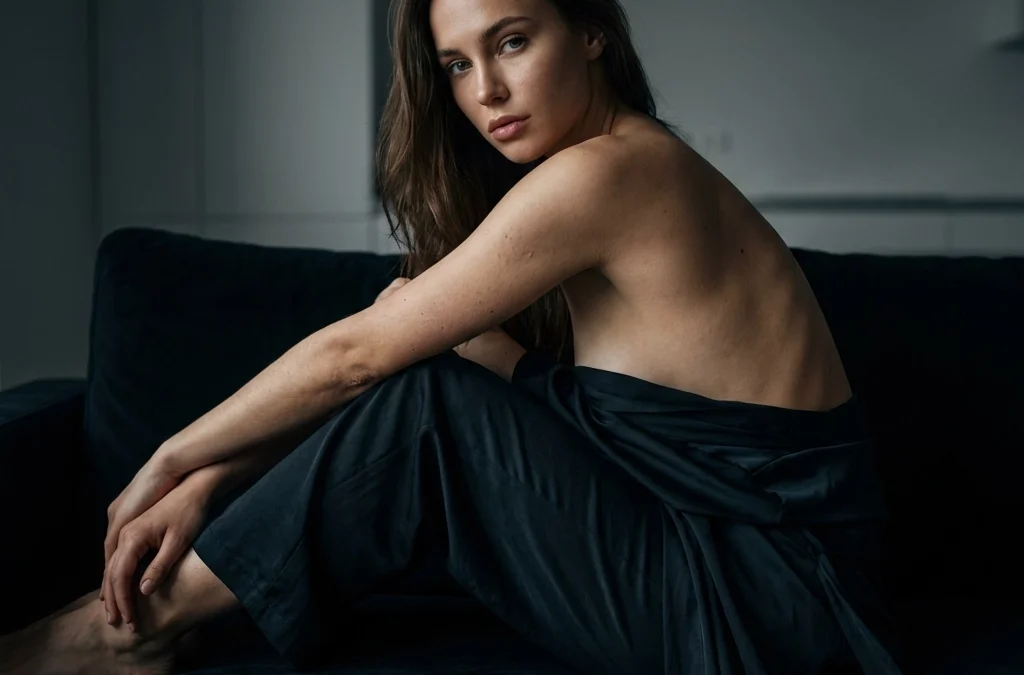
Erotic photography is a dance between what we reveal and what we leave to the imagination. It’s not just about a beautiful woman standing in front of a lens; it’s about how the light caresses her skin, how the shadows define the curve of her hip, and the mood you create in that space between them. If you’re just pointing a light at a model and hitting the shutter, you’re missing the point. You’re making a document, not art.
Lighting for nude photography is arguably the most difficult skill to master. When clothes come off, the skin becomes a canvas that reflects everything. Every pore, every muscle ripple, and every curve reacts to your light source. If you’ve been feeling like your shots are flat, clinical, or just "off," you’re likely falling into one of these common traps.
Here are seven mistakes you’re making with your lighting and how to turn those errors into high-end, raw eroticism.
1. The Death of Mood: Flat Lighting
The biggest mistake beginners make is trying to "see" everything. You think that because she’s beautiful, you need to illuminate every inch of her. This results in flat, front-on lighting that kills the three-dimensional reality of the female form. Flat lighting washes out texture and makes even the most athletic body look two-dimensional.
The Fix: Embrace side lighting. By moving your light source 45 to 90 degrees to the side of your model, you create "Rembrandt" lighting or split lighting. This allows the light to fall across the body, creating highlights on the peaks and shadows in the valleys. This is how you define a waistline or the subtle ridge of a spine. If you’re struggling to visualize how light hits different body types, playing around with an AI generator like CandyAI can be a great way to experiment with virtual shadows and poses before you ever get into the studio. It helps you see how light wraps around different silhouettes, which you can then recreate with your physical gear.

2. Being Afraid of the Dark
In erotic photography, the shadow is just as important: if not more important: than the light. Many photographers panic when they see a deep shadow, thinking they’re losing "data." They over-fill the shadows with reflectors or secondary lights, and suddenly, the mystery is gone.
The Fix: Let the shadows go black. High-contrast, low-key lighting is the hallmark of fine art nude photography. Use negative fill (black foam boards) to soak up reflected light and deepen those shadows. When you allow a model's leg to disappear into the darkness, the viewer’s mind fills in the blanks, which is far more provocative than showing every detail. Shadows are where the sex appeal lives.
3. Ignoring the Power of Short Lighting
Are you lighting the side of the face or body that is closest to the camera? That’s called broad lighting, and in most erotic contexts, it’s a mistake. Broad lighting makes a subject look wider and flatter. It’s the enemy of the "snatched" look that many models desire.
The Fix: Use short lighting. This means your main light source is illuminating the side of the model turned away from the camera. This leaves the side closest to the lens in shadow, which instantly slims the body and adds a sense of drama and depth. Whether you are shooting a pale-skinned muse or a woman with deep, melanin-rich skin, short lighting emphasizes the structure of the bone and the tautness of the skin. For a deeper look at the technical setups for this, our fine art nude tutorial section breaks down the specific gear you need to achieve this sculptured look.

4. Hard Light in the Wrong Places
There’s a trend toward "raw" and "harsh" lighting, often using direct flash to mimic a 90s aesthetic. While this can look cool in a fashion context, in erotic photography, it can be unforgiving. Hard light creates "specular highlights": those bright, shiny spots on the skin that look like sweat or oil. If not controlled, it makes the skin look greasy rather than glowing.
The Fix: Learn to diffuse. A large softbox or an umbrella mimics the soft light of a window, which is the gold standard for erotic art. It wraps around the curves of a woman's breast or the curve of her glutes, creating a gradient rather than a sharp line. If you want that "hard" look, use a beauty dish with a grid. It gives you the punch and contrast of hard light but keeps it focused so it doesn't spill everywhere and ruin the mood.
5. Forgetting the Background Contrast
You’ve spent an hour getting the light on the model perfect, but she’s blending into the background. Or worse, the background is so bright it’s distracting from her form. This is a classic mistake in boudoir and art nude photography.
The Fix: Create separation. You don’t need a separate light for the background, but you do need to understand "fall-off." By moving your model further away from the wall, you allow the light to hit her but drop off before it hits the background. This creates a natural spotlight effect. Alternatively, use a "rim light" (a light placed behind the model, pointing toward her back) to create a thin line of light along her silhouette. This separates her from a dark background and makes her body "pop" in a way that feels electric and high-end.
6. Inconsistent Color Temperatures
Mixing light sources is a recipe for a post-processing nightmare. If you have warm tungsten light coming from a bedside lamp and cool daylight coming from a window, your model’s skin tones will look muddy. One part of her body might look jaundiced while the other looks blue.
The Fix: Commit to a vibe. If you want the warm, intimate glow of a late-night encounter, gel your flashes to match the ambient light. If you want a clean, clinical, fine-art look, block out the room’s lamps and stick to your daylight-balanced strobes. Skin tone is everything in this genre. When you’re shooting a diverse range of models, you’ll find that warmer tones often enhance the richness of darker skin, while cooler, soft-box setups can make porcelain skin look ethereal. Consistency in your color temperature allows the viewer to focus on the subject’s beauty rather than your technical errors.
7. Overcomplicating the Setup
Many photographers think they need a five-light setup to look professional. They end up with lights, stands, and cables everywhere, which kills the intimacy of the session. If the model feels like she’s in a laboratory, she won’t give you those raw, sensual expressions that make a photo truly erotic.
The Fix: Strip it back. Some of the most iconic art nudes in history were shot with a single light source and a reflector. One light allows you to see exactly what is happening. It creates a single, dominant shadow and a single story. Once you master the "one light" setup, you can add more if necessary, but you’ll find that simplicity often leads to much more powerful imagery.

Erotic photography is a journey of constant refinement. It’s about more than just technical proficiency; it’s about how you use that technique to evoke a feeling. When you stop making these common lighting mistakes, you stop being a guy with a camera and start being an artist. You start creating images that don't just show a body, but tell a story of desire, confidence, and raw beauty.
If you’re ready to stop guessing and start creating the kind of work that belongs in a high-end gallery or a premium private collection, you need to see how the masters do it. We have a community of creators who are pushing the boundaries of the craft every single day. If you want to see our full library of exclusive shoots, behind-the-scenes breakdowns, and lighting maps, join the club and get full access today. There is a world of difference between a "nude" and a "fine art nude," and it all starts with the light.