
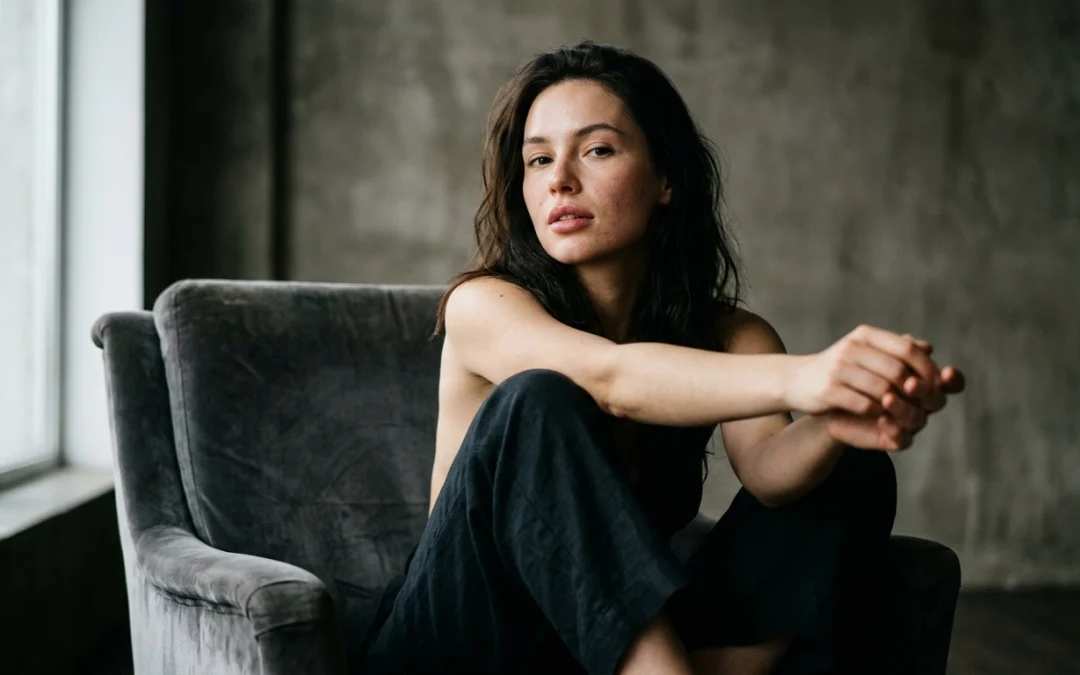
Roseanne looks absolutely stunning in this minimalist studio setting, where the soft cinematic lighting highlights her raw skin texture and natural beauty, making for a perfect example of high-end fine art nude photography.
Capturing the female form is one of the most primal and rewarding pursuits in photography. But let’s be honest: there’s a massive gap between a snapshot of a naked woman and a masterpiece of fine art nude photography. Many photographers dive into this world thinking it’s just about the nudity, only to end up with images that feel flat, awkward, or: dare I say: cheap.
If you’ve been feeling like your erotic photography is missing that "wow" factor, you’re likely making one of these common mistakes. The good news? They are all easy to fix if you know what to look for. Whether you’re drawing inspiration from digital muses on CandyAI or working with professional models in a studio, these tips will elevate your work from amateur to art.
1. The "Glamour Trap": Lacking Artistic Intent
The biggest mistake beginners make is treating fine art nude photography like a standard glamour or boudoir shoot. If your only goal is to show a "sexy girl," the image will often feel cliché. Fine art is about shapes, shadows, and the narrative of the body.
How to Fix It:
Stop thinking about "parts" and start thinking about geometry. Look for the S-curves of the spine, the negative space between an arm and a torso, and the way light wraps around a hip. When you approach the shoot with a conceptual mindset: perhaps focusing on the contrast between soft skin and hard architecture: the eroticism becomes a sophisticated byproduct of the art, rather than the sole focus. For a deeper look at refining your artistic eye, our fine art nude tutorials offer a masterclass in seeing the body as a canvas.
2. Flat and Boring Lighting
If you’re using a single softbox pointed directly at your model, you’re killing the drama. Erotic photography thrives on the interplay between light and shadow. Flat lighting erases the very contours that make the female body so captivating.

Shaylene’s silhouette is sculpted by dramatic chiaroscuro in this luxury apartment setting, showing how directional light can transform erotic nude photography into a powerful visual narrative.
How to Fix It:
Embrace the shadows. Use a single light source from the side: what we call chiaroscuro: to sculpt the body. This technique highlights the "hills and valleys" of the model’s form, creating a three-dimensional feel. Pay attention to how the light catches the subtle sheen of the skin. If you want to see how the pros manipulate light to create that deep, cinematic look, check out the galleries of our top models after you join the club.
3. Stiff and Unnatural Posing
Nothing ruins a beautiful frame faster than visible tension. When a model is uncomfortable or forced into an "Instagram-ready" pose, it shows in her neck, her hands, and her eyes. Those "broken" poses where joints look awkward or limbs appear foreshortened can distract the viewer from the beauty of the scene.

The Scorpio Sisters demonstrate the power of relaxed posing; their empowered stance and natural interactions create a sense of authenticity that is essential for high-end art nude photography.
How to Fix It:
Focus on flow. Encourage your model to move naturally and breathe. Watch for "claw hands" or toes that aren't pointed; these small details matter. Instead of barking orders, describe the mood you want to evoke. If you’re struggling for posing ideas, look at how the Scorpio Sisters interact with the camera: they possess an effortless grace that comes from true confidence. You can even experiment with posing ideas by generating reference concepts through CandyAI before your session.
4. Using the Wrong Lens
A common technical error is using a wide-angle lens too close to the model. While a 24mm or 35mm lens is great for environmental shots, using it close-up will distort the body, making whatever is closest to the lens: usually a hand or a knee: look unnaturally large.
How to Fix It:
For most fine art nude photography, a 50mm or 85mm lens is your best friend. These focal lengths are much more flattering for the human form, compressing the features and keeping proportions realistic. If you do use a 35mm lens, stay back and let the environment breathe around the model. This creates a raw, intimate feeling without the unflattering distortion.
5. The "Plastic Skin" Sin (Over-Editing)
In the age of social media filters, many photographers have forgotten what real skin looks like. Heavy-handed retouching that erases every pore, freckle, and stretch mark doesn't make a photo better: it makes it look like a 3D render. Fine art is about truth, and the truth of the human body includes texture.

Scarlet’s natural beauty is highlighted through sharp focus on her raw skin texture and visible pores, proving that natural imperfections are what make fine art nude photography truly intimate.
How to Fix It:
Step away from the "Frequency Separation" tool. High-end erotic photography celebrates the raw, hyper-realistic look. You want to see the subsurface scattering of light through the skin, the subtle sheen of natural oils, and the fine pores. If you need to retouch, do it selectively: remove temporary blemishes but leave the character of the skin intact. Our tutorials emphasize this "less is more" approach to post-processing, helping you maintain that high-end, masterpiece quality.
6. Ignoring the Environment
You might have the most beautiful model in the world, but if she’s standing in front of a cluttered corner of your living room or a boring, flat wall with no character, the photo will suffer. The background is just as much a part of the composition as the subject.
How to Fix It:
Keep it minimalist and intentional. Whether it’s a high-end luxury apartment or a simple studio with a single chair, the environment should complement the model, not compete with her. Use a shallow depth of field (like f/1.8) to blur the background into a soft, cinematic wash of color, keeping the focus entirely on her form.
7. A Lack of Connection and Rapport
The final and most critical mistake is failing to build a connection with your model. If there is no rapport, the images will feel cold and clinical. Fine art nude photography is an intimate collaboration; if the model doesn't trust your vision, she won't give you her best performance.
How to Fix It:
Communicate clearly before you even pick up the camera. Discuss the concept, show her mood boards, and ensure she feels safe and respected. When a model feels empowered, she brings a level of eye contact and presence that can’t be faked. This is why the galleries at the Fine Art Nude Club are so successful: our models are professionals who understand the art and feel comfortable expressing their sexuality in front of the lens.
Level Up Your Photography Today
Mastering these seven areas will immediately separate your work from the masses. Fine art is a journey of constant learning and inspiration. If you're ready to dive deeper into the world of professional eroticism and learn the exact techniques used to capture the world's most beautiful women, now is the time to become a member. You’ll get exclusive access to over 6,000 high-resolution photos and expert video tutorials that will transform the way you shoot.
Don't let your talent go to waste by making these rookie mistakes. Start seeing the body for the masterpiece it is.