
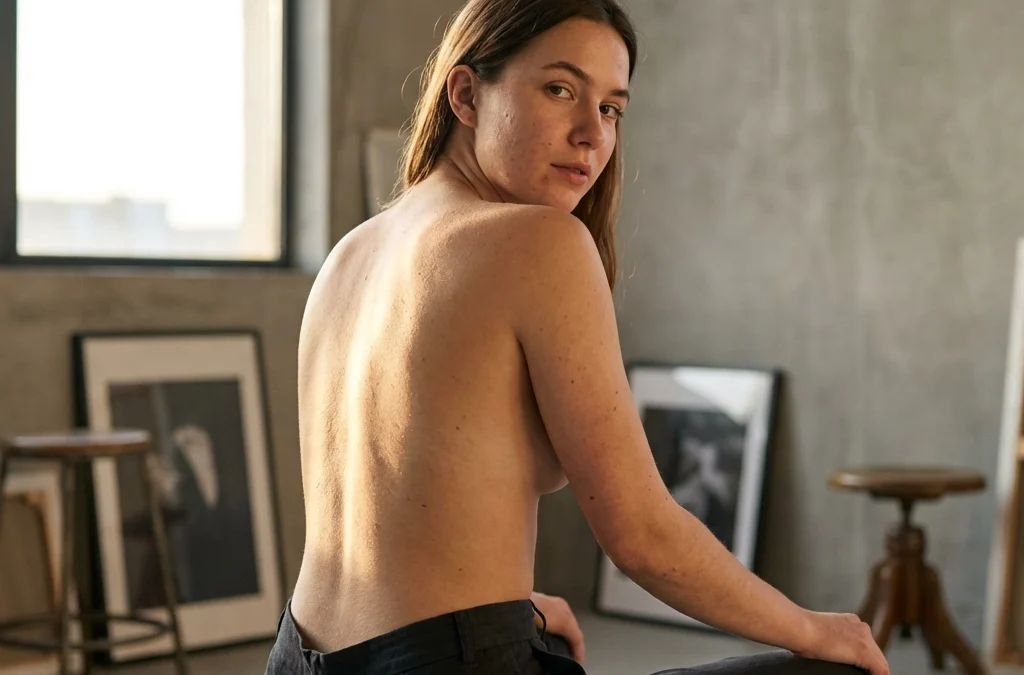
There is something inherently visceral about fine art nude photography. It’s not just about the absence of clothes; it’s about the presence of the soul, the texture of the skin, and the raw, unyielding beauty of the female form. When you strip everything away, you’re left with the ultimate canvas. But capturing that canvas in a way that feels both high-end and intensely erotic requires more than just a camera and a willing subject. It requires a mastery of light, an eye for detail, and a deep respect for the art of the body.
If you’ve ever looked at a professional gallery and wondered how they make the skin look so tactile: how you can almost feel the warmth radiating off the screen: you’re in the right place. We’re diving into the five essential steps to mastering art nude photography, focusing on how to capture those raw details that turn a simple photo into a masterpiece of erotic nude photography.
1. Master the Language of Light and Shadow
In nude photography, light is your paintbrush. You aren't just lighting a person; you are sculpting a form. To capture raw skin detail, you need to understand how light interacts with the various textures of the body. While soft, diffused light is often the "safe" choice for boudoir photography poses, art nude photography frequently demands something more dramatic.
Side lighting is your best friend when you want to emphasize texture. When light hits the skin at an angle, it casts tiny shadows across every pore, every curve, and every subtle imperfection. This is what creates that "raw" look. Instead of a flat, airbrushed appearance, you get a three-dimensional image that feels alive. Experiment with rim lighting to separate the model from the background, creating a glowing silhouette that highlights the fine hairs on the skin or the curve of a shoulder.

Before you even pick up your camera, it helps to have a clear vision of the mood you want to evoke. Sometimes, I find that playing with digital muses on CandyAI helps me visualize lighting setups and body types that I want to explore in my next live shoot. It’s a great way to refine your aesthetic before the model even steps into the studio.
2. Choose Settings That Respect the Details
Technical precision is non-negotiable when your goal is high-end erotic photography. You want the viewer to see the goosebumps, the faint stretch marks, and the subtle sheen of sweat or oil. This means your focus has to be tack-sharp.
A medium telephoto lens, like an 85mm or a 105mm macro, is ideal. These lenses allow you to maintain a respectful distance from the model while providing a flattering perspective that doesn't distort the body. A wider aperture (around f/2.8 to f/4) is perfect for creating a shallow depth of field, drawing the eye exactly where you want it: perhaps the small of her back or the curve of her hip: while letting the rest of the frame melt into a soft, sensual blur.
Keep your ISO as low as possible to avoid digital noise, which can muddy the fine details of the skin. If you’re shooting in a dark, moody environment, use a tripod rather than cranking up the ISO. You want the texture to come from the skin itself, not from digital grain. For those who want to dive deeper into the technicalities of gear and settings, our fine art nude tutorial section covers everything from lens choice to advanced tethering techniques.
3. The Art of Communication and Comfort
You can have the best lighting and the most expensive camera in the world, but if your model isn't comfortable, the photos will feel cold and forced. Erotic photography is a collaborative effort. It requires a level of trust that is unique to this genre.
Start every session with a conversation. Discuss the vision, the level of nudity, and the specific "vibe" of the shoot. Are we going for something soft and romantic, or something raw, edgy, and provocative? Show her your mood boards. When a model feels seen as an artist rather than just a subject, she will give you more authentic expressions and more fluid movements.
During the shoot, be vocal. Direct her with confidence but stay casual and professional. Instead of saying "move your leg," try "arch your back slightly to catch the light on your ribs." Positive reinforcement goes a long way. When she knows she’s nailing the shot, her confidence will radiate through the lens, making the final images significantly more impactful.

4. Posing for Form and Tension
Posing nude models is an exercise in geometry. You are looking for lines, triangles, and curves. The "S-curve" is a classic for a reason: it emphasizes the natural flow of the female body: but don't be afraid to experiment with more architectural or high-fashion poses.
Think about tension. A relaxed body is beautiful, but a body with a bit of tension: a pointed toe, a hand gripping a thigh, or a neck stretched long: creates a sense of energy and narrative. Use negative space to your advantage. The gap between an arm and a torso can be just as interesting as the body itself.
Remember, erotic nude photography tips often focus on the "obvious," but the most sensual shots are often the ones that leave a little to the imagination or focus on unexpected details. A close-up of the nape of the neck or the way a hand rests on a hip can be more powerful than a full-frontal shot. If you’re looking for inspiration on how to pose your models to maximize their natural beauty, you should definitely join the club to see how our featured photographers handle complex compositions.
5. Post-Processing: Enhancing, Not Erasing
The final step in mastering art nude photography happens in the digital darkroom. The biggest mistake beginners make is over-retouching. If you blur the skin until it looks like plastic, you’ve lost the "raw" element that makes fine art so compelling.
Your goal in post-processing should be to enhance what is already there. Use dodging and burning to accentuate the highlights and shadows you created with your lighting. This adds even more depth and "pop" to the skin texture. If you’re working in black and white: a staple of the genre: pay close attention to the contrast. You want a rich range of tones, from the deepest blacks to the brightest highlights.

In color photography, focus on skin tones. You want them to look natural and vibrant. A slight increase in clarity can help bring out those raw skin details, but use it sparingly. The best erotic photography looks like a captured moment in time, not a heavily manipulated graphic.
Mastering this craft takes time, patience, and a lot of practice. It’s about learning to see the body not just as a person, but as a landscape of light and shadow. By following these steps and focusing on the raw, unedited beauty of your subjects, you’ll be well on your way to creating images that aren't just seen, but felt.
The journey of a photographer never truly ends. There is always a new light setup to try, a new pose to master, and a new way to see the human form. If you're ready to take your skills to the next level and gain access to exclusive content and a community of like-minded artists, check out our membership options and start your path toward becoming a master of the craft.