
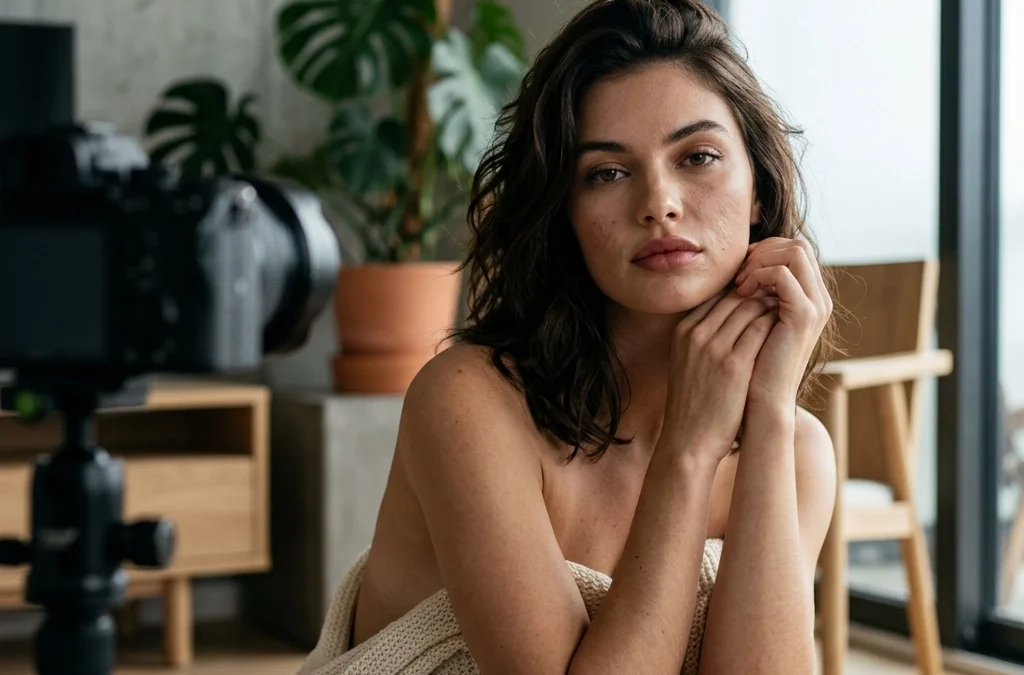
Stepping into the world of nude photography can feel like a daunting transition for any hobbyist. You’ve mastered the basics of landscapes or street photography, but capturing the raw, intimate beauty of the human form requires a different kind of eye. It’s not just about the technicalities; it’s about the connection, the lighting, and the art of the reveal. Whether you are aiming for high-end erotic photography or classic art nude photography, the goal is to create images that feel deliberate, professional, and evocative.
If you’re ready to stop taking "naked pictures" and start creating fine art nude photography, you need a roadmap. Here are five essential steps to elevate your work from amateur snapshots to professional-grade art.
1. Dial in Your Gear and Lighting Mastery
The difference between a flat, uninspired shot and a professional masterpiece often comes down to how you handle light. When you’re learning how to photograph nude models, your camera is secondary to your light source. However, you still need the right glass. A large aperture lens: something like a 50mm or 85mm prime at f/1.8 or f/1.4: is your best friend. It allows you to create a shallow depth of field, beautifully blurring the background and making the model’s skin the undisputed star of the show.
Lighting for nude photography should prioritize the contours of the body. If you’re working with natural light, find a large window and use a white or gold reflector to bounce light back into the shadows. This softens the transitions between light and dark, creating a supple look on the skin. If you prefer the control of a studio setting, use a large softbox or an umbrella. The goal is "wrap-around" light that caresses the curves rather than harsh, direct light that flattens them.

2. Cultivate a Professional and Sexy Environment
Technical skill doesn’t matter if your model is uncomfortable. To get those raw, authentic expressions found in high-end erotic nude photography, you need to set the mood. Start by ensuring the space is warm: models are exposed, and a cold room leads to goosebumps and tension. Background music is another essential; it fills the silence and helps the model find a rhythm.
Before the shoot, it helps to have a visual language to share. Many photographers use mood boards to communicate their vision. If you’re ever stuck for inspiration or want to experiment with aesthetic concepts before a model arrives, you can use CandyAI to explore different looks, lighting styles, and virtual muses that help refine your creative direction.
Once the model arrives, talk through the shoot. Use props like silk sheets, velvet pillows, or even feathers to add texture. These items aren't just for show; they provide a "safety net" for the model, allowing her to partially cover herself while she gets used to the camera, which often results in more sensual, relaxed images.
3. Master the Fundamentals of Posing
Posing is where most hobbyists struggle. A common mistake is letting the model stand or lie flat against a surface. In the world of art nude photography, we look for "triangles." Ask your model to bend her arms at the elbows or her legs at the knees. These angles create negative space and prevent the limbs from looking like blocks of flesh.

When you're exploring different boudoir photography poses, remember that tension is the enemy of beauty. Encourage the model to breathe through her mouth to relax her jaw and to keep her fingers soft and elongated. If you want to dive deeper into the nuances of body placement, check out our comprehensive fine art nude tutorial section for a masterclass on directional flow.
Focus on the "S-curve." By asking the model to shift her weight to one hip or arch her back slightly, you accentuate the natural flow of the female form. This is the cornerstone of professional nude photography tips: never let the model stay "square" to the camera. Always angle the body to create depth and shadow.
4. Use Proven, Flattering Positions
While every model is unique, there are classic positions that consistently deliver professional results.
- The Reclining Side Pose: Have the model lie on her side with the bottom leg straight and the top leg bent at the knee, pulled toward her chest. This lifts the hip and creates a beautiful curve from the shoulder down to the ankle.
- The Seated Triangle: A sitting pose where the model crosses her legs and drapes an arm over her knee is timeless. It’s elegant and offers plenty of opportunities for "peek-a-boo" lighting.
- The Elevated Back Pose: Facing away from the camera, have the model arch her back and look over her shoulder. This highlights the spine and the curve of the glutes, providing a powerful, sculptural look.
As you work through these positions, move your camera. Don't just stand in one spot. Change your height; shooting from a slightly lower angle can make the model look statuesque and powerful, while shooting from above can feel more intimate and vulnerable.
5. Composition and Framing for Impact
The final step to achieving professional results is in the framing. A common hobbyist mistake is cutting off limbs at the joints. Never crop at the wrists, elbows, knees, or ankles: it creates a jarring, "amputated" look. Instead, crop mid-thigh or mid-bicep for a more natural feel.
In erotic photography, the "rule of thirds" is a great starting point, but don't be afraid to break it. Sometimes a centered, symmetrical shot of the torso can be incredibly striking. Use the body's natural lines to lead the viewer's eye. A model's arm might point toward her face, or the curve of her hip might lead the eye toward a specific detail you want to highlight.

Experiment with close-ups. Nude photography doesn't always have to show the whole body. A tight shot of the small of the back, the curve of a breast, or the nape of the neck can be just as provocative and artistic as a full-body shot. Professional results come from a willingness to explore the "landscapes" of the body.
Elevate Your Artistry
Capturing the essence of a woman’s beauty through your lens is a journey of constant learning. It’s about more than just settings; it’s about the passion you bring to the frame and the respect you show for the art form. If you are serious about moving past the basics and want to join a community of creators who live and breathe this aesthetic, it’s time to take the next step.
You can gain access to exclusive galleries, behind-the-scenes insights, and advanced techniques by securing your Fine Art Nude Club membership. Whether you're a hobbyist or an aspiring pro, having the right resources and a supportive community will transform the way you see and shoot the nude form. Stop guessing and start creating the high-end erotic art you’ve always envisioned.